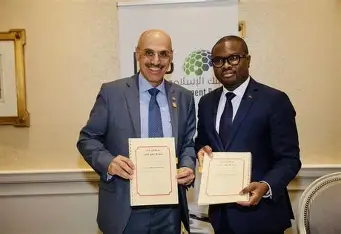
The Republic of Bénin has taken a decisive step toward reinforcing its agricultural sovereignty by securing a substantial financial commitment from the Islamic Development Bank (IDB). The newly approved funding, amounting to 12.57 billion FCFA, will be allocated to modernizing the nation’s agricultural sector, with a primary focus on restoring soil fertility—a challenge exacerbated by the intensifying impacts of climate change.
Strategic financial diversification to bolster agricultural resilience
Beyond the sheer financial scale of this initiative, the decision to engage the IDB reflects a deliberate shift in Bénin’s fiscal and diplomatic strategy. By diversifying its funding sources, the government in Porto-Novo is actively reducing its long-standing reliance on traditional multilateral institutions and Western bond markets, where borrowing costs remain prohibitively high. The adoption of Islamic finance principles, which emphasize risk-sharing and asset-backed funding structures, offers a sustainable pathway for long-term infrastructure development in agriculture.
Economic pragmatism drives investment in agricultural adaptation
The rationale behind this financial move is fundamentally economic. Enhancing soil health and agricultural resilience is no longer merely an environmental consideration; it is a strategic imperative for safeguarding the country’s Gross Domestic Product (GDP). By fortifying crops against prolonged droughts and unpredictable flooding, Bénin aims to mitigate the need for costly emergency food imports, thereby preserving foreign exchange reserves. This forward-thinking approach not only stabilizes the national trade balance but also reinforces the country’s economic autonomy in an increasingly volatile global market.