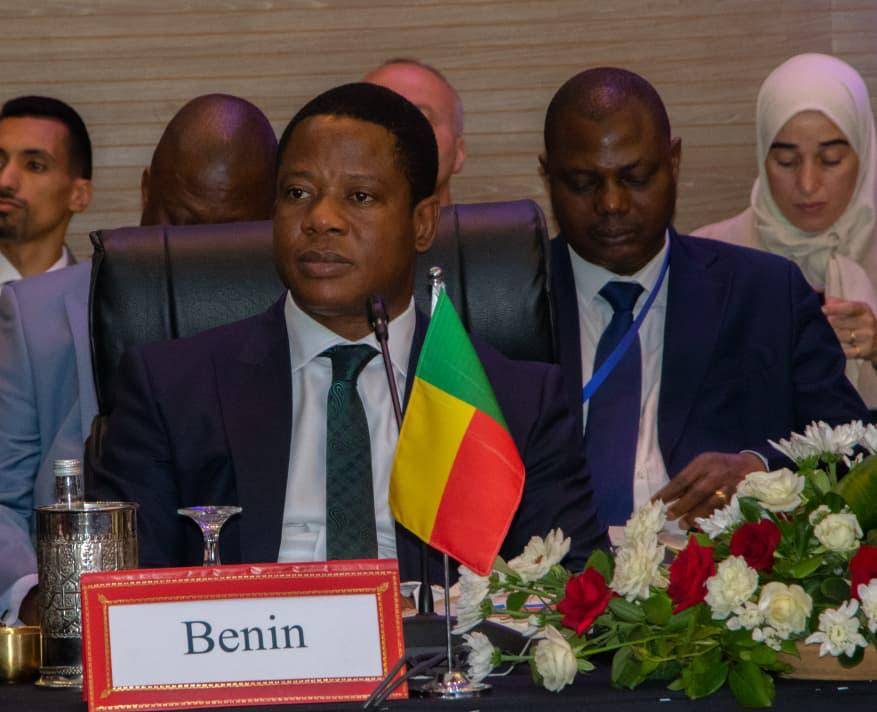
The Benin has reinforced its position as a pioneer in digital governance at the 17th CAFRAD Ministerial Forum held in Rabat, Morocco. On 14 July 2026, the country’s delegation, led by Minister Rodrigue Chaou, outlined a bold vision for transforming public administration into a key driver of economic development through innovation and digital reform.
Strategic gathering for Africa’s public service future
Held in the Moroccan capital—a historic hub for South-South cooperation—the forum brought together ministers, international experts, and senior officials to address the continent’s most pressing administrative challenges. As the flagship institution of the African Centre for Training and Administrative Research, CAFRAD has long shaped the evolution of public governance across Africa since its founding in 1964.
This year’s edition focused on the critical role of leadership in navigating volatile, uncertain, complex, ambiguous, and digitally driven environments—collectively referred to as the VICA(P)D framework. The Beninese delegation seized this platform to showcase how its national reforms align with global best practices and position the country as a regional model for modern governance.
Leading through change: Rethinking public sector leadership
The forum’s discussions were anchored in two high-level presentations that explored the future of public sector management. Dr Dieudonné Assouvi, Director-General of CAFRAD, delivered a keynote on adaptive leadership—highlighting the need to move beyond rigid bureaucratic structures. He emphasized the importance of agility in crisis response and real-time decision-making to ensure state continuity.
Professor Sehl Mellouli of Laval University in Canada then examined the intersection of political leadership and digital sovereignty. In an era dominated by artificial intelligence and cloud computing, he stressed that technological independence is no longer optional for African states—it is a cornerstone of national security and economic resilience.
Digital transformation as an economic catalyst
During the ministerial exchange, the Beninese delegation presented tangible results from its nationwide digitalization drive. Cotonou’s strategy hinges on the belief that streamlined public services can unlock private sector growth by cutting transaction costs and fostering a more business-friendly environment.
The country shared its progress in digitizing tax collection and customs procedures, which has not only secured public revenue but also eliminated bureaucratic bottlenecks that previously hindered trade. Additionally, the one-stop business registration portal allows entrepreneurs to launch companies in just hours, fueling youth entrepreneurship and attracting foreign direct investment.
Transparency has been a natural outcome of digitalization. By shifting interactions to online platforms, the government has reduced physical contact between officials and citizens, minimizing opportunities for corruption and building public trust in institutions.
Inclusive digital governance for all citizens
The Beninese delegation underscored that digital reform is not just about efficiency—it is about equity. The government has paired technological upgrades with policies to bridge the digital divide, ensuring no citizen is left behind.
From expedited civil registry services to streamlined judicial records and identity document issuance, the modernization drive is bringing essential administrative processes closer to the people. Whether in urban centers or remote regions, the reforms are helping citizens reintegrate into the formal economy and access opportunities on equal footing.
Preparing for the next phase: CAFRAD’s strategic roadmap
With the forum concluded, attention now turns to the 61st session of the CAFRAD Administrative Council. The gathering will focus on turning strategic discussions into actionable plans, including evaluating the organization’s performance, shaping future training programs for African administrators, and deepening South-South collaboration in public sector innovation.
By actively shaping these decisions, the Benin is sending a clear message: it is not merely adopting governance models but co-creating the administrative frameworks of the 21st century. For global partners and investors, this signals a nation committed to growth through modernization—a model for others to follow.