Five journalists and a human rights defender freed after forced military enrolment
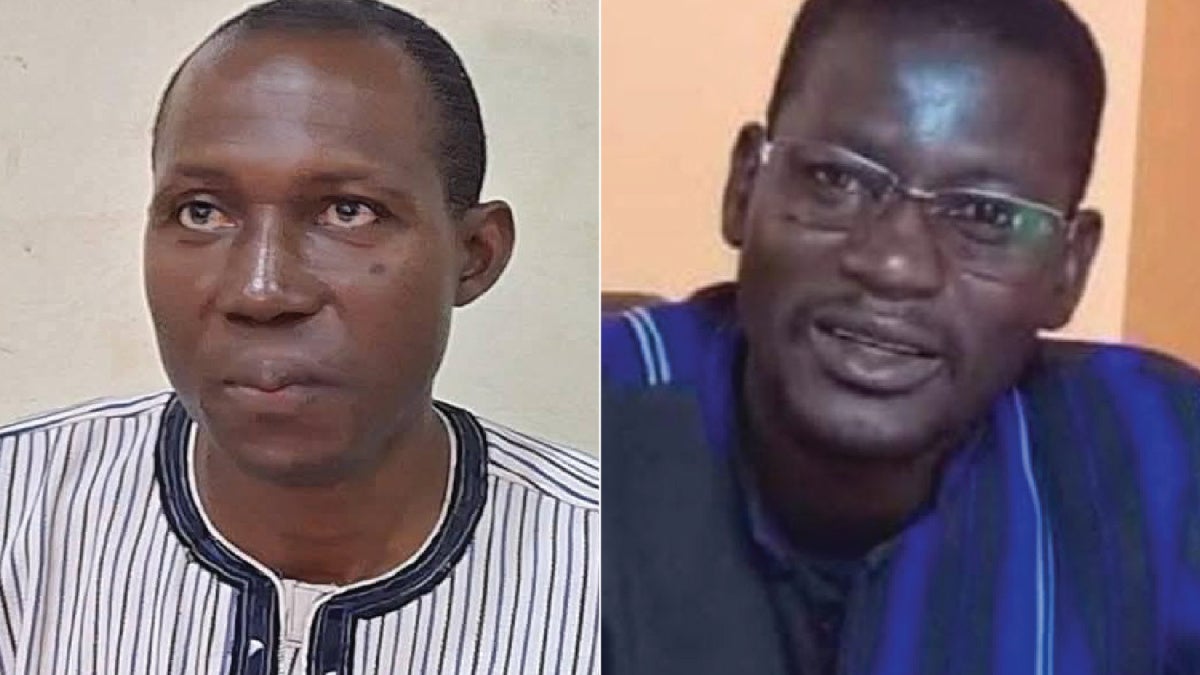
In early July 2025, the Burkina Faso government released five journalists and one human rights activist who had been forcibly conscripted into the military after criticising the ruling junta. While this marks a positive step, their release also casts a harsh light on the ongoing disappearances of others—some missing since 2024—with no trace of their whereabouts.
Background: arrests and forced conscription
On March 24, 2024, in the capital Ouagadougou, authorities detained three members of the Burkina Faso Journalists’ Association (AJB)—Guezouma Sanogo, Boukari Ouoba, and Phil Roland Zongo—alongside Luc Pagbelguem, a reporter for the private television channel BF1. Their crime? Speaking out against media freedom restrictions imposed by the junta. On April 2, a video surfaced online showing Sanogo, Ouoba, and Pagbelguem in military uniforms, raising serious concerns about their forced conscription. Zongo’s conscription was only publicly confirmed upon his release.
On June 18, 2024, Kalifara Séré, a commentator for BF1 TV, vanished after a meeting with officials from the Superior Council of Communication (CSC), the media regulator. He had previously questioned the authenticity of state-sponsored photos featuring the president. In October 2024, authorities admitted he had been conscripted—alongside two other journalists, Serge Oulon and Adama Bayala. The whereabouts of Oulon and Bayala remain unknown.
Beyond journalists, the junta has also targeted human rights defenders. On November 29, 2023, plainclothes agents abducted Lamine Ouattara, a member of the Burkinabè Movement for Human and Peoples’ Rights (MBDHP), from his home. Relatives later confirmed he was forcibly enrolled in the military.
Systematic repression through forced conscription
Human Rights Watch has documented how the junta exploits an emergency law to silence critics by conscripting journalists, human rights defenders, and even magistrates. While civilian conscription exists for national defence, such measures must comply with international standards—including informing conscripts of their service duration and providing avenues for appeal.
Governments may recruit civilians for defence, but conscription must never become a tool for silencing dissent. The Burkina Faso authorities must immediately release all remaining detainees and halt the use of conscription to punish media professionals and activists.