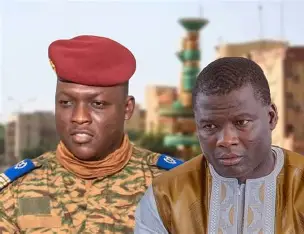
The political landscape within Burkina Faso continues to generate considerable discussion, particularly concerning the internal workings of its most critical decision-making bodies. Over recent weeks, the notable and extended absence of Commander Oumarou Yabré, who leads the nation’s intelligence services, has ignited a flurry of commentary and conjecture across political circles and digital platforms. While no official statement has been issued to clarify this discreet posture, it unfolds against a backdrop where matters of security governance remain paramount.
Observations from various sources and analysts point to emerging questions regarding a potential reordering of responsibilities within the security apparatus. Some theories suggest a more direct engagement from Captain Ibrahim Traoré in overseeing highly sensitive portfolios. Nevertheless, these assertions have not received confirmation from Burkinabè authorities and warrant a cautious interpretation.
In governance systems where security imperatives hold a central position, intelligence agencies represent a vital component of the decision-making framework. Their core mandate involves the collection, analysis, and dissemination of critical information, enabling authorities to anticipate threats and formulate appropriate responses. Consequently, any perceived alteration in their operational dynamics or hierarchical structure naturally draws the intense focus of observers, even in the absence of official pronouncements confirming such a reorganization.
Commander Oumarou Yabré’s conspicuous absence during the recent Tabaski celebrations further intensified these inquiries. For some commentators, such a lack of public appearance could simply stem from operational imperatives or a deliberate choice for discretion, a common practice within intelligence operations. Others, however, interpret it as fueling deeper questions about the internal power dynamics at play. Without an official explanation, drawing definitive conclusions remains premature.
Historical precedents indicate that periods of significant security pressure can sometimes lead leaders to exercise closer oversight of strategic dossiers. Such a practice, even if implemented, does not inherently signify disagreements among key officials. It may instead be a response to urgent coordination needs, an exceptional operational context, or a strategic intent to centralize certain critical decisions.
At this juncture, publicly available information does not substantiate claims of any deterioration in the relationship between Captain Ibrahim Traoré and Commander Oumarou Yabré. Burkinabè authorities have refrained from commenting on any prospective reorganization of security services or changes in the roles of principal figures within the security establishment.
Given the rapid dissemination of unverified information, prudence remains an essential guiding principle. The established facts are limited, and speculative narratives should not supersede verified intelligence. Any significant evolution within institutional structures must be assessed in light of officially confirmed elements or robustly corroborated evidence.