Gabon’s fight against high living costs: beyond supermarket solutions
Libreville, Friday, July 3, 2026 – For several years, the battle against the high cost of living has become a primary concern for African populations. In Gabon, this issue now holds a central position in public discourse, as rising prices significantly impact household finances daily.
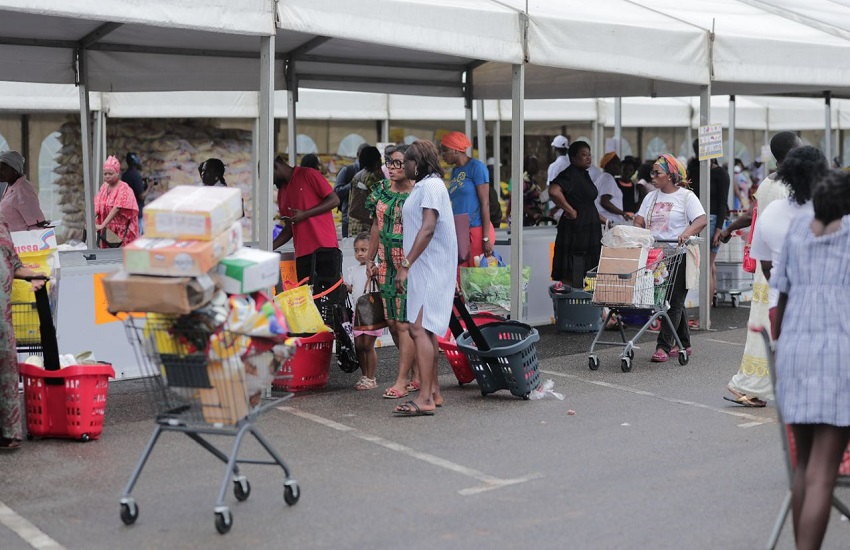
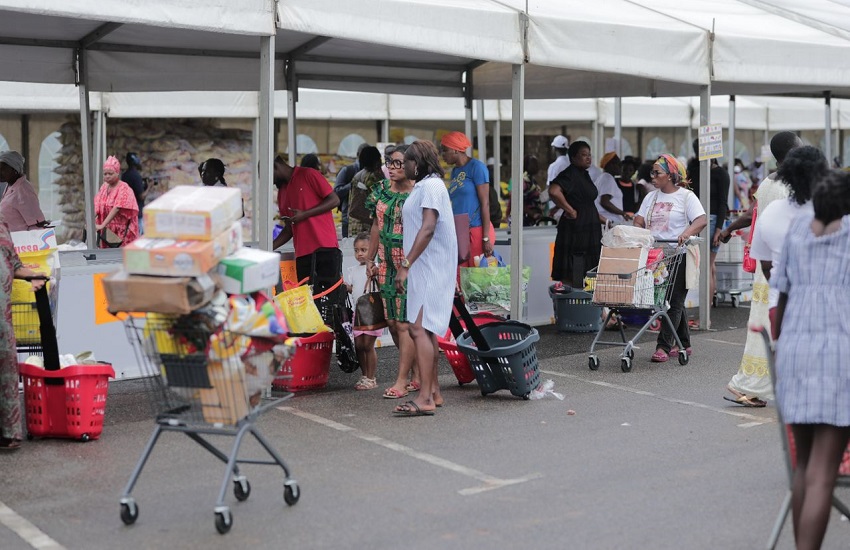
In response to this pressing situation, public authorities have implemented numerous measures. These include price controls, tax exemptions, subsidies, special commercial initiatives, tariff caps, and even large-scale markets organized by the Centrale d’Achat du Gabon (CEAG). Such actions reflect a legitimate desire to safeguard citizens’ purchasing power.
However, despite the proliferation of regulatory mechanisms, a key question remains: why do prices continue to be perceived as high even as measures to combat the high cost of living are repeatedly introduced? The answer may challenge decades of economic thinking. What if the high cost of living is not primarily a problem of prices, but rather one of insufficient wealth creation?
When price reduction policies reach their limits
Price reduction schemes undoubtedly play a crucial social role, offering temporary relief to households most vulnerable to economic hardship. The initiatives spearheaded by the Centrale d’Achat du Gabon perfectly exemplify this approach. By providing the public with occasional access to essential goods at more affordable rates, they address an immediate social need. Yet, an economy cannot sustainably rely on exceptional mechanisms.
Once these special operations conclude, consumers typically return to regular distribution channels, encountering the same economic pressures. Prices often revert to their previous levels because the fundamental factors determining them have not changed.
This reality does not suggest these mechanisms are ineffective. Instead, it indicates they primarily tackle symptoms rather than root causes. The true challenge, therefore, lies in understanding why prices remain structurally elevated and why administrative solutions struggle to yield lasting results for the African economy today.
High living costs reveal productive structure weaknesses
Most discussions surrounding the high cost of living tend to focus on the consumer experience. However, the problem often originates long before products reach a retailer’s shelf. An economy that heavily relies on imports for its consumption remains susceptible to international market volatility, maritime transport expenses, logistical constraints, and global supply chain disruptions. Every increase in overseas costs inevitably translates into higher prices paid by the local consumer.
The high cost of living thus emerges as a symptom of a deeper reality. A nation that imports the majority of its food also imports a portion of its inflation. Similarly, a country that exports its raw materials without processing them locally also exports potential jobs, future income, and purchasing power. From this perspective, the issue of high living costs transcends a simple debate about prices; it becomes a fundamental question of the economic model itself.
Produce, transform, employ: Gabon’s economic transformation imperative
The pivotal shift for Gabon could lie in its capacity to accelerate productive transformation. The country possesses significant assets, including vast forest resources, substantial mineral deposits, considerable agricultural potential, a strategic geographical position, and relative institutional stability. Despite these advantages, a significant portion of this wealth continues to leave the territory in raw form, only to be processed elsewhere.
Local transformation of raw materials represents far more than an industrial ambition today. It serves as a direct lever in the fight against the high cost of living. Each new factory creates jobs, each job generates income, and each income strengthens purchasing power. This enhanced purchasing power, in turn, supports consumption and stimulates the economy. The same logic applies to agriculture and livestock farming.
Developing local agricultural production, modernizing food supply chains, encouraging poultry farming, and supporting agro-industry can progressively reduce the nation’s food dependency. Beyond the potential reduction in certain costs, these sectors primarily offer an exceptional capacity for creating sustainable employment opportunities.
The future of the battle against the high cost of living may therefore be determined as much in agricultural farms, poultry operations, and processing units as in traditional price control mechanisms.
Cultivating a robust middle class
For an extended period, public policies concentrated on influencing prices. Perhaps the time has come to shift the focus of the debate toward incomes. A society does not become prosperous merely because prices are artificially suppressed. True prosperity emerges when the majority of its citizens possess sufficiently stable incomes to access essential goods and services, invest in education, plan for the future, and fully participate in the economy.
The expansion of the middle class stands as one of Gabon’s most strategic objectives in this regard. A dynamic middle class acts as a significant factor for economic and social stability. It bolsters domestic demand, stimulates private investment, and fosters the emergence of a national entrepreneurial ecosystem.
The genuine struggle against the high cost of living could thus be defined by the creation of productive jobs and sustainable incomes. From this viewpoint, purchasing power should no longer be seen as merely a consequence of growth. It must become one of its primary objectives, driving Gabon economic transformation.
The challenge of economic transparency
This transformation must be accompanied by a modernization of governance tools. The digitalization of price monitoring represents a particularly promising reform. Leveraging digital technologies makes it possible to track price fluctuations across the territory in real-time, identify abnormal discrepancies, enhance competition, and accurately measure the actual impact of public policies.
Economic data can evolve into a powerful instrument of regulation. It would enable a shift from management based on perceptions to governance grounded in facts. In an era where citizens demand greater transparency, this evolution could strengthen trust among consumers, businesses, and public authorities.
The debate on the high cost of living now extends beyond Gabon’s borders, impacting a large part of Africa. Governments across the continent face the same dilemma: how to protect populations without locking the economy into a perpetual cycle of subsidies and price corrections? Gabon has the opportunity to offer an innovative answer to this critical question.
By maintaining social support mechanisms while simultaneously accelerating local raw material transformation, agricultural development, livestock farming, industrialization, productive job creation, market digitalization, and the expansion of the middle class, the nation can gradually shift the fight against the high cost of living from the realm of compensation to that of comprehensive transformation.
The question is no longer how long the state can continue to lower certain prices. The real question is how many Gabonese citizens will soon be able to live with dignity thanks to stable incomes, derived from an economy that creates value, without constantly relying on corrective mechanisms to preserve their purchasing power.
This marks the crucial distinction between an economy that merely manages consequences and one that proactively addresses root causes. And it is perhaps here that the lasting solution to the high cost of living truly lies.