President Tshisekedi backs inclusive national dialogue after religious leaders’ meeting
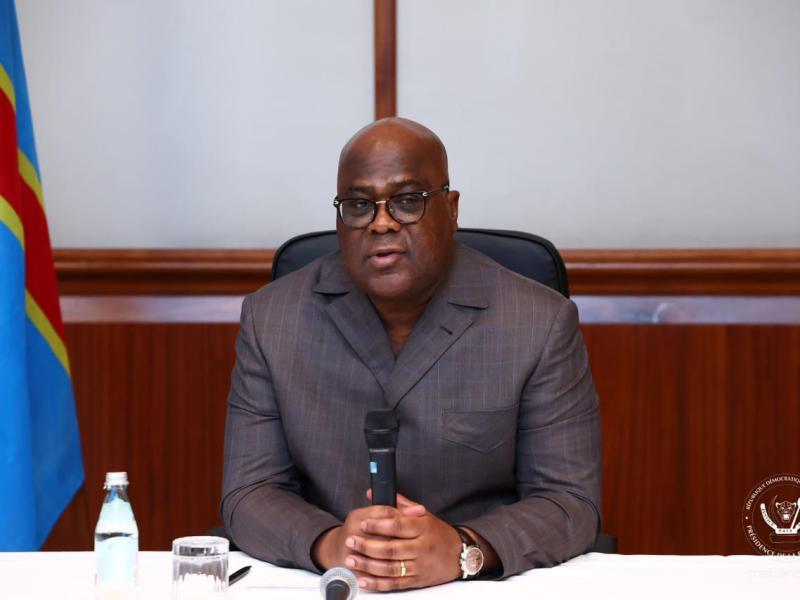
In a landmark move to foster national cohesion, President Félix Tshisekedi convened an emergency meeting with representatives of religious denominations at the City of the African Union in Kinshasa today. The gathering marks a decisive step toward launching an inclusive national dialogue process, as confirmed by sources within the religious community.
The initiative follows months of behind-the-scenes consultations, with Tshisekedi initially resisting calls for a structured dialogue platform. However, mounting pressure from civil society, opposition groups, and international partners appears to have shifted his stance, culminating in this historic encounter.
From resistance to commitment: Tshisekedi’s evolving position
Sources close to the presidency revealed that Tshisekedi had privately dismissed the idea of a formal dialogue as recently as the start of the year. Yet, the deteriorating socio-political climate—marked by heightened tensions between security forces and armed groups in the eastern provinces—has prompted a strategic reevaluation. The president’s willingness to engage religious leaders, who wield significant moral authority across the country, underscores the gravity of the situation.
“This dialogue is not merely symbolic,” stated one attendee who requested anonymity. “It represents a recognition that no single group can resolve the nation’s challenges alone.”
Next steps: A roadmap for dialogue
While the details of the proposed dialogue remain under wraps, insiders indicate that a comprehensive roadmap will be unveiled within days. The framework is expected to prioritize key national priorities, including:
- Addressing the persistent insecurity in the eastern provinces
- Strengthening governance and institutional transparency
- Fostering social cohesion amid rising ethnic and regional divisions
- Revitalizing the economy through inclusive policies
The inclusion of religious leaders is widely seen as a calculated move to legitimize the process. Historically, faith-based organizations have played a pivotal role in mediating conflicts and advocating for peace, particularly in regions plagued by violence.
Reactions and expectations
Political analysts have reacted cautiously to the announcement. Some praise Tshisekedi’s flexibility, while others question the feasibility of such a broad-based dialogue in a deeply divided nation. Opposition figures have called for concrete guarantees, including the participation of all political stakeholders and clear timelines for implementation.
Civil society leaders, however, have welcomed the move with cautious optimism. “Dialogue is the only path to sustainable peace,” remarked a prominent activist. “But words must translate into action. The roadmap must be practical, inclusive, and time-bound.”
As the nation watches closely, the success of this initiative could redefine the political landscape of the Democratic Republic of the Congo. The coming weeks will reveal whether Tshisekedi’s gamble pays off—or if the challenges ahead prove too formidable to overcome.