Western Sahara conflict: polisario faces crushing military disadvantage against Morocco

A senior Polisario leader’s death in a precision strike has laid bare the movement’s military inferiority and diplomatic isolation. Despite calls for dialogue, the movement struggles to reconcile its stated positions with ground realities.
The killing of Lahbib Mohamed Abdelaziz, a key figure in the Sahrawi armed forces and son of a former Polisario president, underscores the stark military asymmetry in the Western Sahara conflict. His death, reportedly from a high-precision drone strike during a withdrawal operation, adds to the toll of Sahrawi lives lost to advanced aerial warfare in recent years. With outdated equipment—often modified Spanish Land Rovers—the movement’s fighters face an insurmountable technological gap.
Jalil Mohamed Abdelaziz, Polisario’s delegate in Madrid, acknowledged the “steep price” of defending Sahrawi dignity in the face of Morocco’s overwhelming firepower. Yet, despite these losses, the movement clings to the possibility of dialogue. Abdoullah Arabi, the group’s representative in Spain, insists on maintaining communication channels, stating that the Polisario “is accustomed to engaging in talks under all circumstances”.
Diplomatic paralysis amid shifting sands
This contradictory stance stems from growing international isolation. While Morocco has secured backing from major Western powers like the United States and France, the Polisario’s diplomatic leverage has waned. Spain’s 2022 endorsement of Morocco’s autonomy plan marked a turning point, a move Arabi condemned as hypocrisy given Madrid’s alleged silence on Sahrawi casualties.
Territorial confinement and unyielding resistance
The physical divide of the 1980s sand berm—stretching across 250,000 square kilometers—has left the movement confined to 20% of the region’s interior. Though activists like Aminatou Haidar emphasize the resilience of Sahrawi society, local knowledge of the desert no longer offsets Morocco’s military dominance. The fortified barrier remains an impassable obstacle, reinforcing Rabat’s control over the coastal zones.
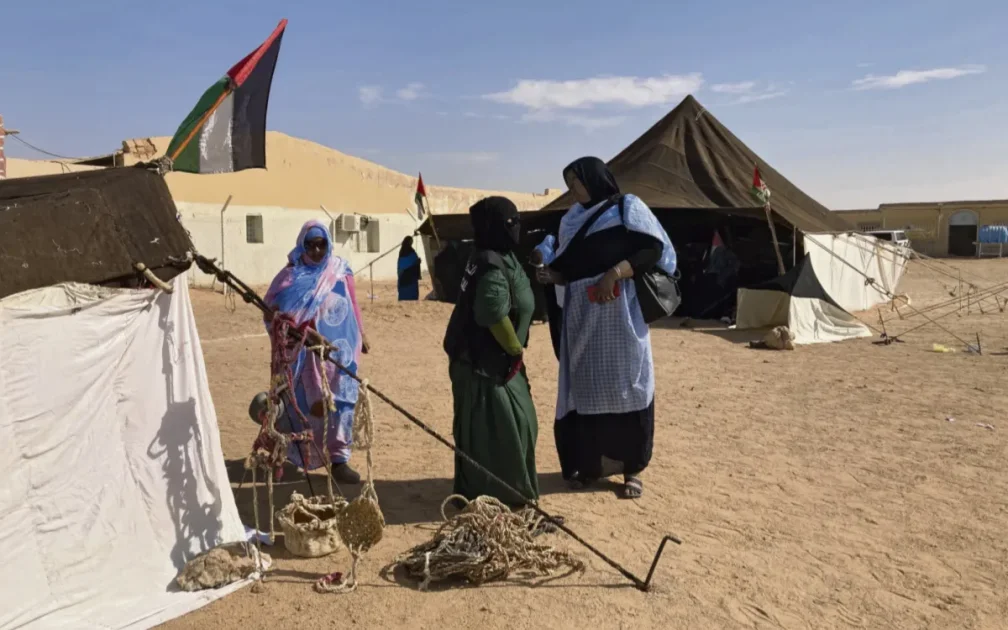
In the camps around Tindouf, Algeria, where 175,000 people reside, Brahim Ghali’s recent remarks hinted at a softened rhetoric. The Polisario leader framed his movement as a potential peaceful partner for neighboring states, including Morocco, while reiterating demands for strict adherence to UN resolutions. Yet the movement’s military setbacks and eroding global support underscore a widening chasm between its ambitions and realities on the ground.