Six journalists face judicial persecution in Niger amid press freedom crackdown
The arrest of six journalists in Niamey on November 2 has escalated into a full-blown crisis for press freedom in Niger. Three of these media professionals remain arbitrarily detained, while the others have been released on bail but still face serious charges. The International Federation for Human Rights (FIDH) and the World Organisation Against Torture (OMCT), through the Observatory for the Protection of Human Rights Defenders, have condemned these actions as flagrant violations of press freedom and called for the immediate and unconditional release of all detained journalists.
Legal harassment targets media professionals covering controversial events
The arrests followed the publication of an invitation on social media for Radio-télévision Saraounia (RTS) to cover a press conference organized by the Solidarity Fund for the Safeguarding of the Homeland (FSSP)—a military-backed structure collecting mandatory contributions from workers, NGOs, and citizens to fund military operations against extremist groups. The event coincided with a discussion on RTS titled “Le club de la presse” held on October 31, 2025.
The six journalists implicated in this case are:
- Moussa Kaka – Former RFI correspondent and current director of RTS;
- Abdoul Aziz Idé – Journalist at RTS (Zarma service);
- Ibro Chaibou – Presenter of “Le club de la presse” and RTS editorial secretary;
- Youssouf Seriba – Editor-in-chief of Échos du Niger;
- Oumarou Kané – Founder of the satirical weekly Le Hérisson;
- Souleymane Brah – Editor-in-chief of La voix du peuple.
All six face charges of “complicity in disseminating information likely to disturb public order” under Niger’s cybercrime law, which was amended in June 2024 to reintroduce prison sentences for offenses such as defamation, insults, or the dissemination of data deemed threatening to public order. The charges carry potential penalties of two to five years in prison.
Arbitrary detention and repeated press freedom violations
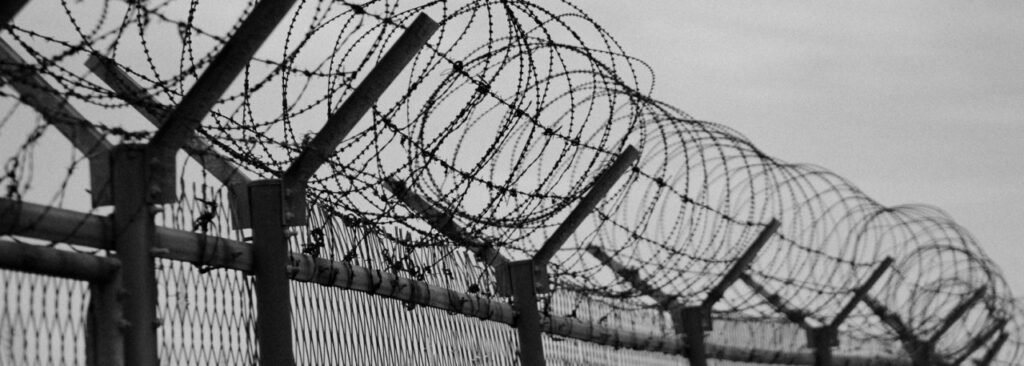
On November 3, the investigating judge at the Niamey High Court placed Ibro Chaibou, Youssouf Seriba, and Oumarou Kané under detention at the high-security prison of Kollo, located about 50 km south of Niamey. Meanwhile, Moussa Kaka, Abdoul Aziz Idé, and Souleymane Brah were released on bail after hours of questioning, though their charges remain pending.
This is not the first time these journalists have faced persecution. Moussa Kaka, in particular, has a history of arbitrary detention dating back to 2007 under the regime of Mamadou Tandja, when he was charged with “complicity in undermining state authority” for reporting on the Niger Movement for Justice (MNJ). He was released in 2008 following international condemnation. Radio France Internationale (RFI), where Kaka previously worked, has been banned in Niger since August 2023.
The Observatory highlights that this crackdown is part of a broader pattern of repression since the July 27, 2023, military coup, which has seen severe restrictions on civic space. Human rights defenders, journalists, and opposition voices have faced repeated arrests, arbitrary detentions, and judicial harassment. Notable cases include:
- Moussa Tchangari, a human rights defender arbitrarily detained for nearly 12 months;
- Hamid Mahmoud, Mahaman Sani, and Massaouda Jaharou, journalists from Sahara FM in Agadez, arrested in May 2025 for reporting on alleged intelligence cooperation breakdowns between Niger, Russia, and Turkey. While Jaharou was released, Mahmoud and Sani remain in detention at the Kollo prison.
International calls for justice and legal reform
The Observatory has urged Nigerien authorities to immediately release all detained journalists—Ibro Chaibou, Youssouf Seriba, Oumarou Kané, Hamid Mahmoud, and Mahaman Sani—and drop all charges against them and the others still under investigation. It has also called for a review of the cybercrime law to ensure it aligns with international human rights standards, particularly Article 19 of the International Covenant on Civil and Political Rights (ICCPR) and Article 9 of the African Charter on Human and Peoples’ Rights, which protect freedom of opinion and expression.
The FIDH and OMCT have warned that the 2024 amendments to the cybercrime law—introducing prison sentences for vaguely defined offenses—could be weaponized to suppress dissent, including by targeting human rights defenders and journalists. Since the military takeover, the National Council for the Safeguarding of the Homeland (CNSP), Niger’s ruling military body, has systematically restricted civic freedoms, raising serious concerns about the country’s democratic future.
As the international community watches, the fate of these journalists hangs in the balance, symbolizing the broader struggle for press freedom and human rights in Niger.