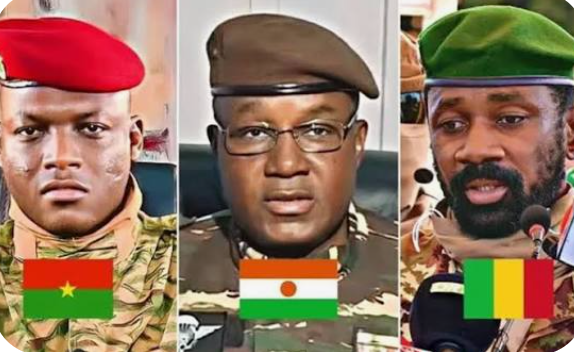
In the heart of the Sahel, a once-solid alliance is facing an unprecedented crisis. The Alliance of Sahel States (AES)—a coalition uniting Mali, Burkina Faso, and Niger against shared security threats—now stands at a crossroads. Despite public declarations of unity, internal tensions are threatening to unravel the bloc’s cohesion. A leaked intelligence report from Burkina Faso has raised serious questions about Mali’s leadership and its growing ties with Russian-backed networks.
What began as a strategic partnership against terrorism and regional instability appears to be shifting under the weight of external influence. According to the classified document, Moscow’s influence extends far beyond military advisors—it has allegedly seeped into Mali’s highest political, military, and media circles. The list of individuals cited in the report reads like a who’s who of Mali’s power structure, including close aides to President Assimi Goïta, high-ranking military officials, and even key media personalities.
a web of influence: who’s pulling the strings?
The leaked intelligence dossier names several figures allegedly connected to Russian operatives. Among them are:
- Yamoussa Camara, a senior advisor to President Goïta;
- Modibo Maïga, a prominent diplomat and former prime minister;
- Moussa Diakité, a key figure in Mali’s foreign policy;
- Bakari Koré and Harouna Haidara, high-ranking military officers;
- Sékou Bolly, a militia leader with alleged ties to Russian mercenaries;
- Issa Cissé, a journalist reportedly spreading pro-Russian narratives.
For Burkina Faso, this revelation is nothing short of alarming. If Mali’s decisions are being shaped by Russian interests rather than the collective goals of the AES, the alliance’s entire security strategy could be at risk. The fear is that Bamako’s alignment with Moscow could redefine the bloc’s priorities, leaving Niger and Burkina Faso to pay the price.
sovereignty at stake: trading one dependency for another
The AES was founded on a bold promise: breaking free from Western influence and forging a new path toward regional autonomy. Yet, as Mali’s alleged entanglement with Russian networks deepens, critics argue that the country is merely swapping one set of foreign pressures for another. The growing presence of foreign mercenaries and shadowy advisors has sparked unease among Mali’s neighbors, particularly in Niger, where skepticism toward Bamako’s intentions is growing.
There’s a growing sense that Mali’s military and political choices may no longer reflect the interests of the Sahel but instead serve Moscow’s broader geopolitical agenda. This shift has fueled mistrust within the alliance, with Burkina Faso and Niger questioning whether Mali can still be a reliable partner in the fight against insurgency and instability.
a fragile alliance on the brink
The future of the AES now hangs in the balance. Can the bloc maintain its unity when one of its members is suspected of compromising its own sovereignty? The leaked report has already prompted Burkina Faso to reconsider its involvement, wary that instability in Mali—or decisions dictated from Moscow—could spill over into the wider region.
For many analysts, the alliance’s survival depends on whether Mali can reclaim control of its national decisions. If it fails to do so, the AES risks collapsing under the weight of its own contradictions—a fate that would leave the Sahel more divided than ever, betraying the very principles it was meant to uphold.