UN warns of growing authoritarianism and repression in Mali
The United Nations High Commissioner for Human Rights, Volker Türk, has raised urgent concerns about the deteriorating political situation in Mali, where democratic processes are being eroded under an increasingly repressive regime.
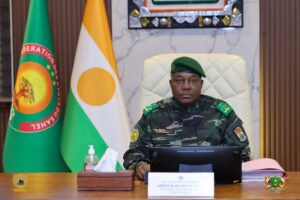
The alarm was sounded following a series of legal and institutional changes implemented by the military junta since 2020, consolidating power in the hands of General Assimi Goïta. These measures have effectively closed the door on any democratic elections in the foreseeable future, according to Volker Türk.
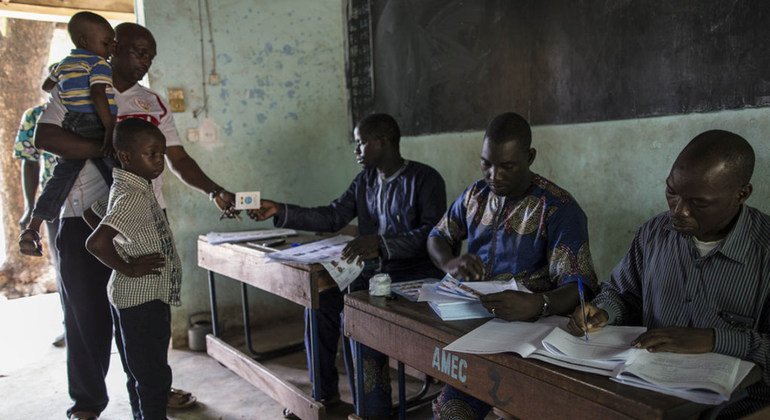
Indefinite suspension of elections
Nearly five years after the overthrow of President Ibrahim Boubacar Keïta in a military coup condemned by the UN Security Council, promises of transitioning back to civilian rule have faded. Since Keïta’s election in 2018, no presidential elections have taken place in the country.
On July 8, a new law granted General Goïta the power to extend his mandate indefinitely « as many times as necessary until the country is pacified. » Earlier, a presidential decree had already dissolved all political parties and organizations. The High Commissioner for Human Rights emphasized that these actions violate citizens’ fundamental rights to « participate in public affairs, vote, and stand for election. »
Widespread repression
The political drift has been accompanied by a tightening of security measures. Former Prime Minister Moussa Mara, a vocal critic of the regime, was arrested on August 1 for « undermining state credibility and opposing legitimate authority » after posting a message on X expressing solidarity with political detainees.
Volker Türk condemned the « weaponization of the law against dissent » and warned of a surge in arrests targeting Malians from all walks of life, using charges similar to those faced by Mara to silence opposition.
Human rights violations against civilians
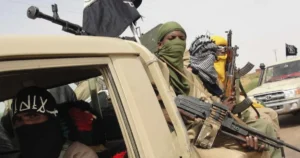
Mali continues to face deadly jihadist attacks, primarily by the Group for the Support of Islam and Muslims (GSIM), an Al-Qaeda affiliate, and the Islamic State in the Greater Sahara (ISGS). These groups operate across the region, including along the borders of Mali, Burkina Faso, and Niger.
While the Malian army, supported by the Russian paramilitary group Africa Corps (formerly Wagner Group), conducts counterterrorism operations, civilians bear the brunt of the violence. According to the UN, since April, there have been « hundreds of extrajudicial executions, arbitrary arrests, enforced disappearances, and kidnappings » attributed to all parties involved in the conflict.
The combination of indefinite election delays and sweeping repression risks plunging Mali into a prolonged cycle of political deadlock and violence, the UN warns.