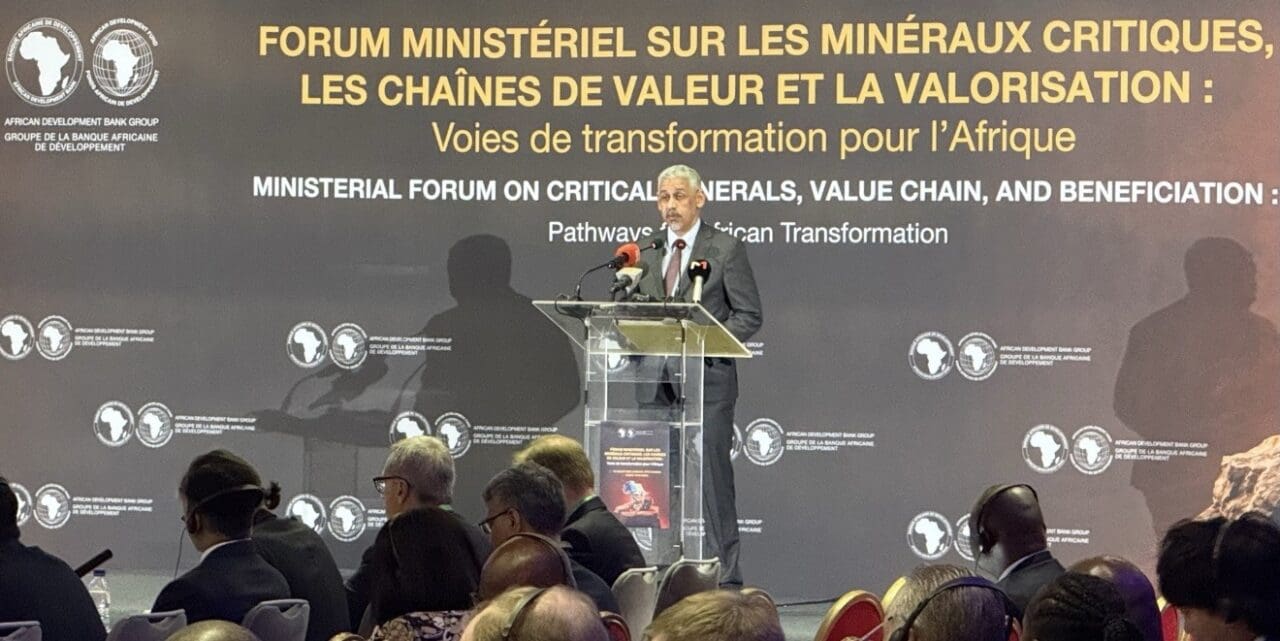
Ministers from African nations abundant in critical minerals convened in Abidjan to forge a unified strategy, aiming to harness their vast underground wealth—valued at $29.5 trillion—to fuel economic, industrial, and social transformation. The focus? Local value addition, sustainable financing, and building robust regional supply chains to meet surging global demand.
On July 10, policymakers specializing in Mines, Energy, Industry, Green Economy, and Natural Resources gathered alongside representatives from the African Union Commission, the African Continental Free Trade Area (AfCFTA) secretariat, the UN Economic Commission for Africa, regional development banks, financial institutions, and global investors. Their shared mission: redefine Africa’s role in the global critical minerals market.
A bold new mineral pact for Africa
The conference marked a turning point, with delegates emphasizing the need to shift from raw material exports to integrated value creation. The goal is clear—maximize the continent’s mineral potential while ensuring benefits reach local communities through sustainable practices.
Shifting the narrative: Africa’s mineral revolution
Opening the talks, the President of the African Development Bank (AfDB), Sidi Ould Tah, framed the meeting as a paradigm shift in how Africa manages its natural resources. “This isn’t just about extraction—it’s about ownership, transformation, and shared prosperity,” he stated.
Ould Tah called for urgent reforms, highlighting that Africa’s over 100 development finance institutions collectively hold just 1% of the world’s funding capacity. “We must consolidate, recapitalize, and align these institutions to unlock Africa’s true mineral potential,” he argued. He also underscored the need for resilient infrastructure and localized industries to ensure mining profits stay on the continent.
Côte d’Ivoire’s mineral strategy takes center stage
The Ivorian Minister of Mines, Petroleum, and Energy, Mamadou Sangafowa-Coulibaly, echoed the call for continental solidarity. “No single nation can harness these resources alone. We must collaborate to build regional value chains that lift all our economies,” he stressed.
Highlighting Côte d’Ivoire’s vast untapped potential, he revealed that up to 75% of the country’s landmass may contain critical minerals—a cornerstone of President Alassane Ouattara’s vision to elevate Côte d’Ivoire to upper-middle-income status by 2030.
To achieve this, Abidjan is rolling out a 2026–2040 mineral and energy roadmap, priced at 38 trillion West African CFA francs. Private sector investment is expected to cover 88% of the funding, signaling a shift toward market-driven growth.
The global race for Africa’s minerals intensifies
Africa holds 30% of the world’s critical minerals, including cobalt, lithium, graphite, rare earths, platinum-group metals, copper, manganese, and nickel. Its mineral wealth is estimated at $29.5 trillion—eight times the continent’s annual GDP and nearly 20% of global reserves, with $8.6 trillion still untapped.
Meanwhile, global demand is skyrocketing. By 2040, platinum-group metals needs could surge over 1,000%, lithium 842%, and copper 88% compared to 2023 levels. The electric vehicle and battery value chain alone could expand from $7 trillion in 2030 to $59 trillion by 2050.
Why Africa must act now
The world’s transition to clean energy has turned Africa’s mineral deposits into a geopolitical and economic game-changer. Leaders in Abidjan made it clear: the time to break free from the raw material export model is now. Their strategy? Turn critical minerals into engines of industrialization, job creation, and long-term prosperity for the continent.