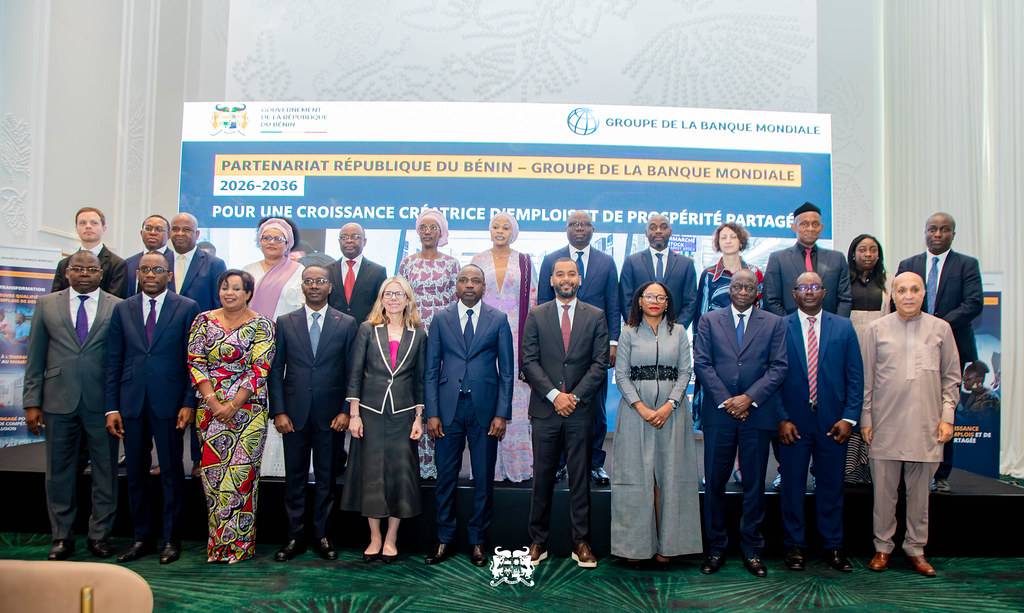
The Sofitel Cotonou Marina Hotel & Spa buzzed with anticipation on Friday, July 17, 2026, as officials from the Bénin government and the World Bank officially launched the Country Partnership Framework (CPP) for 2026-2036. This landmark agreement charts a bold course for the nation’s future, anchored in three transformative pillars: human capital development, productive infrastructure, and youth employment. Designed to align with Alafia Bénin 2060, the country’s long-term vision, this decade-long framework signals a new chapter in economic progress.
a strategic reset for Bénin’s economic trajectory
The launch event at the Sofitel was more than a ceremonial milestone—it marked a fundamental rethinking of how the World Bank will support Bénin’s growth over the next ten years. Government officials, international diplomats, and private sector leaders gathered to witness the birth of a framework that goes beyond incremental updates. It represents a full-scale overhaul of financial and technical cooperation, tailored to meet the evolving needs of a nation at a critical crossroads in its political and economic history.
The presence of Anna Bjerde, World Bank Managing Director of Operations, underscored the strong confidence of global donors in Bénin’s ongoing structural reforms. Her attendance highlighted the international community’s recognition of the government’s commitment to macroeconomic stability and inclusive development.
economic transformation as the core mission
The CPP 2026-2036 is not merely about sustaining growth—it’s about reshaping Bénin’s economy into one that is competitive, resilient, and equitable. The framework introduces a decade of predictable financing, enabling the country to launch major infrastructure projects without compromising fiscal balance. This steady flow of capital and expertise is engineered to unlock private investment, both domestic and foreign, fostering a self-sustaining cycle of economic expansion.
three pillars to drive structural change
The partnership focuses on three interconnected domains to ensure broad-based development:
- Human capital development: A skilled, healthy workforce is the backbone of any thriving economy. The CPP prioritizes improvements in public health, nutrition, and vocational training to align education with market demands. The goal is to equip young Béninois with the skills needed to thrive in evolving industries.
- Critical infrastructure expansion: Persistent bottlenecks in energy, digital connectivity, and transport have long hindered business competitiveness. The framework commits substantial investment to modernize these sectors, particularly by improving links between agricultural regions, urban centers, and the Port of Cotonou. These upgrades aim to cut logistics costs and boost export capacity.
- Private sector-led growth and job creation: Small and medium enterprises (SMEs) are positioned as the engines of sustainable employment. The CPP supports policy reforms to simplify business regulations, expand access to finance for entrepreneurs, and empower women and youth through targeted entrepreneurship programs.
youth employment: the litmus test of success
With over half of its population under 25, Bénin faces a pressing demographic challenge—and opportunity. Aristide Medenou, Minister of Economy, Finance, and Cooperation, emphasized that youth employment is not just a social priority but a strategic economic imperative. The CPP integrates technical assistance with national industrialization goals, such as the Glo-Djigbé Industrial Zone, to create lasting jobs in high-value sectors like agro-processing. This approach aims to reduce rural-urban migration by offering meaningful local opportunities.
building resilience across the nation
Sustainable growth cannot thrive in isolated urban bubbles. The CPP embeds resilience and inclusivity into every project, particularly in underserved northern and peripheral regions. By improving access to clean water, electricity, and rural roads, the program seeks to address structural vulnerabilities and strengthen national cohesion. These measures are vital in a West African context marked by climate and security uncertainties.
global recognition and long-term partnership
Ms. Bjerde lauded Bénin’s strategic leadership, praising the administration’s vision under the President’s guidance. She described the CPP’s timing as ideal for translating macroeconomic planning into tangible benefits for entrepreneurs, farmers, and families nationwide. This endorsement reinforces Bénin’s reputation as a reform leader within international financial institutions and signals the World Bank’s role as a committed long-term partner, ready to adapt financing mechanisms to ground realities.
a path to emergence by 2036?
The CPP 2026-2036 sets the stage for a transformative decade. By addressing human development, infrastructure, and private sector dynamism in unison, Bénin and the World Bank are charting a bold path toward inclusive prosperity. Success hinges on rigorous implementation, transparent governance, and the ability of public institutions and local businesses to absorb and deploy investments effectively. If Cotonou’s promises translate into tangible progress across the country, Bénin could emerge as a leading example of inclusive economic transformation in West Africa. The countdown has begun.