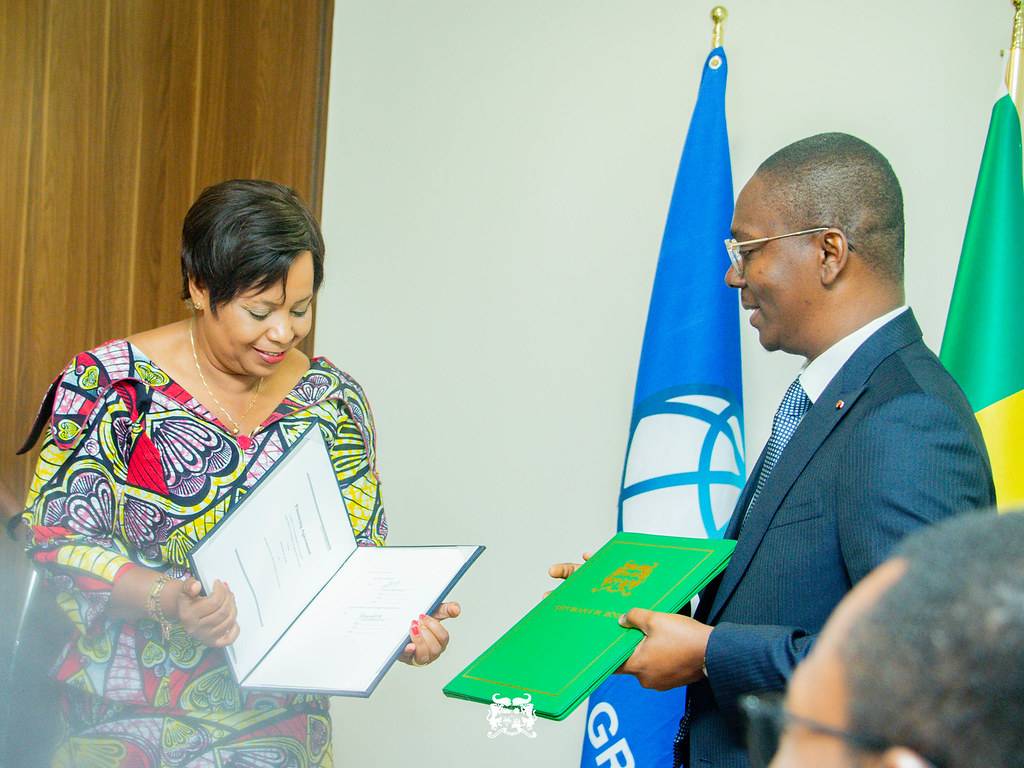
The structural transformation of Bénin’s economy has just taken a decisive leap forward. In a landmark agreement signed in Cotonou, the government and the World Bank formalized two major financing deals totaling $320 million USD. These investments are set to redefine the nation’s economic trajectory by strengthening energy independence, revitalizing agriculture, and investing in human capital—key pillars for sustainable growth and social progress.
Against the backdrop of the modern Cité ministérielle in Cotonou, officials from the executive branch, the World Bank, and international partners convened to seal this strategic partnership. Far more than a financial transaction, this collaboration embodies a bold vision: one that balances heavy infrastructure with inclusive development to build a resilient and dynamic economy.
Dogo-Bis Dam: Powering growth across the Ouémé Valley
The first tranche, amounting to $150 million USD, is entirely dedicated to the construction of the Dogo-Bis multi-purpose hydro dam. This project is not just another dam—it’s a game-changer for Bénin’s energy and agricultural sectors.
On the energy front, Dogo-Bis will significantly expand the country’s electricity generation capacity, reducing reliance on imported power from neighboring countries—a persistent vulnerability for local industries. As Édouard Dahome, Minister of Energy, Water and Mines, emphasized, the dam will inject stability into the Ouémé Valley by supplying affordable, reliable electricity, unlocking new opportunities for businesses and communities alike.
But the benefits extend beyond the grid. By securing year-round water supply, the dam will catalyze agricultural transformation. The Ouémé Valley, long constrained by water scarcity and limited processing infrastructure, is poised to become a thriving agro-industrial hub. The government aims to stabilize agricultural output in all seasons and attract private investment in local food processing—turning the valley into an engine of rural prosperity.
ALAFIA I: Investing in people for long-term prosperity
While concrete and steel lay the foundation for growth, they are meaningless without a healthy, skilled workforce. That’s where the second agreement comes in—$170 million USD allocated to ALAFIA I, the *“Nourish Bénin for the Future”* program.
This initiative targets the root of economic development: early childhood, nutrition, and maternal health. By delivering integrated, high-quality services, Bénin is prioritizing prevention over treatment. Research consistently shows that investments in early childhood yield the highest returns in public policy—lower health costs, higher school enrollment, and a more productive future workforce.
ALAFIA I is designed to ensure that growth is not just measured in GDP figures, but felt in the daily lives of citizens. A healthier, better-nourished population means stronger families, more resilient communities, and a foundation for inclusive progress.
Synergy in action: Connecting energy, food, and people
The most powerful aspect of this financing package is its interconnectedness. As Hugues Oscar Lokossou, Minister Delegate for External Resource Mobilization and Debt Management, pointed out, these projects are designed to reinforce each other.
ALAFIA I’s focus on nutrition and public health will support ALAFIA I’s long-term goal of a healthier workforce, while Dogo-Bis’s energy and water supply will enable agro-industrial expansion. Together, they create a virtuous cycle: surplus agricultural production in the Ouémé Valley can feed urban and rural centers, cutting food import costs, while improved public health ensures a robust labor force ready to power industrial growth. Enhanced territorial connectivity further ensures that these gains are distributed nationwide.
A blueprint for sustainable, inclusive development in West Africa?
The World Bank’s $320 million commitment is a vote of confidence in Bénin’s economic governance and stability. In a region where uncertainty often deters international backers, Cotonou is positioning itself as a preferred destination for development finance.
The overarching goal is clear: transition from a transit-based, subsistence economy to a semi-industrial, diversified, and resilient one. By emphasizing sustainable infrastructure and inclusive growth—particularly for rural women and children—Bénin is pioneering a model that leaves no one behind.
The July 17 signing wasn’t just a bureaucratic milestone; it was a cornerstone for the nation’s future. By simultaneously investing in the Ouémé Valley’s productive energy and the nation’s youth through ALAFIA I, Bénin has recognized a timeless truth: lasting economic power requires a strong, valued human capital. The real test now lies in execution—something both citizens and analysts are watching closely.