With a clear vision to elevate its agricultural exports on the global stage, the government of Bénin, under President Romuald Wadagni’s leadership, is rolling out groundbreaking initiatives. From a cutting-edge vitroplant production hub in Glo-Djigbé to a state-of-the-art fruit terminal at Cotonou’s international airport, the country is redefining its agricultural value chain. This strategic overhaul prioritizes economic impact and technological self-reliance, marking a significant milestone in the nation’s farming revolution.
reimagining Bénin’s agricultural future
For generations, agriculture has been the backbone of Bénin’s economy, yet the sector has long grappled with systemic challenges: exporting raw, unstandardized produce and suffering substantial post-harvest losses due to weak logistics. The government’s new approach shifts the paradigm from mere production to full-spectrum value chain control, capturing maximum added value.
By focusing on high-demand global markets like pineapple, cashew nuts, and mango, Bénin is targeting lucrative opportunities that demand strict quality standards. The economic ripple effects are substantial—boosting export revenues, stabilizing incomes for local farmers, and fostering skilled employment in advanced technological and logistical infrastructures. Through the Projet d’Appui à la Compétitivité des Filières Agricoles et à la Diversification des Exportations (PACOFIDE), the country is transitioning from subsistence farming to a competitive agro-industry.
glo-djigbé: the seed of agricultural innovation
At the heart of this transformation lies the Glo-Djigbé Special Economic Zone, home to a soon-to-be-completed industrial vitroplant production unit. The facility’s annual capacity of 13.5 million vitroplants is a game-changer for the nation’s farming landscape.
« Seed technology is the cornerstone of agricultural transformation. No nation can achieve agricultural revolution without controlling its seed industry, » declared Adin Yeton Bloukounon Goubalan, Minister of Agriculture, Livestock, and Fisheries, during a recent inspection.
The economic benefits of this facility are twofold. For farmers, it promises access to healthy, uniform, and high-yielding plant material, eliminating the unpredictability of traditional seeds that often undermined harvests. These disease-resistant, internationally compliant plants will ensure consistent quality and higher productivity per hectare, optimizing production costs and sharpening Bénin’s competitive edge.
To solidify this technological leap, the government is developing 1,000 hectares at the former Glo-Djigbé airport site into elite and demonstration fields. This open-air laboratory will validate the performance of new pineapple vitroplants before scaling up distribution, ensuring farmers achieve maximum returns on their investments.
Cotonou’s fruit terminal: the logistical game-changer
Producing premium-quality fruits is only half the battle; without efficient logistics, perishable goods risk spoiling before reaching global markets. The PACOFIDE’s second pillar addresses this gap with a modern fruit terminal at Cotonou’s Bernardin Gantin International Airport.
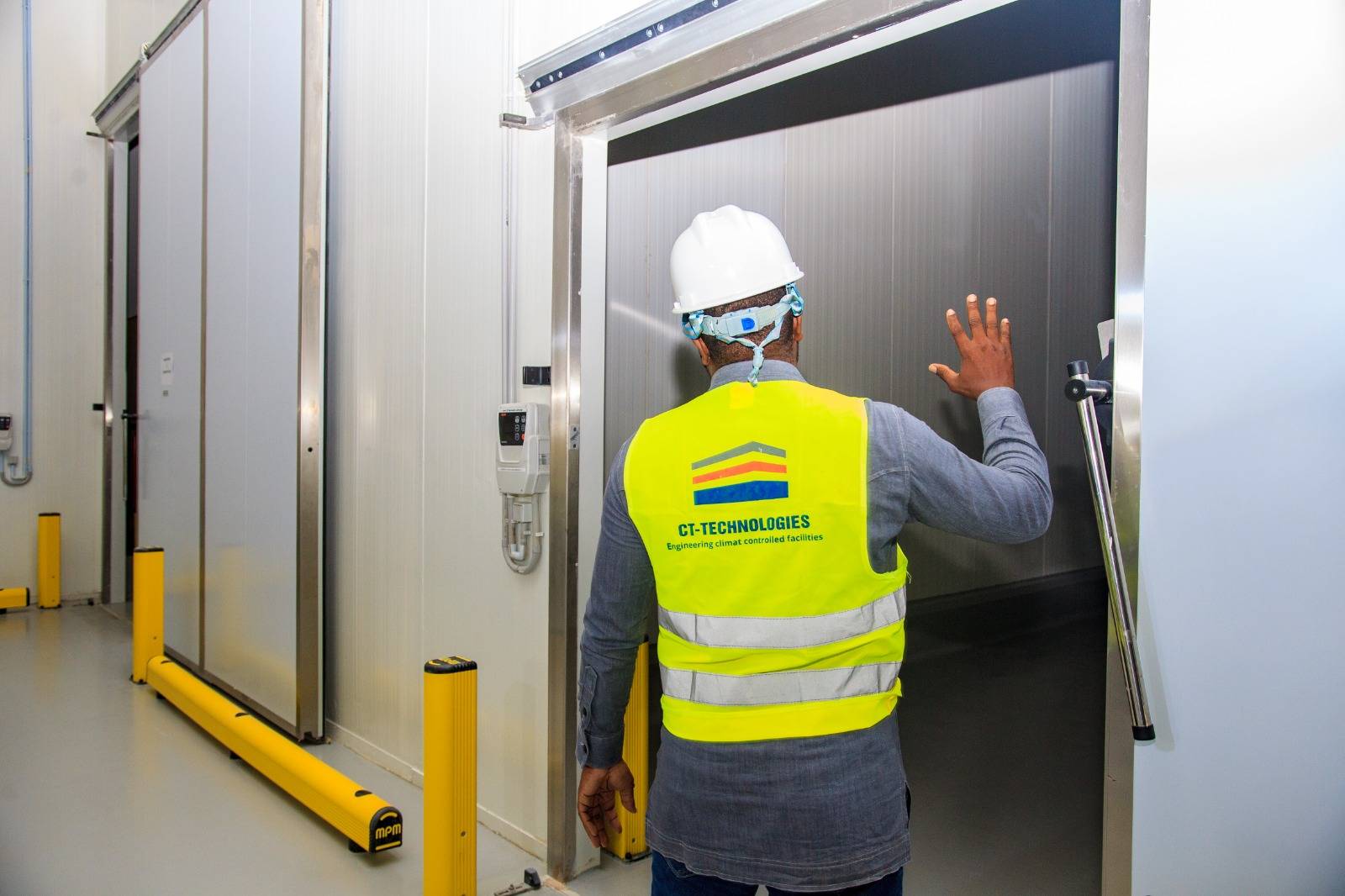
This logistical marvel features cold storage chambers, refrigerated warehousing, freezing units, and dedicated customs and import-export zones, enabling simultaneous conditioning of up to *736 fruit pallets. The immediate financial impact is undeniable—by maintaining the cold chain from farm to aircraft, Bénin drastically reduces spoilage rates. Béninois fruits, such as sugarloaf pineapples and fresh produce, will arrive on European and Asian shelves with unmatched freshness, commanding premium prices.
political will driving tangible progress
A recent ministerial inspection confirmed that construction timelines are being met with precision. Minister Bloukounon Goubalan expressed pride in the project’s progress, emphasizing the administration’s commitment to economic sovereignty: « Seeds are the foundation of production. By mastering seed technology, we enhance our competitiveness and take full control of our agricultural destiny. »
This integrated strategy—merging cutting-edge research with robust logistics—addresses long-standing structural gaps. It also reassures private investors and international partners, positioning Bénin as a reliable and structured agricultural leader in the region.
By linking Glo-Djigbé’s high-tech seed production with Cotonou’s efficient fruit terminal, the government is laying the groundwork for a resilient, export-driven agricultural economy. This industrial and scientific wager isn’t just about volume—it’s about structurally transforming the national economy. By controlling its seeds and cold chain, Bénin ensures that the wealth generated from its land stays firmly within its borders. The green revolution in Bénin is not just underway; it is armed with the technological prowess to dominate international markets.