Bénin’s robust economic expansion continues despite global headwinds
In a world grappling with geopolitical tensions, supply chain disruptions, and volatile financial markets, the Bénin economy has defied expectations with a remarkable growth trajectory. The latest national assessment confirms an 8.1% GDP expansion in 2025, with forecasts projecting sustained growth above 7% through 2027. This stellar performance is underpinned by the booming Glo-Djigbé Industrial Zone (GDIZ), port infrastructure upgrades, and strict fiscal discipline—though significant social and security challenges remain on the horizon.
Sectoral momentum drives inclusive growth
The Bénin economy’s strength lies in its balanced sectoral contribution, with all major economic drivers fueling the surge in 2025.
Industrial and infrastructure boom fuels secondary sector growth
The secondary sector achieved a striking 9.8% increase, propelled by major sanitation projects, road infrastructure upgrades, and port modernization. The GDIZ has emerged as a game-changer, accelerating manufacturing output. Meanwhile, extractive industries surged, driven by expanded quarry operations supplying local cement plants and the emerging tile manufacturing sector.
Services and digital transformation power tertiary growth
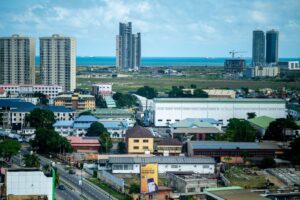
The services sector grew by 8.5%, buoyed by a thriving digital economy, robust international trade, and Cotonou’s strategic port operations, which continue to facilitate regional commerce.
Agriculture and livestock sectors maintain steady progress
The primary sector recorded a 5.7% rise, with livestock production leading the charge at 8.8%. Favorable agricultural conditions and targeted productivity investments contributed to this growth. Investment remained the economy’s primary engine, climbing 10.7% in 2025, while household consumption increased by 7.3%.
Monetary stability and fiscal prudence amidst global inflationary pressures
While many nations struggle with surging inflation, Bénin has maintained remarkable price stability.
Inflation remains well below regional targets
The West African Central Bank (BCEAO) policies have kept inflation at a modest 1.1% in 2025—significantly below the 3% UEMOA target. This stability stems from stable fuel supply costs from neighboring Nigeria and abundant local harvests, which have prevented sharp food price hikes.
Strong banking sector and fiscal discipline
Bénin’s banking system remains resilient, with an 8.8% rise in credit to the economy and a 9.2% increase in banking assets. The sector’s solvency ratio comfortably exceeds regulatory requirements. On the fiscal front, the government has maintained its austerity measures, with tax revenues rising from 13.3% to 13.9% of GDP and public spending held steady at 18.7% of GDP. This discipline reduced the budget deficit to 2.8% of GDP from 3% the previous year. While Bénin faces a moderate debt risk, rising commercial financing costs warrant close monitoring.
Export-led transformation redefines Bénin’s trade model
The nation is shifting from a transit economy to one focused on exporting processed goods. The GDIZ has enabled local transformation of cotton, soybeans, and cashew nuts into textiles and food products. Exports now account for 23% of GDP, up from 21.8%, helping narrow the current account deficit to 5.8% of GDP. Within the UEMOA zone, foreign reserves now cover 7.6 months of imports, providing a reassuring buffer for future trade.
Looking ahead, growth is projected at 7% in 2026 and 7.1% in 2027, driven by political stability, expanded Cotonou infrastructure, and new extraction projects like the Sèmè oil field and the Perma gold mine.
Transforming demographic dividends into tangible opportunities
Despite strong macroeconomic indicators and a 5.6% rise in real GDP per capita in 2025, the benefits have not yet fully reached most citizens. While the GDIZ has created 25,000 direct jobs, over 90% of Bénin’s workforce remains in the informal sector. This structural imbalance limits productivity gains and slows poverty reduction.
To address this gap, intensified investment in vocational training is essential to align education with industrial demands. Supporting formal job creation and human capital development will be key to unlocking the demographic dividend.
Navigating risks and strategic priorities
While Bénin’s growth story is compelling, several risks could derail progress. External threats include escalating Middle East tensions and prolonged high oil prices, while regional security concerns in northern areas and reliance on Nigerian trade policies remain areas of concern. Climate variability also poses risks to agricultural output.
To secure its momentum, Bénin must sustain fiscal discipline while accelerating energy projects like the Dogo-Bis hydroelectric plant. This infrastructure will enhance energy autonomy, reduce production costs for GDIZ factories, and boost the country’s overall competitiveness.
Bénin has positioned itself as a macroeconomic success story in West Africa. By leveraging industrialization, fiscal prudence, and port development, the nation is on track for over 7% growth through 2027. The true test, however, will be its ability to reduce informality, strengthen border security, and ensure this prosperity translates into real opportunities for its youth.