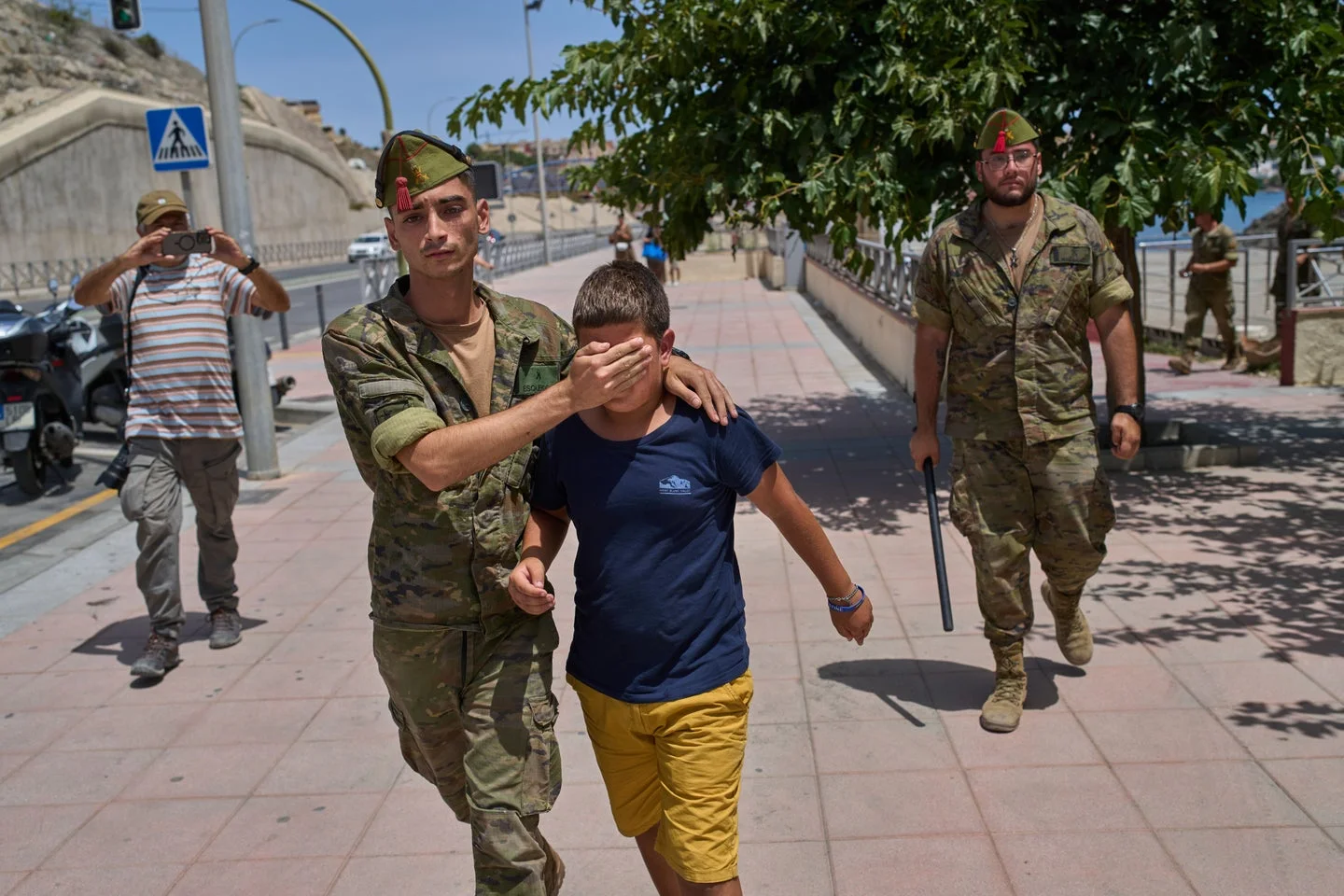
Morocco’s Minister of Justice, Abdellatif Ouahbi, has urged the repatriation of Moroccan minors currently in Spain, including those who arrived in Ceuta during the recent migration surge. This directive follows royal instructions aimed at streamlining the identification and return process for these minors.
The exact number of affected minors remains unclear. Spanish authorities reported 1,527 unaccompanied minors in Ceuta following the crisis, as of the latest data shared on August 12. However, this figure may include some who were already present in the enclave before the late July influx.
Existing framework between Rabat and Madrid
A common misconception is that Spanish law prohibits the return of Moroccan minors. In reality, Spain and Morocco have a 2007 agreement focused on preventing irregular migration of unaccompanied minors, protecting their rights, and facilitating their organized return. The agreement outlines cooperation between the two nations to locate minors’ families and, when feasible, reunite them with relatives or transfer them to Moroccan authorities.
However, the agreement does not allow for collective or automatic returns. Spanish law requires a case-by-case assessment to determine if repatriation aligns with the child’s best interests. Authorities must gather family background, consult with Moroccan counterparts, and allow the minor to express their views. The public prosecutor also plays a role in this process.
This rigorous review process explains why these minors were not treated like adults during the immediate pushback operations. Their irregular entry into Spain does not negate their status as minors under Spanish protection.
2021 Precedent complicates swift action
The cautious approach stems from the Ceuta crisis of August 2021, when hundreds of minors were returned to Morocco in an organized operation by Spanish authorities. The Spanish judiciary later ruled this procedure unlawful, as it failed to meet the legal safeguards required by Spanish law. A 2024 Supreme Court ruling reaffirmed the illegality of these returns, citing insufficient individual assessments of the minors’ situations.
This legal precedent now poses a significant hurdle to any collective return efforts. While both Rabat and Madrid seek solutions to ease Ceuta’s overcrowding, Spanish authorities must ensure each repatriation complies with legal protections.
Alternative approach: redistributing minors within Spain
In the interim, Madrid is addressing the immediate challenge of Ceuta’s overcapacity by transferring some unaccompanied minors to other autonomous communities. This measure is separate from any potential repatriation discussions and does not preclude future returns to Morocco.
The situation has sparked political tensions in Spain. The central government advocates redistributing minors to ease pressure on Ceuta, while the opposition Popular Party insists on prioritizing returns to Morocco. Juan José Imbroda, President of Melilla, has also called for enforcing the 2007 agreement with Rabat.
The core issue is not Spain’s refusal to return Moroccan minors but the legal constraints governing the process. Morocco is ready to accept their return, but Spain must handle each case individually. The coming weeks will test whether bilateral cooperation can expedite family identifications and meet the conditions for safe returns. The 2021 legal fallout serves as a stark reminder that hastily organized collective returns risk further legal challenges.