From trusted advisor to restricted figure: the shifting fortunes of Niger’s transitional prime minister
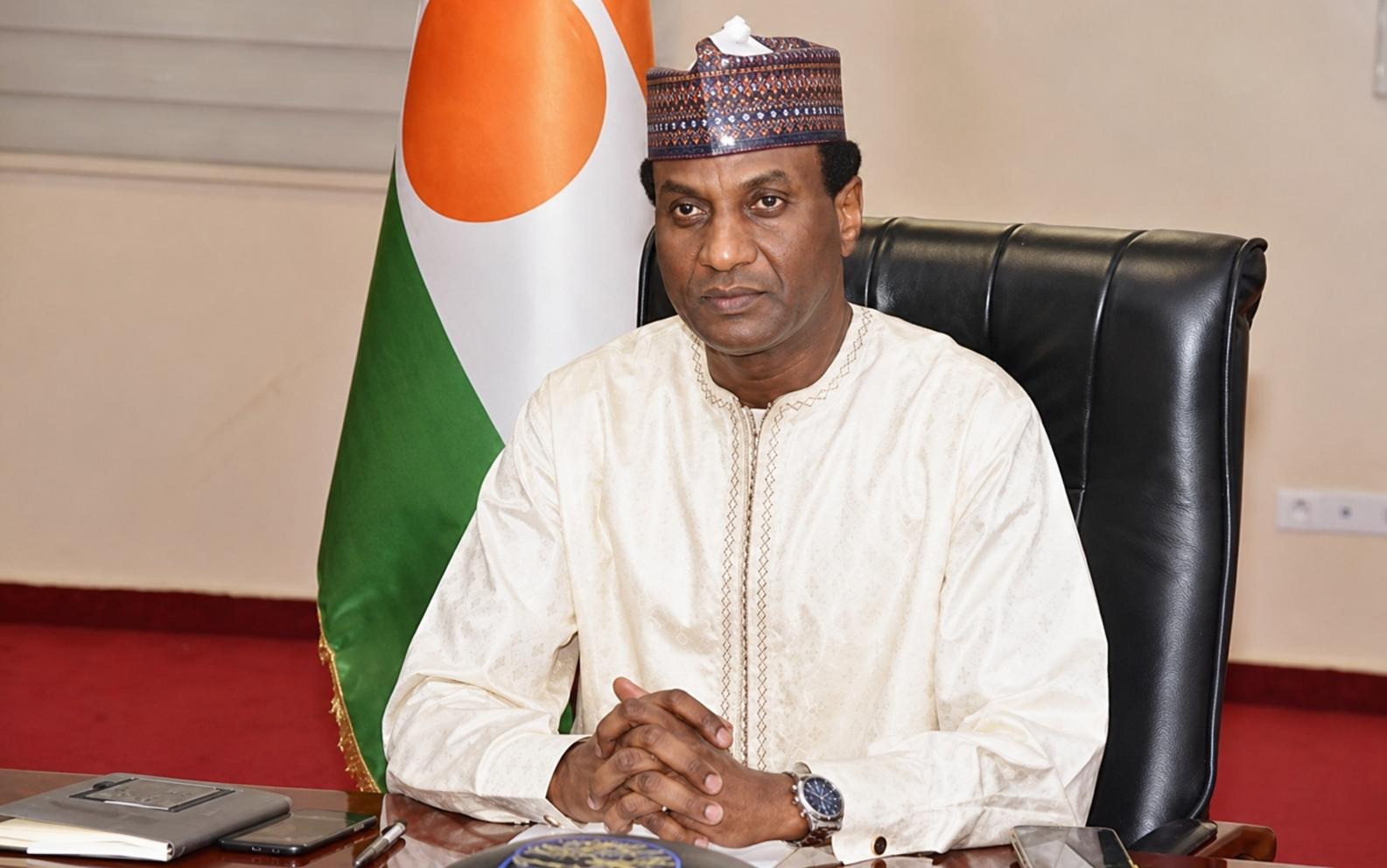
In the shifting sands of post-coup governance, the line between influence and exclusion can blur without warning. In Niger, recent developments surrounding Prime Minister Ali Mahamane Lamine Zeine have reignited concerns about the precarious standing of civilian leaders within military-dominated regimes. What began as routine administrative measures now casts a longer shadow over his leadership.
A tightening grip on authority
Whispers from within the corridors of the transitional government have intensified, painting a picture of growing unease. Sources close to the Prime Minister’s office report that a sweeping overhaul of his personal security detail occurred without prior notice, accompanied by a sharp escalation in access controls. Visitors permitted to meet with him now face rigorous physical screenings, while his prolonged absence from official duties—attributed to a severe bout of malaria—has done little to dispel speculation about deeper, unspoken developments.
In a political environment where information is both currency and weapon, the lack of transparent communication fuels conjecture. The sudden security upgrades, framed as precautionary health measures, bear the hallmarks of a de facto house arrest rather than standard protective protocol. This discrepancy underscores a recurring pattern in Sahelian transitional systems, where civilian figures are often valued for their technical competence but remain vulnerable to sudden shifts in favor.
The silent logic of exclusion
The unfolding situation reflects a well-rehearsed playbook among military-led governments in the region. When civilian technocrats resist full alignment with the strategic or ideological directives of the ruling junta, the security apparatus swiftly moves to neutralize perceived dissent. Rather than risk public upheaval through outright dismissal, these regimes favor a subtler approach: gradual marginalization masked by official continuity. By maintaining the individual in office while progressively curtailing their operational freedom, the military preserves institutional appearances while consolidating decision-making power behind the scenes.
This strategy serves multiple objectives. It allows the regime to gauge external reactions—whether from international partners, domestic stakeholders, or rival factions—before taking more decisive action. It also reinforces the message that loyalty to the military command is non-negotiable, even for those occupying prominent civilian roles. The renewal of a security detail, the restriction of movement, and the filtering of communications are not merely administrative acts; they are deliberate political signals, broadcasting the limits of autonomy within the state apparatus.
A broader pattern across the Sahel
Niger’s experience is not an isolated case. Across the Sahel, civilian leaders often serve as temporary stabilizers, tasked with managing economic stability and diplomatic relations while the junta retains ultimate control. In Mali, the trajectory of former Prime Minister Choguel Maïga revealed the fragility of such arrangements, while in Burkina Faso, the political manoeuvring around Apollinaire Kyélem de Tambèla followed similar contours. In each instance, the message was clear: civilian legitimacy is contingent upon unwavering alignment with the military’s vision. Any deviation risks swift correction.
For Ali Mahamane Lamine Zeine, the challenge has evolved from policy implementation to navigating a labyrinth of suspicion. Every movement is monitored, every silence analyzed. The paradox of his position lies in the duality of his role: visible on paper as head of government, yet increasingly constrained in practice by the invisible hand of the junta. In regimes where power is exercised through exception rather than convention, the trust placed in civilian leaders is inherently fragile, subject to revocation at any moment.
As Niger’s transition continues to unfold, the case of Lamine Zeine serves as a stark reminder of the realities facing civilian actors in military-led systems. The optics of governance may suggest collaboration, but the mechanics of power reveal a far more conditional and conditional arrangement—one where autonomy is a fleeting privilege, not a guaranteed right.