The Burkina Faso government’s bold decision to nationalize its gold mines at Boungou and Wahgnion has entered a critical phase, as the country grapples with the financial and operational challenges of managing these strategic assets. Two years after the historic takeover, Ouagadougou is discovering just how steep the road to economic sovereignty can be in the mining sector.
From political triumph to financial reckoning
In 2024, Burkina Faso took a decisive step toward asserting control over its gold resources by reclaiming the Boungou and Wahgnion mines from private operators. The move, orchestrated through the Société de participation minière du Burkina (SOPAMIB), was hailed as a victory for national sovereignty and economic independence. Yet, the transition from regulator to full-fledged operator has proven far more complex than anticipated.
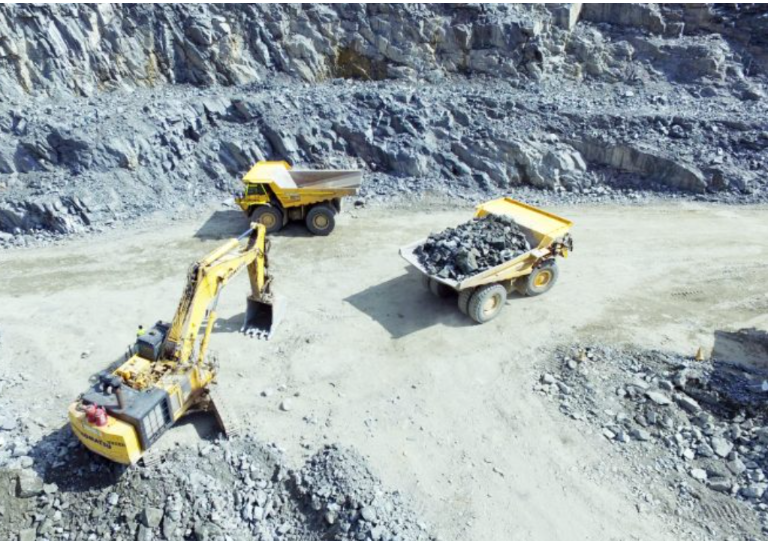
The mines, once operated by the Canadian giant Endeavour Mining before being transferred to Lilium Mining, had been producing at peak capacity in 2022, yielding a combined total of 240,000 ounces of gold. However, the shift in management, compounded by regional security concerns, led to a sharp decline in output. The Boungou site remained completely inactive for two years, only resuming production in July 2025 under public management.
The race to restore production levels
Now, the SOPAMIB is under intense pressure to revive the mines’ full potential. Official projections for 2026 aim to recover lost ground, with Wahgnion alone targeting 92,000 ounces of gold in annual production. The Ministry of Mines has set an even more ambitious goal: a combined output exceeding 225,000 ounces (7 metric tons) for both sites by next year—numbers that would match the performance levels of 2022. But achieving these targets hinges on one critical factor: funding.
A financial lifeline from the BOAD
To turn these ambitions into reality, Burkina Faso secured a financial lifeline from the Banque ouest-africaine de développement (BOAD), amounting to 45.7 million euros (30 billion CFA francs). This injection is complemented by an additional 3.21 billion CFA francs (4.9 million euros) from the national budget. Unlike emergency funds used to cover debts, these resources are earmarked for high-impact structural investments, including:
- Heavy machinery acquisition: Upgrading the mining fleet to reduce reliance on third-party equipment.
- Tailings management enhancement: Strengthening residue storage facilities to meet both environmental and technical standards.
- Energy independence for Wahgnion: Connecting the mine to the national grid via a dedicated power line, eliminating costly reliance on imported fossil fuels.
The latter initiative is particularly transformative. Until now, Wahgnion has operated on diesel generators, driving up production costs and carbon emissions. A direct connection to the national grid, managed by Société nationale d’électricité du Burkina (SONABEL), could slash operational expenses while aligning with sustainability goals.
The cost of outsourcing and the path to profitability
The urgency of these investments stems from a harsh financial reality. Since assuming control without owning the necessary equipment, the SOPAMIB has relied heavily on outsourcing and equipment leasing. According to recent disclosures, the monthly cost of these services for Wahgnion alone exceeds 3 billion CFA francs (4.57 million euros). Such expenses are crippling profitability, even amid historically high global gold prices.
The BOAD loan is designed to break this cycle. By purchasing its own machinery and reducing dependence on external contractors, the government aims to restore financial breathing room and ensure the long-term viability of its mining operations.
A test case for state-led mining in West Africa
The trajectory of Boungou and Wahgnion is being closely watched across the Alliance des États du Sahel (AES) and by international investors. Burkina Faso’s experiment in state-led mining represents a departure from the region’s traditional reliance on multinational corporations. Success here could redefine the economic landscape of West Africa, proving that governments can manage complex industrial assets without falling prey to inefficiency or mismanagement.
Yet, the stakes are high. The government must not only secure the mines’ operational stability but also navigate a volatile security environment that has deterred private investors in the past. Striking this balance will determine whether Burkina Faso’s gold nationalization becomes a model of economic sovereignty—or a cautionary tale of overreach.
From symbolism to sustainable industry
The nationalization of Boungou and Wahgnion was celebrated as a political triumph, reflecting public demand for greater control over the country’s natural resources. However, the transition from symbolic victory to sustainable industry requires more than just funding—it demands rigorous cost management, operational efficiency, and a stable production pipeline.
If Burkina Faso succeeds in reducing its reliance on outsourcing, stabilizing output, and meeting its 2026 targets, it could set a new precedent for mining governance in the region. Failure, however, risks burdening the national budget with an unprofitable venture at a time when public finances are already stretched thin.