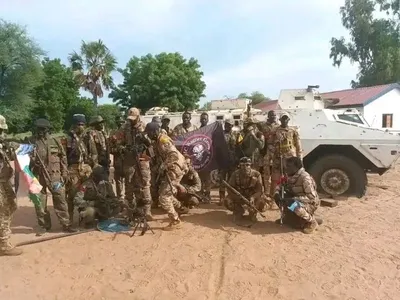
The strategic town of Amdafock has been recaptured by a joint military operation involving government troops, Russian-backed mercenaries, and former rebel factions. This coordinated effort marks a significant shift in the security landscape of the region.
united forces secure amdafock
In a decisive move, Central African Armed Forces (FACA) alongside Russian-linked mercenary groups—including the so-called ‘Wagner Noirs’—launched an offensive to reclaim Amdafock from rebel control. The operation also saw the participation of former fighters from the Union for Peace in the Central African Republic (UPC), Movement of Central African Liberators (MPC), and Return, Reclamation, Rehabilitation (3R) groups, now integrated into the government’s security framework.
key players in the operation
The offensive was a multi-pronged effort, with each faction playing a distinct role:
- FACA: The national army led the ground assault, supported by logistical and tactical guidance.
- Russian mercenaries: Known for their combat experience and heavy weaponry, they provided critical reinforcements.
- Former rebels: Fighters from UPC, MPC, and 3R, now aligned with the government, contributed to the operation’s success.
strategic significance of amdafock
Amdafock’s recapture is more than a military victory—it reshapes the balance of power in the Central African Republic. The town’s location makes it a vital hub for trade, communication, and military mobility, making its control a priority for all parties involved.
The operation underscores the government’s strategy of leveraging former adversaries to stabilize the region, a tactic that has drawn both support and criticism from local and international observers.
challenges ahead
While the recapture of Amdafock is a step forward, the broader security situation remains fragile. The integration of former rebels into state forces poses risks, and the presence of foreign mercenaries continues to spark debate about sovereignty and long-term stability.