Minembwe: M23/Twirwaneho declares triumph, accuses FARDC–FDNB–Wazalendo coalition of withdrawal after week-long battles
Minembwe, June 19, 2026—A week of intense combat recently engulfed the high plateaus of Fizi and Mwenga territories in South Kivu, pitting Twirwaneho fighters, allied with the AFC-M23 politico-military coalition, against the Armed Forces of the Democratic Republic of Congo (FARDC), supported by Burundi’s National Defense Force (FDNB) and Kinshasa-backed Wazalendo militias.
Following these fierce engagements, Twirwaneho/M23 combatants assert they have pushed back the government coalition from several strategic positions surrounding Minembwe. Concurrently, both local residents and military sources confirm a significant repositioning of the forces involved.
Accounts from the ground indicate that the confrontations reached their peak intensity during the week, characterized by the deployment of heavy weaponry, drones, and extensive bombardments. Subsequently, the FARDC, FDNB, and their allies reportedly withdrew towards the localities of Lwiko, Mutunda, and Miko, leaving numerous peripheral areas of Minembwe under the control of Twirwaneho/M23 combatants.
Civilians who fled the fighting towards Kiziba recounted scenes of widespread panic and massive displacement. Multiple testimonies describe residential areas being hit by bombardments, though an independent casualty assessment remains unconfirmed.
While the FARDC has not yet issued a detailed statement, local military officials acknowledge a strategic repositioning following particularly violent clashes in the Ilundu and Bidegu sectors.
Unverified reports from the conflict zone further suggest that Burundian soldiers of the FDNB may have abandoned equipment during their retreat towards Kakenge (Miko). Casualties are reportedly sustained within the ranks of the FARDC, FDNB, and Wazalendo, although no official figures have been released.
Claims of Victory and Strategic Retreats
For the Twirwaneho/M23 combatants, the narrative is one of clear military success. They claim to have driven government forces and their allies beyond several front lines, thereby solidifying their hold on positions around Minembwe.
Former Congolese national deputy Moïse Nyarugabo commended what he described as a “retreat of forces engaged against Minembwe.”
“The threat to Minembwe has been averted. Despite bombardments from Sukhoi jets, drones, and heavy artillery, the opposing forces were pushed back beyond the Lwiko River,” he asserted.
According to Nyarugabo, military operations launched months prior had failed to secure the consistently unstable high plateaus in the long term.
He further accused the coalition of responsibility for bombardments that resulted in civilian casualties and massive population displacements.
Controversy Surrounding FDNB Presence
The deployment of Burundi’s National Defense Force (FDNB) alongside the FARDC continues to fuel regional controversy.
Certain security sector sources allege that Kinshasa offered Gitega mining exploitation benefits in the Minembwe area and other parts of Fizi territory in exchange for military support. These claims have not been substantiated by either Congolese or Burundian authorities.
Presidents Évariste Ndayishimiye and Félix Tshisekedi have, however, confirmed the existence of a bilateral security cooperation agreement authorizing Burundian forces to operate on Congolese soil. A Congolese Ministry of Interior and Security report indicates that over 29,000 Burundian soldiers were deployed to eastern DRC between August 2022 and December 2025.
Against this backdrop of heightened security tensions, the Burundian army recently undertook new redeployments in the region. This follows the withdrawal of AFC-M23 rebels from the strategic city of Uvira, located near Goma and crucial transport routes connecting eastern Congo to Burundi. Uvira had been under rebel occupation for approximately one month between December 2025 and January 2026 before their retreat.
More recently, local sources also report that elements of the AFC-M23 have withdrawn from certain positions in the Rusizi plain, reportedly due to international pressure, particularly from the United States and other partners involved in regional de-escalation efforts.
AFC-M23 and Twirwaneho at the Core of the Conflict
The March 23 Movement (M23) currently stands as a primary component of the Alliance Fleuve Congo–M23 (AFC-M23) politico-military coalition, led by Corneille Nangaa, former president of the Independent National Electoral Commission (CENI) of the Democratic Republic of Congo.
Within the high plateaus of South Kivu, this coalition notably relies on the Twirwaneho armed movement, primarily composed of young individuals from the Banyamulenge community.
Congolese authorities frequently accuse Rwanda of backing the AFC-M23 and its allies, allegations consistently refuted by Kigali. Rwanda, in turn, accuses Kinshasa of collaborating with the FDLR, an armed group comprising former Hutu officials implicated in the 1994 genocide against the Tutsi.
Burundi also accuses Rwanda of supporting armed groups operating against its territory and harboring ambitions for regional influence in eastern DRC. Kigali denies these accusations, while simultaneously reproaching Gitega for alleged collaboration with the FDLR and other armed factions active in the area.
In this climate of persistent tensions, the M23/AFC, a predominantly Tutsi movement that resumed hostilities in late 2021 after accusing Kinshasa of failing to honor its reintegration commitments, now controls or significantly influences several strategic areas in North and South Kivu, including vital economic routes and key localities.
Persistent Instability in the Region
Despite numerous regional agreements and diplomatic initiatives aimed at de-escalating the crisis in eastern DRC, clashes persist on the ground, with no immediate prospect of lasting peace.
The Fizi high plateaus thus remain one of the most volatile flashpoints in the Great Lakes region, where localized rivalries intertwine with broader tensions between Kigali, Kinshasa, and Gitega.
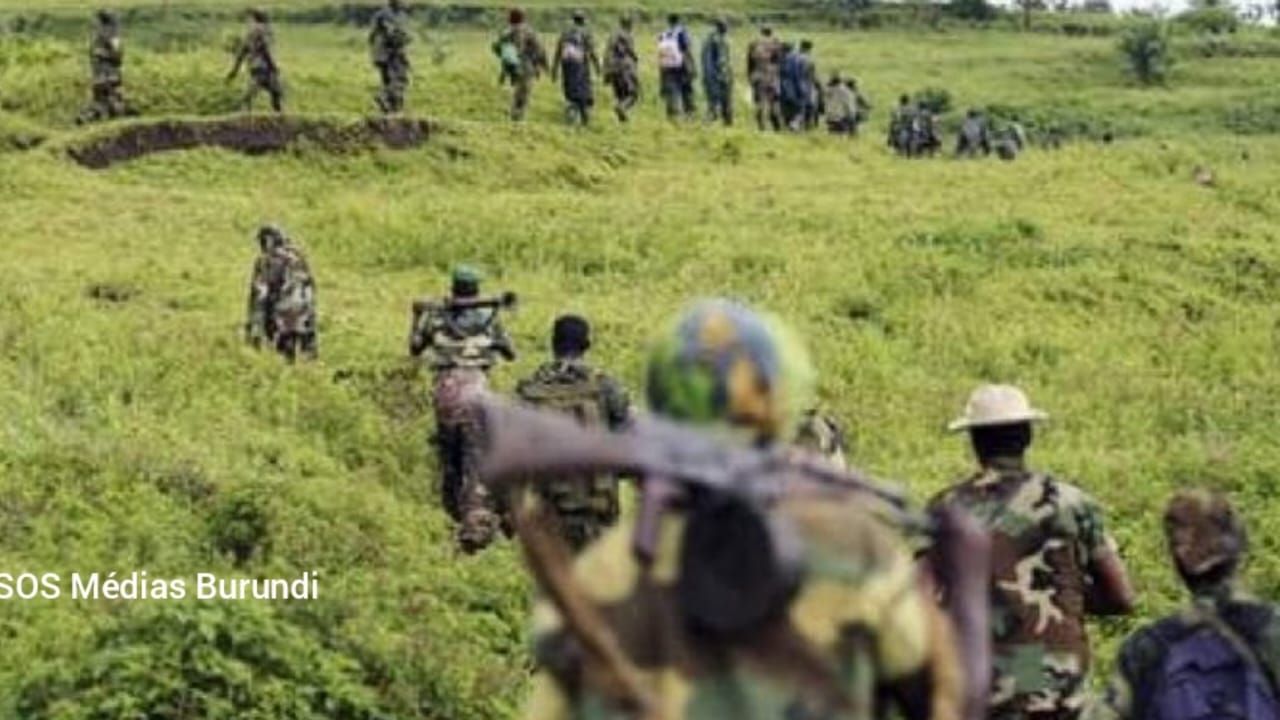
Archival image: Local militiamen engaging M23 forces in Bashali, while various armed groups clash in Minembwe amidst heightened tensions across eastern DRC.