International
French prime minister’s visit to Morocco strengthens bilateral ties

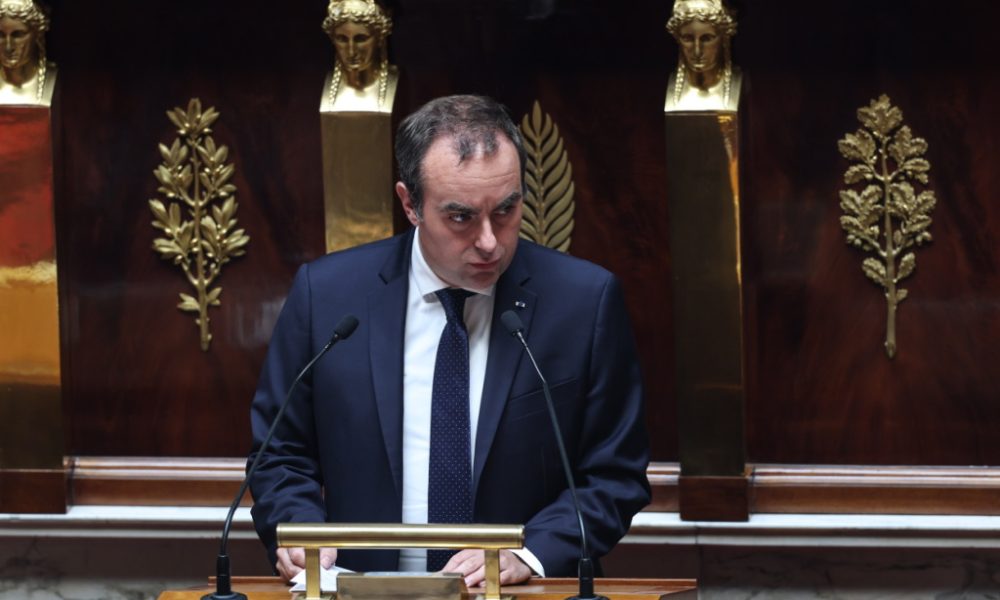
French Prime Minister Sébastien Lecornu embarks on a two-day official visit to Rabat starting Wednesday, aiming to reinforce strategic cooperation between France and Morocco. The visit follows a period of renewed diplomatic engagement that could culminate in a historic state visit by King Mohammed VI to Paris.
The delegation, comprising over a dozen French ministers including Foreign Affairs Minister Jean-Noël Barrot and Interior Minister Laurent Nuñez, will hold high-level talks with Moroccan counterparts led by Prime Minister Aziz Akhannouch. This marks the first such meeting between the two governments since 2019, signaling a significant thaw in relations.
Relations between France and Morocco have steadily improved since President Emmanuel Macron officially recognized Morocco’s sovereignty over the disputed Western Sahara region in the summer of 2024—a move that strained ties with neighboring Algeria.
The French president’s subsequent state visit to Rabat in October 2024, hailed as a diplomatic reset, included the signing of multiple bilateral agreements and put an end to years of tensions exacerbated by espionage allegations and visa restrictions. The visit laid the groundwork for today’s strengthened partnership.
“The relationship is now at its strongest in decades, and we are here to harvest its fruits,” noted Hasni Abidi, director of the Geneva-based Center for Studies and Research on the Arab and Mediterranean World (Cermam).
Morocco takes center stage in French Maghreb policy
Under Macron’s leadership, France has shifted its diplomatic focus in the Maghreb region, prioritizing Morocco over its traditional balancing act with Algeria.
“President Macron no longer feels compelled to maintain an artificial balance between Morocco and Algeria,” Abidi explained. “The two countries’ relations with France remain fragile, but Paris is now fully committed to deepening ties with Rabat.”
This visit is also Sébastien Lecornu’s first official trip abroad since assuming office in late 2025. The trip follows a discreet start to his mandate and includes a formal military welcome, a wreath-laying ceremony at the Royal Mausoleum, and a series of bilateral meetings.
The agenda includes a gathering of delegations at the Moroccan Ministry of Foreign Affairs, where several agreements are expected to be signed. These deals aim to expand cooperation across economic, security, migration, and defense sectors.
As tensions persist with Algeria, Macron—entering the final year of his presidency—seeks to avoid diplomatic setbacks in the Maghreb by turning decisively toward Morocco, according to historian Pierre Vermeren.
“Morocco can play a pivotal role as an intermediary, helping France reconnect with several sub-Saharan African nations,” Vermeren noted. “Both countries share a common interest in combating jihadist threats in the Sahel.”
Security, migration, and royal diplomacy
The visit is expected to see progress on several fronts. Interior Minister Laurent Nuñez will meet with his Moroccan counterpart, Abdelouafi Laftit, to discuss issues including the potential extradition of Franco-Moroccan national Ismael Benahmed, accused of murder in Paris in 2019 and recently arrested in Morocco.
For its part, Morocco has welcomed France’s support for its autonomy plan for Western Sahara, which contributed to the adoption of a United Nations resolution in 2025 favoring Moroccan sovereignty over the territory.
The Western Sahara dispute, a former Spanish colony and a UN-designated “non-self-governing territory,” has pitted Morocco against the Algerian-backed Polisario Front for nearly five decades. Renewed Franco-Moroccan collaboration is also expected to attract new French investments.
During the peak of the 2021–2022 visa crisis, when France reduced visas for Moroccan citizens by half, Rabat retaliated by blocking the return of irregular migrants and diversifying its trade partnerships within Europe. The culmination of this diplomatic thaw could be a state visit by King Mohammed VI to France, potentially accompanied by the signing of a landmark partnership treaty.
Foreign ministers from both countries announced the possibility of such a visit at the end of May, though no date has been confirmed. The last official visit by a Moroccan monarch to France took place in March 2000, when King Mohammed VI traveled to Paris to reinforce bilateral cooperation.