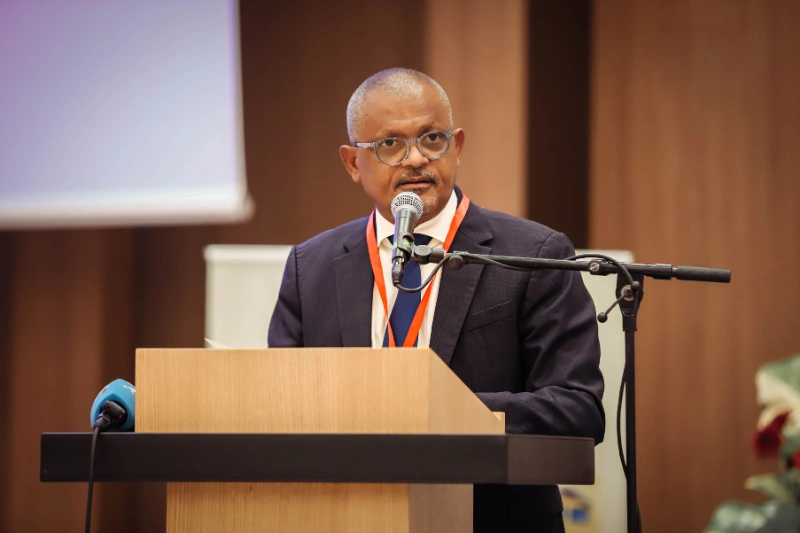
At the conclusion of the Gabon Economic Forum (GEF), Alain-Claude Kouakoua, who presides over the Fédération des entreprises du Gabon (FEG), drew significant attention to what stands as the most critical economic challenge facing the nation: the substantial debt the Gabonese State owes to its private sector enterprises.
Although this figure has been circulating for years, estimated at 4,340 billion FCFA, Kouakoua suggested it was likely inflated. The FEG leader asserted that not all presented claims warrant acceptance, citing numerous questionable files with insufficient or irregular supporting documentation.
Consequently, a collaborative audit, involving a specialized Task Force and the Ministry of Economy, will undertake a crucial sifting process. Its purpose is to distinguish between verified, mutually agreed-upon certain debt and uncertain claims that will not be acknowledged. No payments will be made before this comprehensive review concludes. An immediate outcome is anticipated: the final debt total will be considerably less than the widely cited figure. Furthermore, Kouakoua revealed that approximately 50% of this outstanding debt has reportedly been settled since the CTRI assumed leadership in August 2023. He noted that companies receiving these payments had not publicly disclosed them, contributing to the ongoing ambiguity surrounding the true debt status.
This forthcoming payment framework directly aligns with a key recommendation from GEF 2026. The strategy prioritizes the clearance of internal debt, specifically focusing on Value Added Tax (VAT) credits and arrears from public contracts. This will utilize accelerated mechanisms, securitization, and cross-offsetting, all integrated into a national debt clearance program. This program will feature a publicly accessible tracking dashboard and a dedicated National Monitoring Committee, essentially revitalizing the former Club de Libreville.
While discussions also touched upon the reliability of public statistics and enhancing the CNAMGS, the State’s obligations to private enterprises undoubtedly commanded the most significant attention throughout the forum.
For Gabon’s private sector, this announcement comes at a crucial moment. Following years of uncertainty, disputes, and prolonged waiting, a clear path has finally emerged for a predictable, negotiated, and thoroughly verified settlement. Many within the business community view this as the fundamental prerequisite for gradually rebuilding mutual trust between the Gabonese State and its enterprise partners.