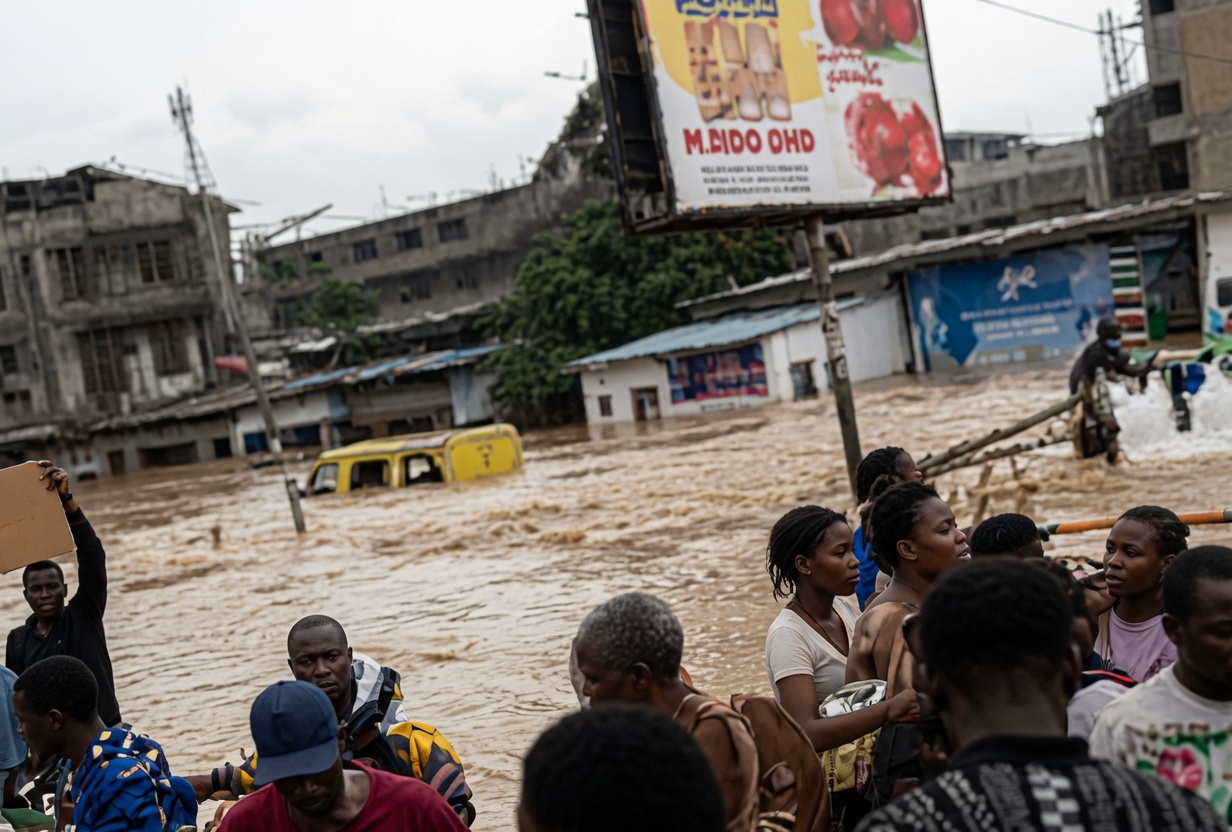
Each return of the annual downpours in Togo invariably ushers in a familiar cycle of distress. Extensive road flooding, residential areas inundated, and homes overwhelmed by water are recurring challenges that families are left to confront in isolation. For many Togolese citizens, these environmental adversities are no longer anomalies but have solidified into an expected, annual ordeal.
Following more than six decades under the leadership of the Gnassingbé family, a significant segment of the populace believes that Togo is due for a fresh political trajectory. Despite numerous assurances articulated over the years, fundamental daily struggles endure: persistently high rates of joblessness, a continuously escalating cost of living, pervasive poverty, and constrained opportunities for the future, particularly for younger generations.
The onset of the rains also intensifies scrutiny regarding the state of public infrastructure. In numerous urban districts, drainage systems remain inadequate, rendering thoroughfares swiftly impassable and leading to substantial material damages from floods. Many residents voice strong disapproval of the insufficient long-term investment in public amenities essential for mitigating these frequently occurring disasters.
Within this challenging environment, voices from both the political opposition and civil society organizations contend that the ruling authority prioritizes the interests of a select elite connected to the regime, even as the economic hardships faced by the majority of the population continue to deepen. These groups assert that public funds should be predominantly allocated to enhancing living standards, fostering infrastructure development, generating employment opportunities, and safeguarding the most vulnerable communities, rather than being directed towards maintaining a political framework established for several decades.
Many analysts anticipate that this latest rainy season is regrettably unlikely to deliver the much-needed respite. Instead, it may once again underscore the shortcomings of public policies concerning urban planning and hazard mitigation. Absent comprehensive reforms and appropriately tailored investments, it will regrettably be the most economically disadvantaged households that disproportionately shoulder the brunt of the consequences.
As challenges mount, an increasing segment of public opinion suggests that the nation requires a fundamental renewal of its governance structure to more effectively address the social, economic, and environmental aspirations of the Togolese people.