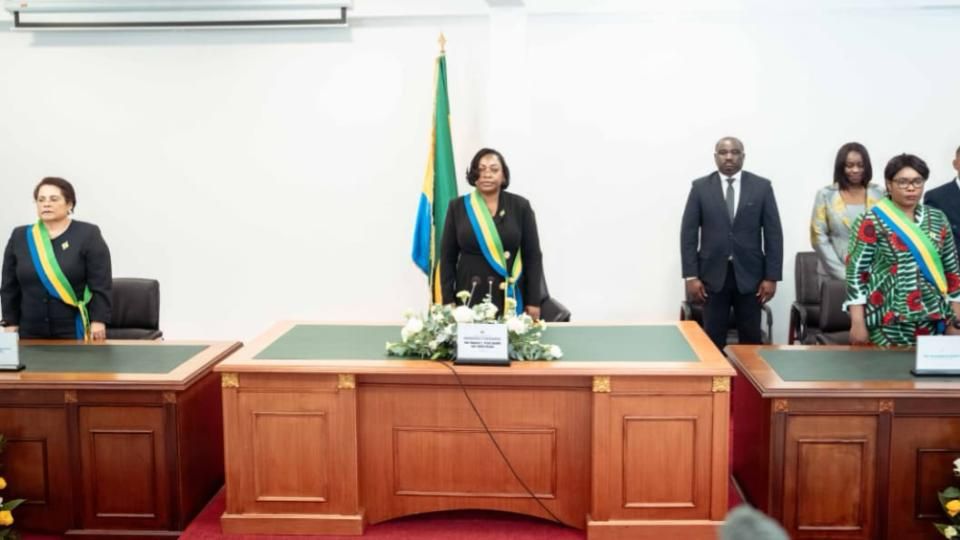
During the formal closing of the Senate’s first ordinary session, the institution’s leadership issued a clear directive to the Executive branch. Huguette Yvonne Nyana Ekoume-Awori, President of the Senate, advocated for a fundamental restructuring of parliamentary procedures by demanding an “equal transmission of texts” between the National Assembly and the Senate, in strict accordance with bicameral principles.
The head of the upper house emphasized that the constitutional framework of a two-chamber system should never reduce the Senate to a mere recording office. She argued that the institution must not be sidelined by the government’s erratic scheduling. While certain documents, such as budget laws and constitutional reforms, follow specific precedence rules, the President is calling for a new methodology in how draft legislation is submitted to parliament.
Upholding the Senate’s legislative mission
Huguette Yvonne Nyana Ekoume-Awori addressed the government representatives present, including Vice-President Hermann Immongault and various ministers, urging them to bring more fluidity and speed to the legislative shuttle. By distributing bills fairly and alternately between the two houses from the moment of their initial review, the Executive would help eliminate a recurring structural bottleneck that continues to hamper parliamentary duties.
Restoring this institutional balance is intended to achieve two main goals. Firstly, it would end the chronic congestion of files that typically build up within a single assembly. Secondly, it would prevent the erosion of legislative quality, which is often sacrificed due to a “dictatorship of urgency” that prevents rigorous debate. This call for institutional order is a move toward more harmonious cooperation between the branches of government, ensuring that lawmaking respects the specific prerogatives of the Senate.