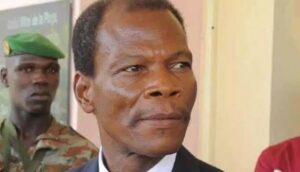
Cotonou — Benin’s highest court has just locked down the procedural fate of one of the most closely followed cases in the country. On Thursday, 24 September 2026, the Supreme Court definitively dismissed the cassation appeal filed by the lawyers of the former Director General of the National Police, General Louis Philippe Houndégnon. The application was declared admissible in form, yet the court rejected it squarely on the merits, upholding the ruling issued on 19 May 2026 by the appeal chamber of the Court for the Repression of Economic Offences and Terrorism (CRIET). By endorsing the jurisdiction of the lower judges, the Supreme Court exhausted the defence’s extraordinary remedies — and left one question hanging over the whole affair: does this rejection close the case, or does it simply clear the ground for the trial that will settle everything?
Admissible in form, rejected on the merits: reading the ruling closely
The nuance carries real weight. The country’s top court did not throw the appeal out as inadmissible; it examined the file and refused the arguments on their substance. In doing so, it confirmed the competence of the judges who had already ruled, and closed off the exceptional routes the defence had been counting on. The path towards a criminal hearing is now wide open, with no procedural detour left to slow it down.
A last-ditch plea on fundamental rights that did not land
Fidèle Abouta, one of the accused’s lawyers, was present in the courtroom and tried one final manoeuvre: arguing that his client’s fundamental rights had been violated from the very first hours of the proceedings. The argument failed to persuade the bench, bringing a definitive end to a tug-of-war over jurisdiction that had dragged on for months.
Why the battle over competence mattered so much
For the defence, contesting which court could hear the case was never a technicality. It was a way of pushing back the moment when the accusations themselves would be examined. By validating the lower judges’ authority, the Supreme Court removed that lever — and shifted the entire weight of the case onto the debate the general’s lawyers have so far managed to postpone.
What the state accuses its former police chief of
At the centre of the file lies a series of serious allegations brought by the Beninese state against a man who once led its police force and has since become a particularly outspoken critic of the authorities in place:
- Incitement to rebellion and civil disobedience, based on statements described as calls for uprising;
- Harassment through electronic communications, linked to the circulation of sharp messages on social networks;
- Breach of the duty of discretion, for having disclosed confidential information connected to his former functions.
The matter was first investigated under a correctional classification before being reclassified as criminal by the CRIET, which sees in it an attempt against the security of the state.
Free expression or a deliberate attempt to destabilise the institutions?
With this final dismissal, procedural arguments step aside and the substance takes centre stage before the CRIET. The question the judges must now answer is a delicate one: were the general’s public statements an exercise of free expression, or part of a calculated effort to destabilise state institutions? That is the dilemma on which the rest of the case now turns — and its outcome will resonate well beyond the courtroom.