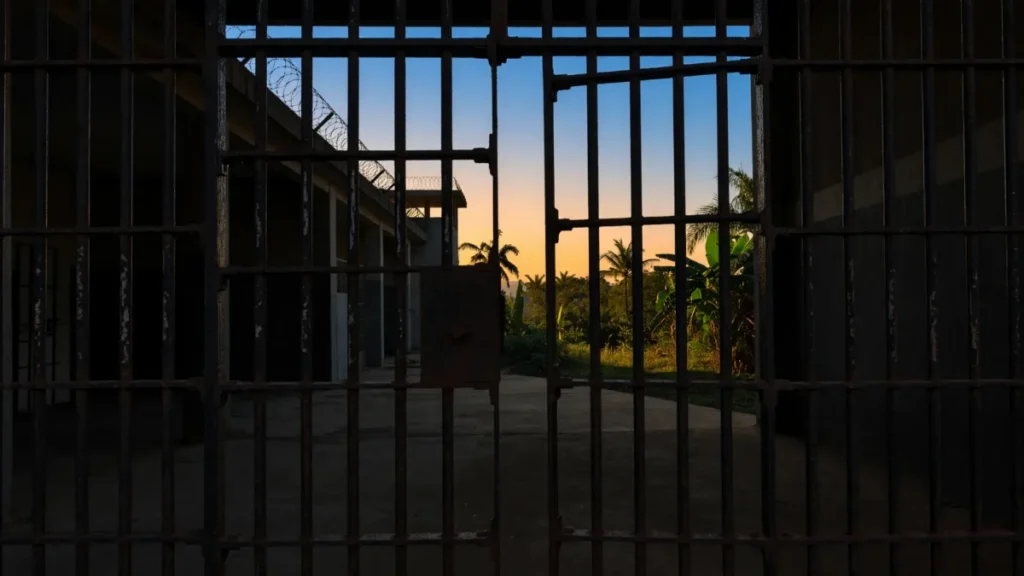
Six local leaders of Côte d’Ivoire’s Democratic Party (PDCI-RDA) walked free on Monday, July 20, 2026, after nine months behind bars. Their release came after a ruling from Abidjan’s anti-terrorism court, confirmed by their lawyer, Me Ange Rodrigue Dadjé, in a public statement. The six activists—Allo Pacôme Didier, Kouleon Manhenin, N’Cho Gnangoran, Mabo Koffi Jean-Marc, Ouattara Kinjinlman, and Niangoran N’Guessan Édouard—were taken into custody between late September and early October 2025, during the high-stakes presidential campaign.
Arrests amid election turmoil
The detentions unfolded against a volatile backdrop as Côte d’Ivoire prepared for its 2025 presidential vote, a contest marked by deep divisions between the ruling administration and opposition forces. Authorities alleged the six men conspired to undermine state security and incite unrest, though the PDCI-RDA swiftly condemned the arrests as politically motivated and demanded their immediate release. Government officials countered that the cases were handled strictly under standard criminal law, with no targeting of political adversaries. The specialized anti-terrorism court, established in 2016, oversaw the proceedings for nearly ten months before ordering the release.
A pattern of opposition releases
This decision follows a recent wave of releases involving other opposition figures, including Moïse Lida Kouassi and Ibrahim Zigui, raising questions about a potential shift in the country’s political climate after a fiercely contested electoral period. While the Ivorian government has yet to comment on whether these developments signal a broader gesture of reconciliation, officials have repeatedly emphasized that all legal actions stem from judicial—not political—concerns. Observers, however, are closely monitoring Côte d’Ivoire’s evolving approach to political rights, particularly as international scrutiny intensifies.
Political landscape in Côte d’Ivoire
As West Africa’s largest economy within the West African Economic and Monetary Union (WAEMU), Côte d’Ivoire remains under international watch following the post-electoral crisis of 2010–2011. Political tensions have flared repeatedly around voting seasons, most recently during the 2020 presidential election, which saw deadly clashes and the detention of multiple opposition leaders. The PDCI-RDA, founded by Félix Houphouët-Boigny and once a dominant force in Ivorian politics, now stands as a key opposition party challenging President Alassane Ouattara, re-elected in 2020 amid contested term limits. The debate over democratic space and political alternation remains central to national discourse as the country gears up for upcoming local and legislative elections.
The release of the six activists also occurs against a backdrop of regional instability, with neighboring states grappling with their own crises. Algeria faces persistent heatwaves, Canada battles nearly a thousand wildfires, and Spain seeks to revitalize its diplomatic ties with Algiers. At home, Côte d’Ivoire’s judicial system continues to navigate the delicate balance between upholding law and addressing political sensitivities.
Legal fallout and next steps
Me Ange Rodrigue Dadjé, the activists’ counsel, welcomed the court’s decision but did not clarify whether the men received a dismissal of charges, a provisional release pending trial, or another legal outcome. Local media outlets reported the ruling without detailing potential next steps. The PDCI-RDA has not yet issued an official response, though the freed leaders—who held key territorial roles within the party—are expected to resume their political activities in the coming days. Whether this decision marks the beginning of a broader thaw or remains an isolated case in the treatment of opposition figures remains to be seen.