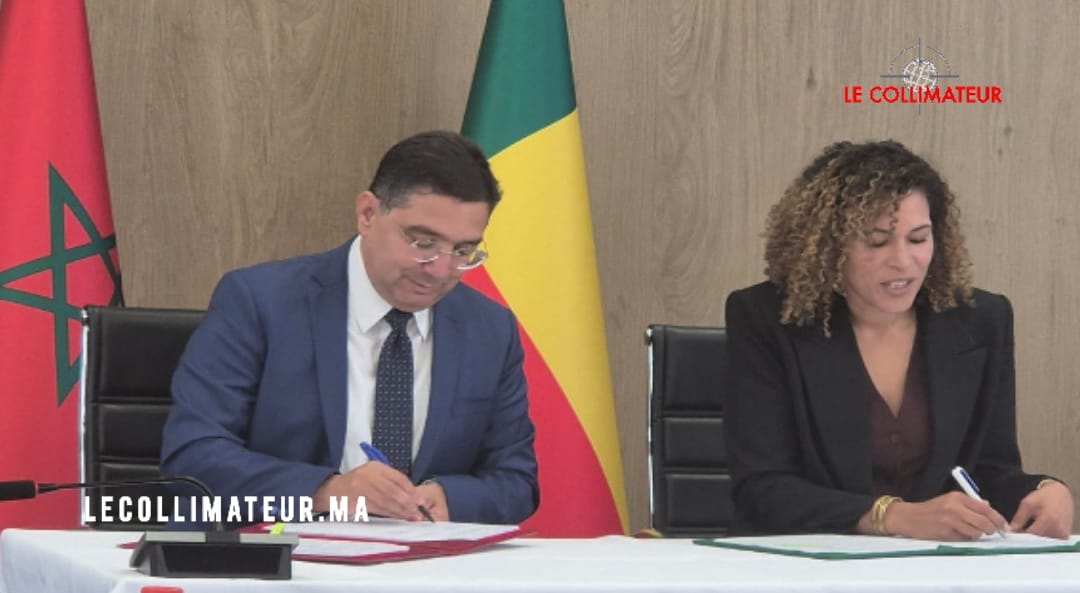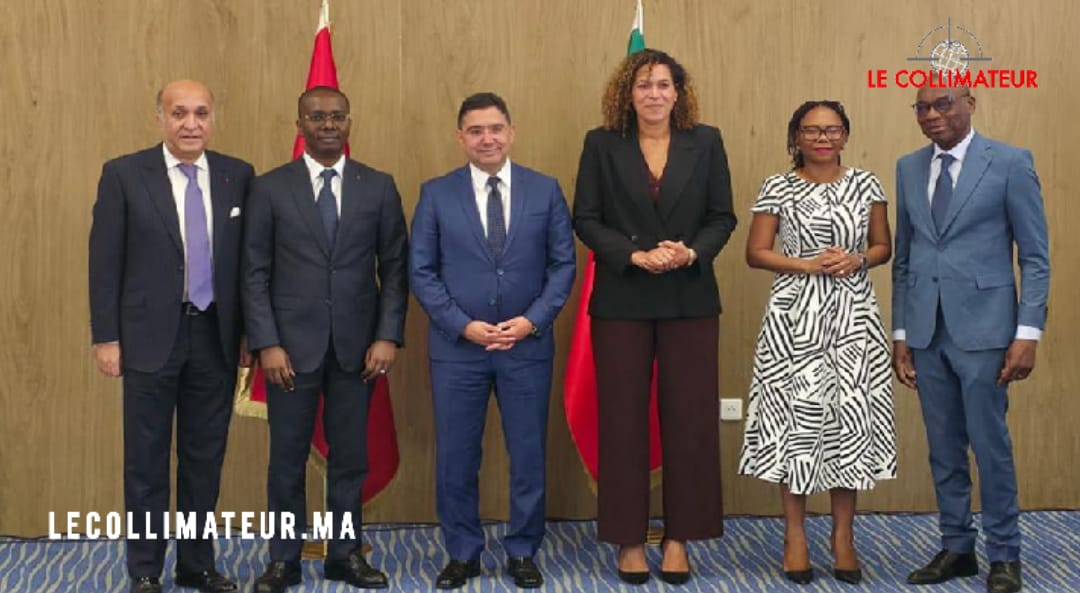
Top officials from Bénin and Morocco have concluded high-level talks in Cotonou, expressing full satisfaction with the progress of their bilateral cooperation while underscoring a shared commitment to deepen and diversify this partnership moving forward. The discussions, held ahead of the joint presidency of the seventh session of the Morocco-Bénin Joint Cooperation Commission, highlighted significant achievements since the historic visit of His Majesty King Mohammed VI to Cotonou in June 2004.
The meeting, led by Nasser Bourita, Morocco’s Minister of Foreign Affairs, African Cooperation, and Moroccans Residing Abroad, and Corinne Amori Brunet, Bénin’s Minister of Foreign Affairs in charge of African Diaspora Integration, alongside Hugues Oscar Lokossou, Minister Delegate for Resource Mobilization and Debt Management, reflected on the strong bonds of friendship and mutual respect between the two nations. Emphasis was placed on the deep ties between His Majesty King Mohammed VI and President Romuald Wadagni, as well as their collective vision to elevate Bénino-Moroccan relations into a leading example of inter-African cooperation rooted in solidarity, exchange, and shared progress.
Expanding horizons: key sectors for deeper collaboration
The talks identified high-potential sectors where collaboration could flourish, including economy, trade, industry, investments, tourism, agriculture, justice, security, vocational training, higher education, scientific research, healthcare, digital technology, and culture. Both delegations reaffirmed their determination to build a robust economic partnership that actively engages the private sectors of both countries, positioning them as key drivers of trade expansion and sustainable development financing.
A partnership built on shared values
The renewed collaboration framework reflects a mutual understanding of the strategic importance of fostering economic resilience and cultural exchange between Bénin and Morocco. By leveraging complementary strengths in trade, agriculture, and innovation, the two nations aim to create a model of cooperation that not only benefits their populations but also sets a benchmark for regional partnerships across Africa.
With a focus on practical, results-driven initiatives, the next phase of this partnership is expected to unlock new opportunities for businesses, professionals, and communities in both countries, reinforcing the foundations of a dynamic and forward-looking alliance.