Khombole controversy: political speech and religious boundaries in Senegal
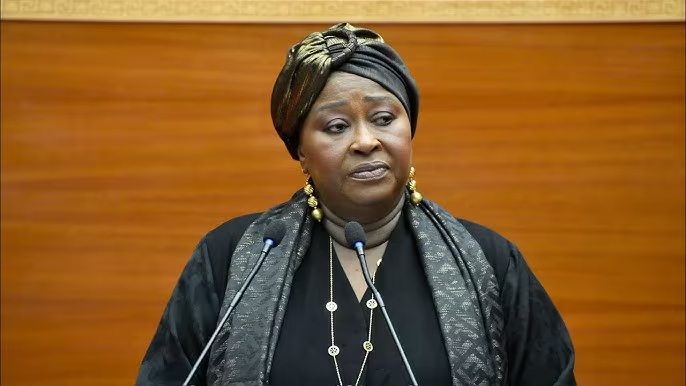
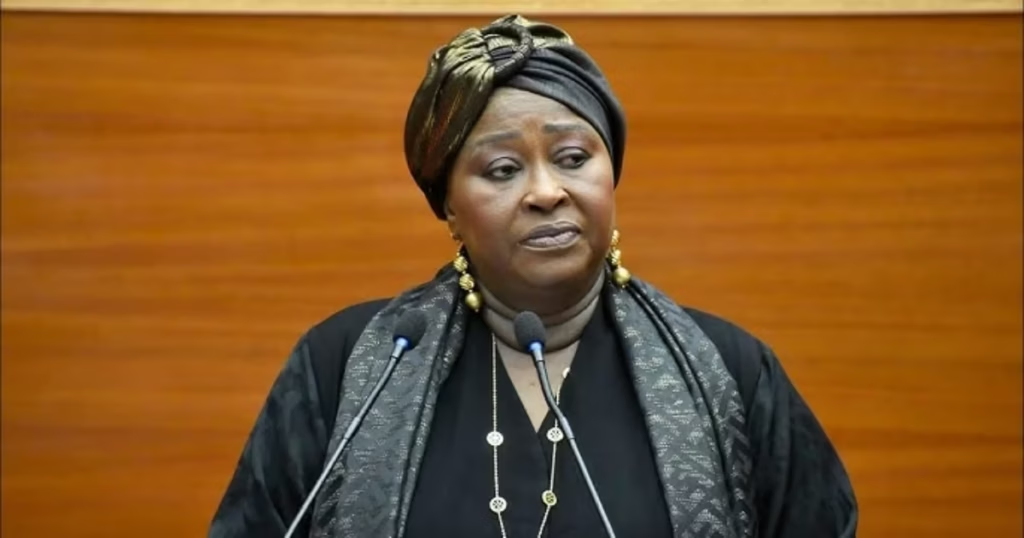
In Khombole, a single phrase has ignited a national debate about the intersection of faith and politics in Senegal. The words of Maïmouna Dièye, addressed to Ousmane Sonko, crossed a sacred line—one that separates respect for leaders from the veneration reserved for the divine.
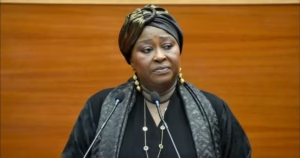
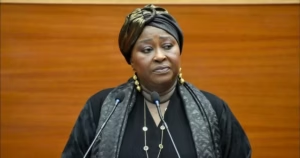
The political landscape in Senegal shifted briefly this weekend in Khombole, where Maïmouna Dièye’s choice of words during a public address left Ousmane Sonko visibly unsettled. Her invocation—”under the presence of Seyidina Ousmane Sonko Salalahou Aleyhi Wa Salam”—was more than a figure of speech; it placed the opposition leader on a spiritual pedestal reserved exclusively for prophets in Islamic tradition.
Maïmouna Dièye’s words spark outrage
By framing Ousmane Sonko’s name within a religious benediction traditionally used only for the Prophet Muhammad (peace and blessings upon him), Dièye inadvertently crossed into forbidden territory. In Islam, the phrase “Salalahou Aleyhi Wa Salam” is a mark of reverence so profound that it is never applied to any human figure, no matter how respected. The misstep is not merely linguistic; it reflects a deeper tension between political admiration and religious sanctity. Dièye’s statement, though likely born of enthusiasm, blurred a line that many religious scholars insist must remain uncrossed—especially in a nation where faith and governance often intertwine.
For Ousmane Sonko, the impact was immediate. His discomfort was palpable as he listened to a title reserved for divine figures being applied to him. The gravity of the situation lies not in the intention behind the words, but in their potential to reshape perceptions—placing a political figure beyond the realm of ordinary leadership and into the sacred.
Ousmane Sonko’s swift response
Recognizing the sensitivity of the moment, Ousmane Sonko acted quickly to clarify the boundaries. In a public statement, he acknowledged the affection of his supporters but drew a firm line: no political leader, no matter how influential, should ever be equated with the Prophet. His words were a deliberate attempt to realign the discourse, reminding both allies and critics that leadership in Senegal, while deeply respected, must never be conflated with divinity.
The incident underscores a recurring challenge in Senegal’s political arena: the fine line between admiration and sacralization. Religious leaders in the country have long cautioned against the dangers of elevating political figures to spiritual status, warning that such practices risk undermining the separation between earthly governance and divine reverence. Ousmane Sonko’s response was not just a personal rebuttal; it was a reaffirmation of Senegal’s commitment to maintaining this delicate balance.