Maïmouna Dièye’s controversial remarks about Ousmane Sonko spark debate in Khombole
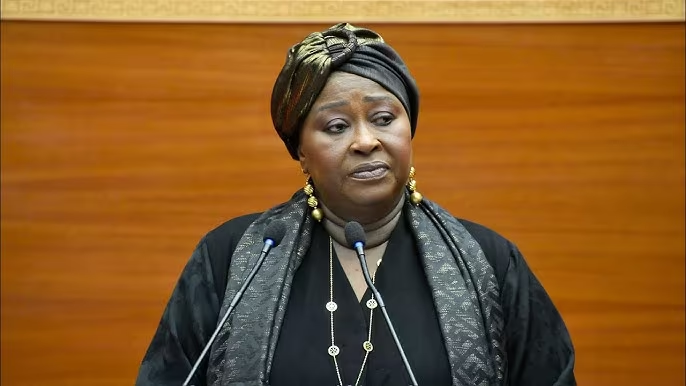
A candid remark by Maïmouna Dièye linking Ousmane Sonko to a sacred Islamic invocation has ignited a fierce debate about the blurring of lines between political reverence and religious sanctity in Senegal.
The choice of words used by Maïmouna Dièye during a public address in Khombole this past Saturday created palpable discomfort for Ousmane Sonko. The phrase she employed carries deep spiritual significance in Islam, reserved exclusively for the Prophet Muhammad (peace and blessings be upon him).
Maïmouna Dièye’s statement in Khombole
By introducing her speech with the phrase « under the presence of Seyidina Ousmane Sonko Salalahou Aleyhi Wa Salam », Maïmouna Dièye bestowed upon the Pastef leader an honorific typically reserved for prophets in Islamic tradition. This invocation, known as salat, is a blessing reserved for the Prophet Muhammad and, in some interpretations, other recognized prophets. Its usage implies a spiritual status that transcends ordinary human respect, which is why many found the remark deeply problematic.
In Islamic practice, such an invocation is never extended to political figures, no matter their popularity or influence. The gravity of this misstep lies in its potential to blur the sacred-profane divide, a distinction that Senegalese religious leaders repeatedly emphasize. The remark, though likely unintended as an insult, carries consequences in a nation where religious sensitivities shape public discourse.
Ousmane Sonko’s swift response
Ousmane Sonko quickly addressed the controversy, clarifying that the affection shown by his supporters does not equate to the divine status reserved for the Prophet. He emphasized that he has never claimed—and will never claim—such elevated spiritual recognition. His response was both a personal clarification and a strategic move to prevent his opponents from exploiting the incident in an already polarized political climate.
The incident underscores the delicate balance political leaders must maintain in Senegal, where religious respect is a cornerstone of public life. Leaders often tread carefully to avoid any perception of overstepping sacred boundaries, a reality that Sonko’s reaction reflects.