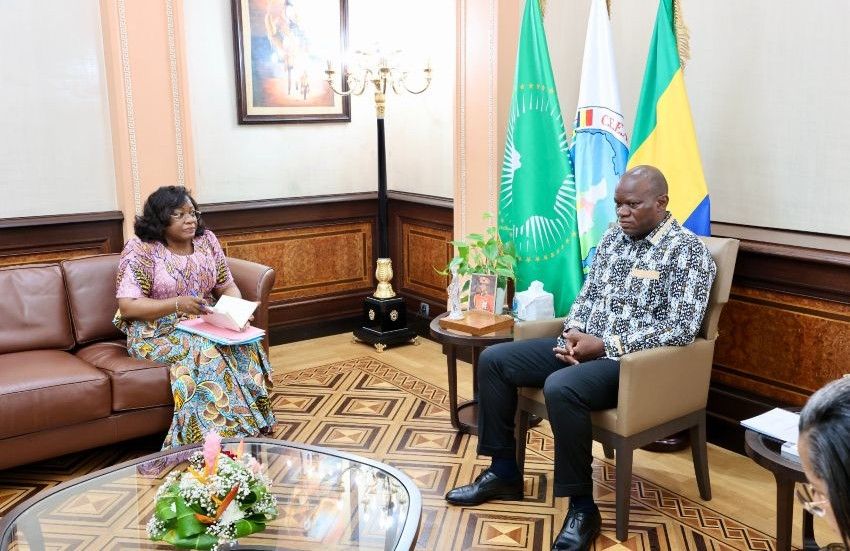
Libreville — President Brice Clotaire Oligui Nguema’s recent meeting with Senate President Huguette Nyana Ekoume Awori Onanga signals a renewed push for decentralisation in Gabon. Yet beneath the political will lies a critical question: how can territories gain real decision-making power without the financial and administrative means to exercise it?
Decentralisation stands as one of Gabon’s most pivotal reforms, designed to bring governance closer to citizens. By empowering local authorities, the initiative aims to tailor public policies to provincial realities, address territorial inequalities, and respond more directly to community needs. However, its success hinges on a delicate balance—one that requires aligning responsibilities with financial resources and administrative capacity.
Bridging the gap between ambition and reality
The reform’s progress in Gabon has been uneven, with a persistent gap between stated goals and on-the-ground execution. The presidential audience with the Senate leader underscores this disconnect, as discussions focused on accelerating decentralisation while identifying the obstacles hindering its implementation.
While the executive branch has demonstrated a clear commitment to advancing decentralisation, the challenge remains: translating political momentum into practical, sustainable mechanisms that reshape territorial governance for the long term.
The core challenge: responsibility without resources
At the heart of the debate is the effective transfer of competencies to local authorities. Simply assigning new responsibilities to municipalities and regional administrations is not enough—true autonomy demands qualified personnel, predictable budgets, and decision-making authority.
Without these pillars, decentralisation risks becoming a symbolic shift rather than a substantive one, leaving local entities burdened with obligations but still dependent on central government oversight. The discussions between the president and the Senate president emphasized strengthening administrative and financial capacities to ensure local bodies can fully exercise their new roles.
Clarity in roles is equally vital. Transferring competencies must be accompanied by a coherent organizational framework to prevent administrative overlaps, delays in decision-making, and funding shortfalls. Decentralisation, therefore, is not merely an institutional reform—it represents a fundamental shift in how public resources are allocated, distributed, and utilized for the benefit of citizens.
Senate’s role: from policy to practice
To bridge the divide between high-level policy and local realities, Senate President Nyana Ekoume proposed field missions for senators. These visits aim to assess the operational challenges faced by local authorities, from administrative bottlenecks to financial constraints, and evaluate their readiness to assume new responsibilities.
This approach carries significant potential. By grounding institutional debates in real-world conditions, these missions can highlight the diverse needs of rural municipalities, expanding urban centers, and resource-limited communities. The insights gathered could inform priority-setting and refine the mechanisms for transferring competencies.
However, their impact will depend on the rigor of data collection, the application of findings, and the willingness of institutions to act on recommendations. Alongside these assessments, training and professional development for local officials—covering areas such as local administration, taxation, revenue collection, and budget management—emerge as critical priorities.
These skills are essential for enhancing local financial autonomy. A municipality capable of identifying revenue sources, improving tax collection, and managing expenditures efficiently gains greater leverage to fund local projects. Yet, capacity-building must be paired with appropriate tools, streamlined procedures, and robust oversight to ensure lasting results.
Local autonomy as a governance test
Beyond administrative restructuring, decentralisation raises a fundamental governance question: how can transferred public resources translate into tangible benefits for citizens? The presidential vision envisions local authorities as active drivers of their own development—requiring transparent financial management, heightened accountability among elected officials, and the ability to set priorities aligned with community needs.
Financial autonomy is central to this equation. Strengthening local revenue streams can reduce dependence on central funding and enable progressive investment in local projects. However, not all territories possess equal fiscal potential or economic capacity. An effective decentralisation strategy must therefore account for regional disparities to prevent lessadvantaged areas from falling further behind.
The state’s role remains indispensable in orchestrating transfers, supporting local administrations, and ensuring equitable resource distribution. At the same time, greater accountability for local leaders must be reinforced through control and evaluation mechanisms that track the use of public funds.
The October 23 meeting marks a new phase for Gabon’s decentralisation efforts. Yet, the reform’s success will not be measured by the number of competencies transferred or the volume of institutional announcements. Its true test lies in whether local authorities can secure funding for their projects, enhance public services, and deliver concrete results to their constituents. The real transformation will occur when territories are equipped not just with responsibilities, but with the means to fulfill them.