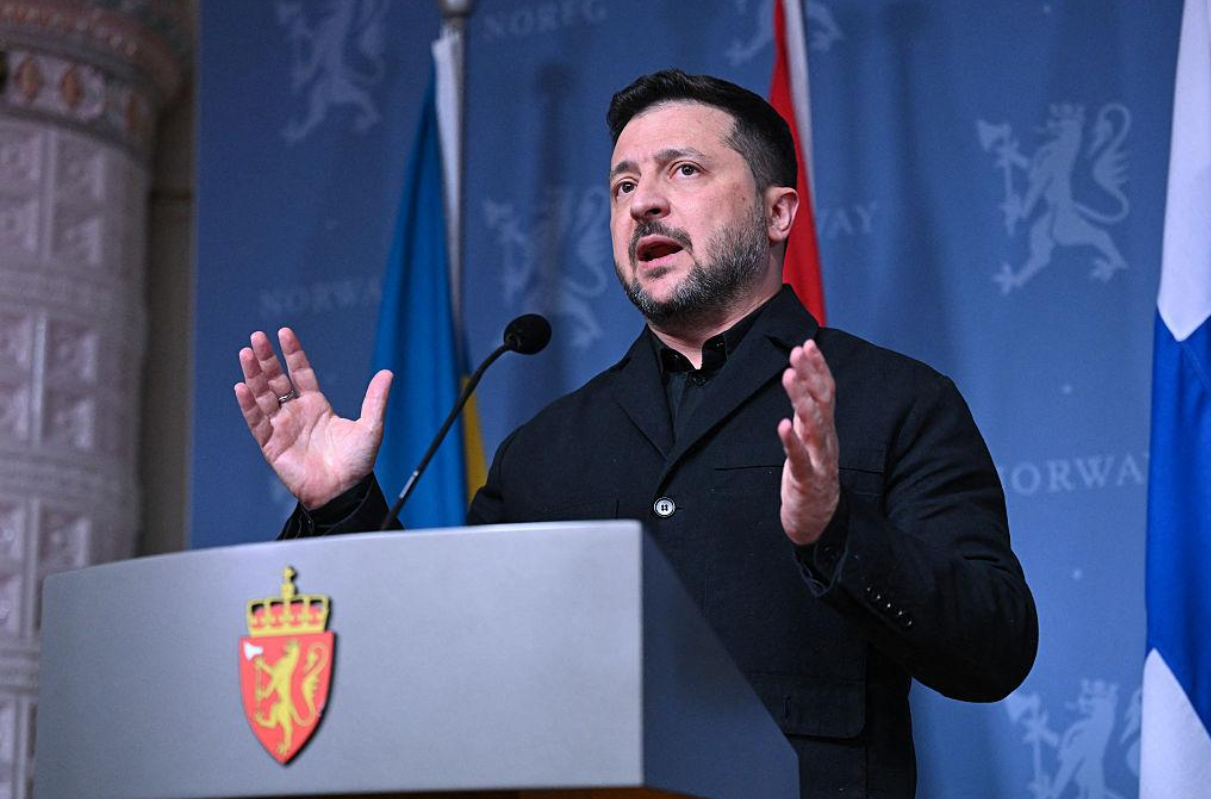
The global reaction to Ukrainian President Volodymyr Zelensky’s announcement of a potential frontline freeze has been swift, sparking intense debate over the future of the conflict and the feasibility of peace. On 21 October 2026, Zelensky declared Ukraine’s readiness to halt fighting along current military positions, paving the way for discussions on security guarantees with Washington and European capitals. Yet, in a follow-up interview with CNN the next day, he firmly ruled out territorial concessions, making it clear that any truce would not equate to recognising Russian control over occupied regions or abandoning Ukrainian-held areas.
Public fallout and the sovereignty dilemma
The proposal has ignited a firestorm of reactions, with analysts and policymakers weighing its implications. Zelensky’s stance—halting the fighting without surrendering sovereignty—reflects Ukraine’s delicate balancing act. The president’s back-to-back interviews underscored a critical distinction: a ceasefire could pause the bloodshed, but it would not legitimise Russia’s territorial claims. For Kyiv, the line between military reality and legal recognition remains non-negotiable.
What a frontline freeze could mean
In his 21 October remarks, Zelensky framed the freeze as a pragmatic first step to end the cycle of violence. By suspending hostilities, Ukraine aims to create space for political dialogue after years of war. Yet, this pause would not resolve the core dispute: the status of occupied regions like Donbass. Moscow’s demands for full control of Donetsk clash with Kyiv’s refusal to cede any Ukrainian-held land. A ceasefire might reduce immediate violence, but the underlying conflict over territory would persist, leaving the door open for future tensions.
Security guarantees: the make-or-break factor
For Ukraine, any truce hinges on ironclad security guarantees from Western partners. Zelensky has stressed that without robust protections, a ceasefire could merely be a temporary lull before renewed aggression. The proposed framework envisions a multi-stage process: halt the fighting, launch negotiations, and establish deterrent mechanisms to prevent a Russian resurgence. However, the specifics remain unclear. What form would these guarantees take? Would Western nations commit militarily if Russia violated the agreement? And how would Europe and the US align their support amid recent strains in transatlantic relations?
Zelensky’s CNN interview highlighted these challenges, noting recent friction with Washington over military aid and communication systems. Despite these tensions, he continues to view the US as indispensable to any lasting solution. Europe’s role is equally critical, with Kyiv seeking long-term security commitments beyond a mere halt in hostilities. Yet, the willingness and ability of Western nations to deliver on these promises remain uncertain.
The road ahead: negotiations or stalemate?
While Zelensky’s proposal signals a diplomatic opening, it falls short of a breakthrough. Russia and Ukraine remain at odds over territory, ceasefire terms, and the conditions needed to prevent a return to war. Russian President Vladimir Putin’s 22 October statement—that Moscow is open to US-mediated talks while insisting on security guarantees for Russia—further complicates the picture. The central question looms: can hostilities end without an immediate resolution on disputed lands?
Kyiv’s approach separates the current military reality from the legal recognition of borders, a distinction that may not satisfy Moscow. The frontline freeze could serve as a first step toward de-escalation, but only if both sides agree on its terms and back it with credible security measures. Until Russia and Ukraine bridge their fundamental divides on sovereignty and security, the prospect of durable peace remains elusive. For now, Ukraine’s narrow diplomatic path offers a glimmer of hope, but its success depends on concessions neither side seems ready to make.