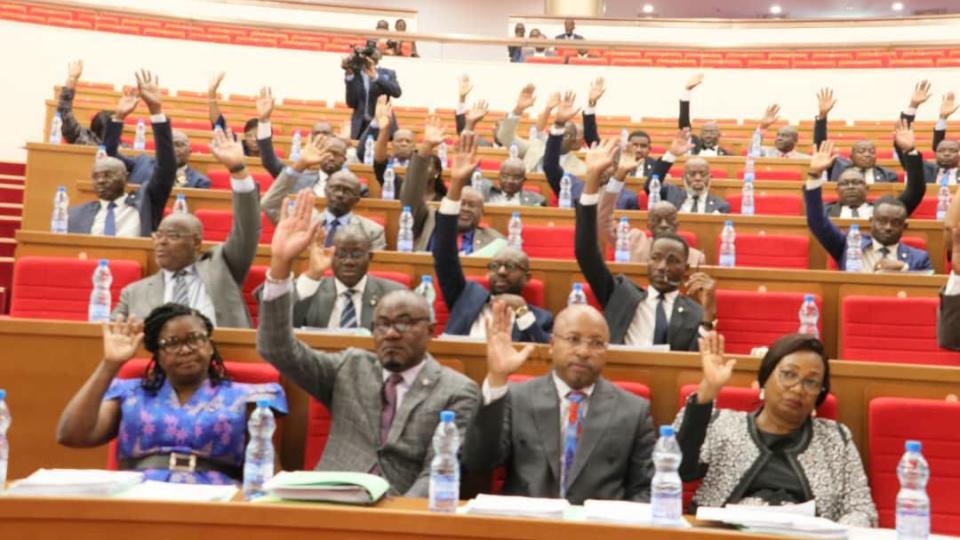
The legislative atmosphere reached a peak this Saturday, June 20, 2026, at the Palais Léon-Mba. Under the leadership of Michel Régis Onanga M. Ndiaye, the President of the National Assembly, deputies gathered for a plenary session to process a substantial volume of legislative texts. This high-stakes meeting, attended by various government members defending their respective portfolios, concluded with a powerful political signal: the unanimous adoption of all 18 bills presented for voting.
These newly approved texts target highly strategic sectors, reflecting a deep-seated commitment to modernizing State structures within the framework of the Fifth Republic. Among the validated legislative projects is the ratification of the January 29, 2026, ordinance concerning electronic archiving—a significant milestone in the digital transformation of the Gabonese administration.
Furthermore, the deputies ratified the restructuring of the High Authority of Communication (HAC) and, crucially, fundamental texts affecting the daily lives of citizens. These include reforms to the Nationality Code and a revision of the land ownership system. This updated legal framework aims to protect the rights of the population while simultaneously securing the business climate for potential investors.
A strengthened institutional synergy
Beyond political divides, the discussions within the chamber were remarkably substantive. Following the vote, the Executive branch praised the sense of responsibility displayed by the national representation. This renewed harmony between the government and Parliament highlights a collective ambition to fortify the rule of law and implement the structural reforms initiated across Gabon over the past three years.
To ensure the success of this plenary, the leadership of the National Assembly had convened earlier during the traditional Conference of Presidents, fine-tuning the final details of this landmark day.
High-pressure conclusion to the session
However, there will be little time for rest for the parliamentarians. As the end of the ordinary session draws near, the schedule remains exceptionally crowded. Eight additional bills are already under consideration by various committees. These texts will undergo rigorous debate within ad hoc committees before being submitted for a final decision during the next plenary session.