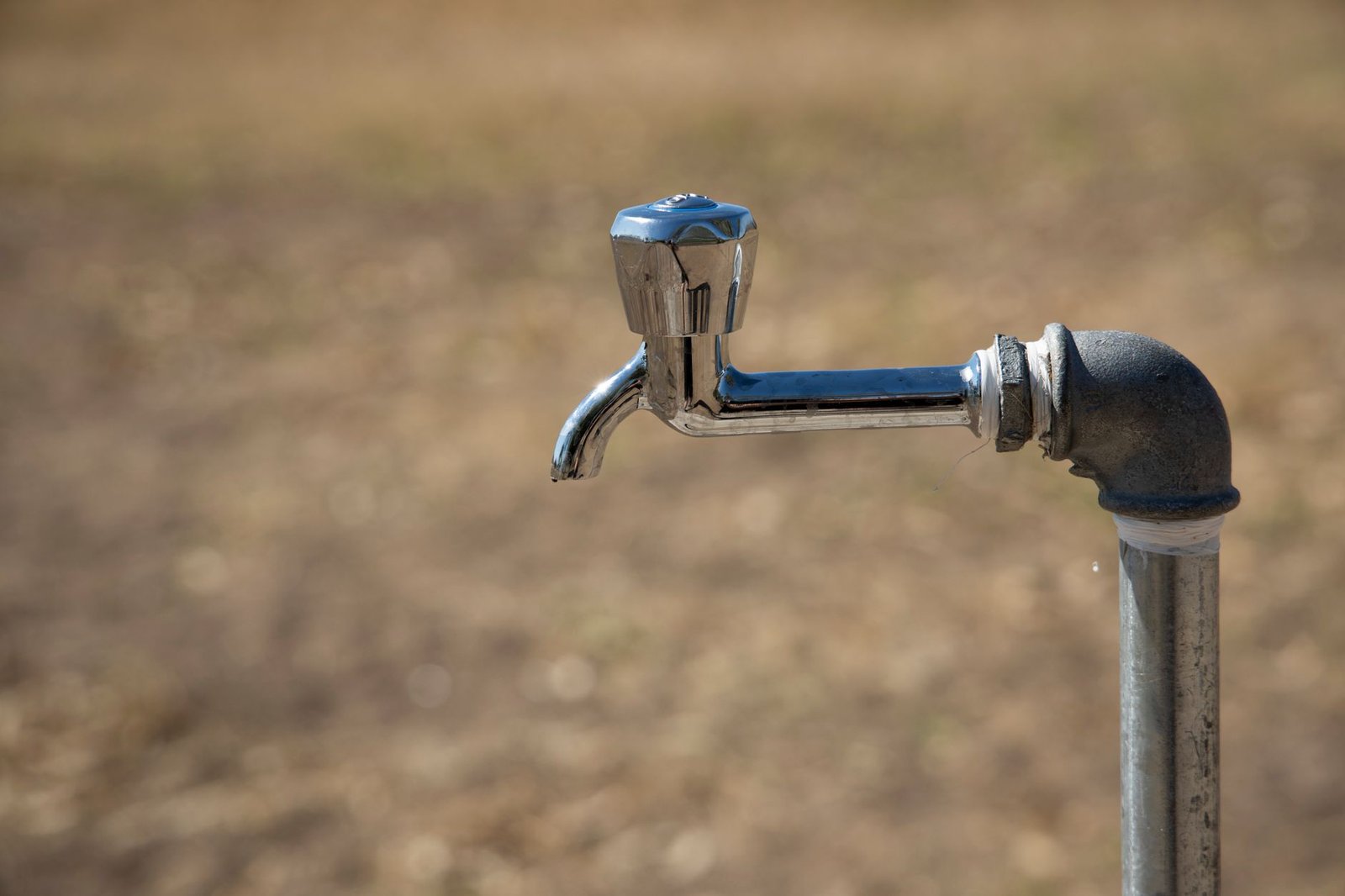
Libreville is grappling with a severe water shortage that has reached crisis levels, prompting authorities to declare a state of hydrological emergency across the capital and its surrounding areas. With faucets running dry for days on end, residents are forced to queue for hours at the few remaining distribution points, while black-market prices for water containers have skyrocketed in working-class neighborhoods. Locals compare the scarcity to the frustration of holding a 10,000 CFA franc bill—just out of reach when most needed.
Two key factors are driving this unprecedented water scarcity. First, an abnormally weak rainy season has drastically reduced reservoir levels and groundwater reserves that sustain the city’s supply. Second, the aging infrastructure—decades old and plagued by leaks and inefficiencies—has left treatment plants operating well below capacity. The result is a fragile system on the brink, unable to withstand even minor disruptions in rainfall or supply.
Collapsing infrastructure threatens Gabon’s water security
The water crisis in Libreville underscores deeper issues within Gabon’s approach to managing critical utilities. Historically managed by the Société d’énergie et d’eau du Gabon (SEEG), the sector has seen repeated state interventions, contract disruptions, and inconsistent investment strategies. With the city’s population now exceeding 700,000—and growing rapidly—the demand for potable water has far outpaced supply. Each dry spell now triggers selective water rationing in outlying districts, leaving households and businesses in the lurch.
The political transition following the 2023 regime change has placed this crisis at the center of public concern. Authorities face a narrow window to demonstrate tangible progress or risk eroding public trust. The declared hydrological emergency has unlocked emergency funds, equipment mobilizations, and inter-ministerial coordination, but lasting solutions will require a long-term investment roadmap with clear accountability and measurable outcomes.
Social unrest grows as water cuts deepen
On the ground, improvisation has become the norm. Government tanker trucks make sporadic deliveries, municipal officials distribute water in batches, private boreholes operate at a premium, and informal resale markets thrive in neighborhoods desperate for relief. Businesses—from hotels to hospitals—are feeling the strain. Hospitals, in particular, face heightened risks as water shortages compromise hygiene standards and raise fears of waterborne outbreaks.
Short-term measures announced by officials include accelerated repairs to treatment plants, emergency drilling of new wells, and accelerated groundwater extraction. Yet behind these efforts looms a daunting financial challenge. Multilateral lenders such as the African Development Bank and the World Bank have previously funded water infrastructure projects in Greater Libreville. Their renewed involvement will likely depend on demonstrable improvements in sector governance and a transparent role for the state-owned utility.
Gabon’s crisis reflects a broader regional challenge
Libreville’s water emergency is not isolated. Cities across Central and West Africa—including Kinshasa, Brazzaville, Douala, and Abidjan—are experiencing recurrent water stress due to rapid urban growth, underinvestment, and increasingly erratic rainfall patterns. For Gabon, long perceived as water-rich because of its vast rainforests, this crisis comes as a stark reminder of ecological fragility and infrastructure vulnerability.
Resolving the crisis will demand a three-pronged strategy: rehabilitating existing pipelines and treatment plants, diversifying water sources (including desalination and deep aquifers), and reforming the institutional framework governing public water services. With national elections on the horizon, the political transition cannot afford delays. Failure to act decisively risks fueling social discontent and undermining public confidence in the new leadership.