Sabotage plunges Bamako into darkness amid rising tensions
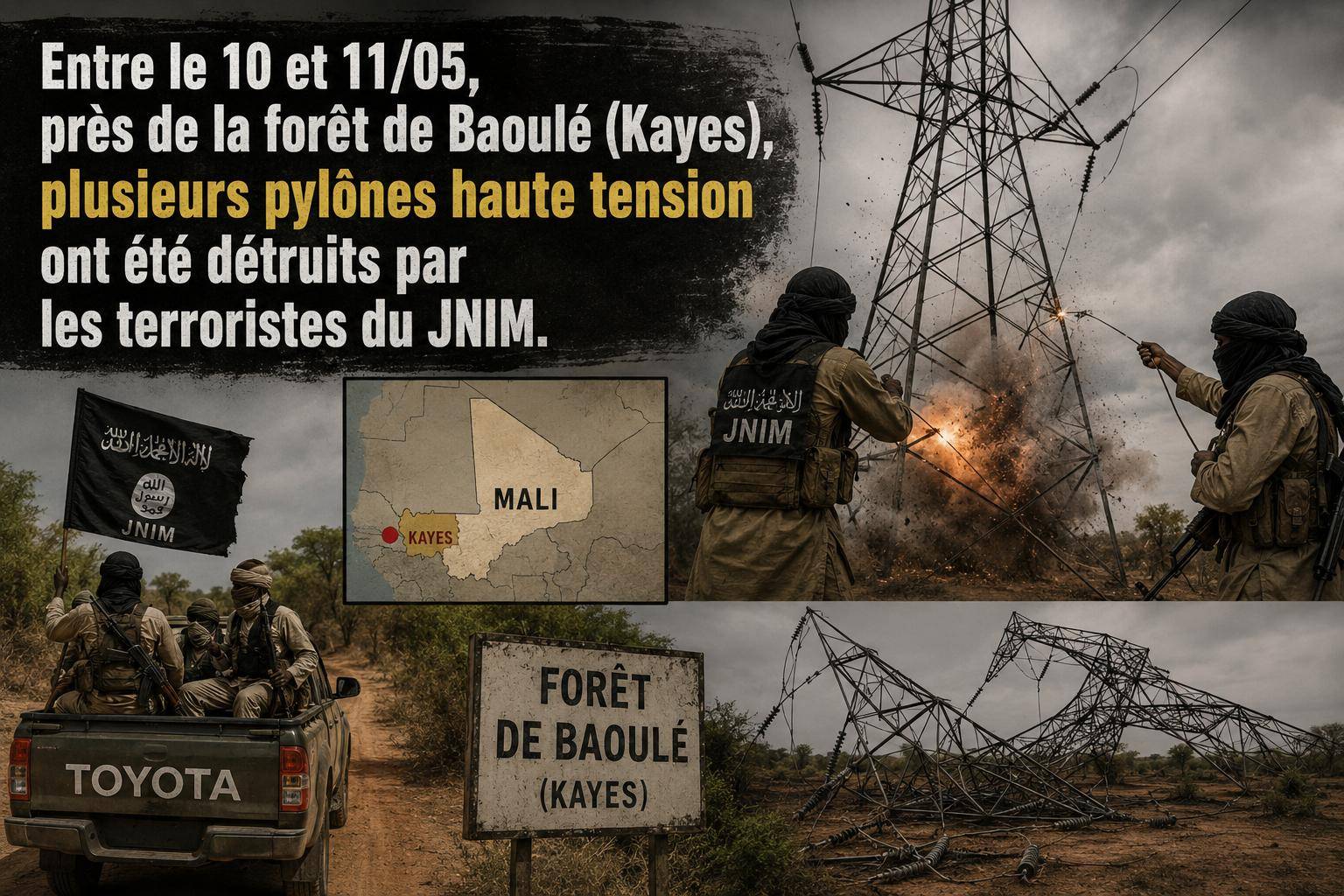
Early May 2026 marked a turning point for Mali’s already fragile energy sector. In the dense forests of Baoulé, located in the Kayes region, militants from the Group for the Support of Islam and Muslims (JNIM) carried out a deliberate attack on critical power transmission infrastructure. The assault left vast areas—including the capital Bamako—in complete darkness, compounding an existing energy crisis amid extreme heat and water shortages.
The attack occurred despite the presence of Russian-backed Africa Corps units, raising serious doubts about their operational effectiveness in safeguarding Mali’s vital infrastructure. With temperatures soaring above 45°C, residents face an unbearable daily struggle as fans, refrigeration, and water pumps fail without electricity. Hospitals and emergency services operate under severe strain, risking countless lives.
JNIM shifts focus to Mali’s economic lifelines
The JNIM’s strategy has evolved from sporadic road ambushes to a calculated campaign targeting the nation’s economic backbone. By systematically destroying high-voltage power lines near Kayes, the group has not only disrupted Bamako’s power supply but also exposed the vulnerability of the Malian state and its Russian allies.
Security experts note the precision of the attack—pylons in remote, heavily forested areas were demolished using sophisticated techniques, suggesting advanced planning and access to specialized explosives. This level of execution contrasts sharply with the Africa Corps’ inability to detect or prevent such sabotage, despite claims of securing key zones.
The irony is stark: while Russian-backed forces claim control over strategic territories, insurgents continue to infiltrate, plant explosives, and retreat unscathed. The failure to protect critical infrastructure undermines public trust in both the Malian government and its foreign partners.
Regional crisis looms as dams come under threat
Intelligence reports indicate that the JNIM’s next targets may include the Manantali and Sélingué dams, two of West Africa’s most crucial hydroelectric and irrigation facilities. A successful attack on these structures would plunge not only Mali but also neighboring countries like Senegal and Mauritania into prolonged darkness and economic chaos.
The consequences would be catastrophic: energy shortages, disrupted agriculture in the Senegal River Basin, and a potential humanitarian disaster across the region. This escalation—from trucks to pylons to dams—reveals a deliberate strategy to cripple regional stability, one that neither the Malian Armed Forces nor the Africa Corps appears equipped to counter.
Government under pressure as promises fall short
The Malian transitional government, heavily reliant on Russian military support, now faces an existential challenge. Despite costly deployments of the Africa Corps, the country’s essential services remain vulnerable, and public frustration is reaching a boiling point.
While authorities highlight fuel convoys and military escorts, the reality on the ground tells a different story. Backup generators are insufficient to compensate for the loss of high-voltage power, leaving hospitals, businesses, and households in limbo. The once-bold rhetoric of territorial sovereignty now clashes with the harsh truth: Mali’s infrastructure is crumbling, and its people are paying the price.
For the people of Bamako, the blackout is more than an inconvenience—it is a symbol of a broken promise. They no longer demand slogans; they demand light, water, and security—the basic pillars of dignity in a nation under siege.