Alleged state-led abductions and threats escalate in Bamako
Bamako, Mali — Since the dual attacks on April 25 and 26, the political climate in Mali has deteriorated sharply, with opposition figures and human rights defenders increasingly targeted in coordinated campaigns of intimidation. Multiple disappearances and public incitements to violence have raised serious concerns among international observers and local civil society groups.
Between May 2 and 5, three prominent political leaders vanished in broad daylight in the capital. Me Mountaga Tall, a veteran human rights lawyer and democratic advocate, Moussa Djiré (Abba), leader of the Yiriba 223 movement, and Youssouf Daba Diawara, former coordinator of the Coordination of Movements, Associations and Sympathizers of Imam Mahmoud Dicko (CMAS), were abducted by armed, masked individuals traveling in unregistered vehicles. Authorities have not disclosed their whereabouts or the reasons behind their detention.
The pattern of abductions mirrors previous incidents linked to the National Agency for State Security (ANSE), an intelligence body already accused of involvement in forced disappearances since 2021. To date, no judicial investigations have been launched into these latest cases.
Calls for immediate action from human rights leaders
“These enforced disappearances signal a dangerous escalation in the suppression of dissent in Mali,” stated Drissa Traoré, Secretary General of the International Federation for Human Rights (FIDH). “The authorities must immediately disclose the fate of those abducted, ensure their safety, and conduct independent inquiries. The fight against extremism cannot serve as a pretext for eroding the rule of law.”
Online hate campaigns threaten exiled voices
FIDH has also documented a disturbing rise in online hate speech and incitement to violence, particularly targeting human rights defenders in exile, journalists, and their families. Death threats, smear campaigns, and calls for stripping citizenship have proliferated across social media platforms, often emanating from accounts linked to pro-government activists.
During the funeral of General Sadio Camara, Defense Minister killed in the April 25 attack, a member of the National Transitional Council (CNT) publicly urged violence against critics abroad, declaring, “they must be killed” and “stripped of their nationality.” While the prosecutor issued a statement condemning online hate speech, no legal action has been taken against those responsible.
Crisis deepens under military rule
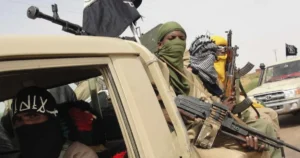
These abuses occur against a backdrop of shrinking civic space in Mali, accelerating since the 2020 and 2021 coups. Political parties were banned in May 2025, in direct violation of the country’s constitution. The recent escalation follows deadly attacks in Bamako, claimed by the Group for the Support of Islam and Muslims (JNIM) and the Liberation Front of Azawad (FLA), which left civilians and military officials dead.
FIDH condemns not only the state-backed violations but also the grave human rights abuses attributed to armed groups, including the JNIM’s recent attacks on villages in the Bandiagara region on May 6, which resulted in civilian casualties. The organization reiterates its call for all parties to respect international humanitarian law and urges the international community to intensify efforts toward sustainable solutions for the Sahel’s intertwined security and political crises.
FIDH demands that Malian authorities immediately cease enforced disappearances, arbitrary detentions, and intimidation tactics targeting dissenting voices. It further calls for impartial investigations into public calls for violence and death threats disseminated online.
As Mali grapples with rising extremism and institutional instability, the protection of fundamental rights remains precarious, with civilians caught in the crossfire of both state repression and armed conflict.