How a political exile reshaped Mali’s security landscape
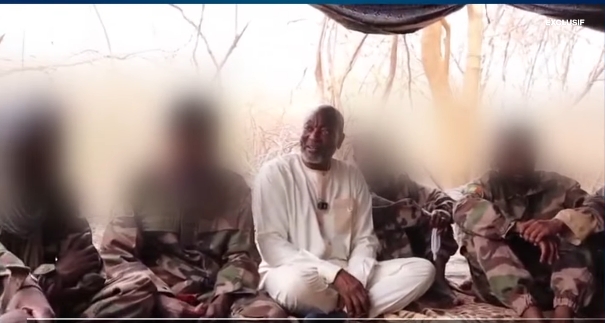
In a striking display of private mediation, a photograph circulating across Malian social media has laid bare the fragility of Bamako’s authority. The image shows opposition leader Oumar Mariko, living in exile, standing alongside 17 recently freed hostages. The captives had been held by the Group for the Support of Islam and Muslims (JNIM), Al-Qaeda’s Sahel affiliate. While the release brings relief to families, it also exposes a troubling truth: the Malian state’s inability to secure its own people.
When the state fails to act, who fills the void?
The fact that a civilian figure, sidelined by the government, could broker such a high-stakes negotiation raises serious questions. How does an opposition leader in exile move freely, negotiate with armed groups, and secure releases where the national security apparatus has repeatedly faltered?
This episode underscores a deeper crisis—the erosion of state sovereignty. In vast swathes of Mali, the power to protect, negotiate, and even administer justice no longer resides with official institutions but with informal actors. For analysts and citizens alike, it signals a state in retreat, its authority replaced by ad hoc arrangements that further weaken its legitimacy.
The JNIM’s calculated public relations move
The hostage release was no act of goodwill. It was a deliberate propaganda coup designed to serve two strategic purposes. First, it allowed the JNIM to present itself as a rational, negotiating force—contrasting sharply with the Malian government’s perceived ineffectiveness. Second, by stepping into the role of local arbiter, the group positions itself as the de facto authority in areas where Bamako’s presence is either absent or distrusted.
As one observer noted, “Sovereignty isn’t declared in speeches from Bamako; it’s proven by the state’s ability to safeguard its people without intermediaries.”
The hidden costs of backchannel deals
Behind the scenes of this apparent humanitarian victory lie dangerous implications. Informal negotiations often come with steep trade-offs:
- Funding insurgency: Ransom payments—though never officially acknowledged—provide financial lifelines to armed groups, fueling future attacks against Malian forces.
- Legitimizing terror: Seeking clemency from a jihadist commander tacitly recognizes their control over territory, emboldening their narrative and eroding trust in the state.
The dilemma is stark: while families celebrate the return of loved ones, the very act of negotiating with extremists may inadvertently strengthen their grip on power.
Two nations under one flag
Mali today is a country divided. In the capital, Bamako’s narrative remains one of military progress and territorial recovery. Yet beyond the urban centers, in rural communities, survival often depends on pragmatic coexistence with armed groups. The state’s absence has forced locals to navigate a harsh reality where the rule of law is replaced by the rule of the gun.
The road to reclaiming authority
This episode is more than a humanitarian footnote—it is a warning. When private actors and opposition figures take the lead on matters of national security, the risks of fragmentation and long-term instability grow. For Bamako, the challenge is no longer just military; it is existential. Restoring state authority will require reclaiming not just territory, but the trust of a population that has learned to rely on other sources of protection.