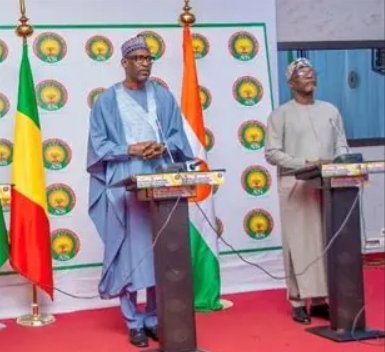
Accusations and cooperation: the contradictory stance of the Sahel states
Recent statements from Niger and Mali’s foreign ministers have sent ripples through the region. On one hand, they level serious accusations against their West African neighbors, alleging that the Economic Community of West African States (ECOWAS) supports armed terrorist groups. On the other, they express willingness to engage in cooperation on select issues. This inconsistent approach—alternating between confrontation and collaboration—reveals an uncomfortable truth: severing ties with a regional bloc is not as simple as a political declaration.
The credibility gap in international diplomacy
Diplomatic consistency is the cornerstone of trust between nations. When a country publicly accuses its neighbors of complicity in violence—such as the alleged support for terrorist factions—it undermines its own credibility to propose economic partnerships the following day.
Analysts argue that such contradictory signals risk portraying Niamey and Bamako as unreliable partners on the global stage. International negotiations, particularly on economic development, require stable and predictable relationships. Framing neighboring states as national enemies while seeking their cooperation creates a paradox that weakens diplomatic leverage.
Geography: an unyielding barrier to self-sufficiency
The withdrawal from ECOWAS was framed as a move toward “total independence.” Yet geography remains an immutable reality that political rhetoric cannot alter.
Dependence on maritime trade routes
Both Mali and Niger are landlocked nations, entirely reliant on coastal ports for critical imports such as food staples, pharmaceuticals, and construction materials. The primary transit hubs—Cotonou in Benin, Lomé in Togo, and Abidjan in Côte d’Ivoire—are essential for their survival.
A breakdown in cooperation with these ports would trigger a surge in transportation costs, pushing consumer prices beyond the reach of already struggling populations. By expressing openness to collaboration, the Sahel governments implicitly acknowledge that the Alliance of Sahel States (AES) cannot operate in isolation without severe economic repercussions.
The illusion of keeping benefits without adhering to rules
Leaving ECOWAS was a bold political statement aimed at appeasing domestic sentiment. Yet the desire to retain technical advantages—such as free movement of goods and services—while rejecting the bloc’s governance framework is a flawed strategy.
The contradiction between political rupture and economic necessity
While the two nations seek to distance themselves from the existing regional order, they still depend on the same infrastructure and trade systems they condemn. This creates a precarious situation: how can a country demand free access to markets it has publicly criticized?
The reality is stark: membership in a regional bloc is not merely about political alignment—it is a contractual agreement that ensures legal protections for trade, investment, and security. By undermining the foundational trust of ECOWAS, the Sahel states risk destabilizing their own economic ecosystems and deterring foreign investors.
From rhetoric to pragmatism: the path forward
Emotion and anger may resonate in public discourse, but they are poor substitutes for effective foreign policy. While fiery speeches may energize domestic audiences, they do little to address pressing challenges like food insecurity or cross-border terrorism.
The urgent need for regional coordination
Terrorism does not respect political borders. It thrives in the gaps created by mistrust and division. To combat this threat effectively, intelligence sharing, military coordination, and joint operations across West Africa are not optional—they are imperative. By alienating potential allies, the Sahel states inadvertently strengthen the very groups they seek to defeat.
True sovereignty: more than just political independence
Niger and Mali are learning a hard lesson: complete disengagement from ECOWAS is not a viable path to prosperity. Genuine sovereignty extends beyond symbolic declarations of autonomy. It encompasses the ability of a nation to feed its people, heal its sick, and protect its citizens.
In today’s interconnected world, no country is an island. The prosperity and security of one state are inextricably linked to the stability of its neighbors. Pretending otherwise—choosing propaganda over practical partnership—only deepens the suffering of ordinary citizens who bear the brunt of these policy missteps.