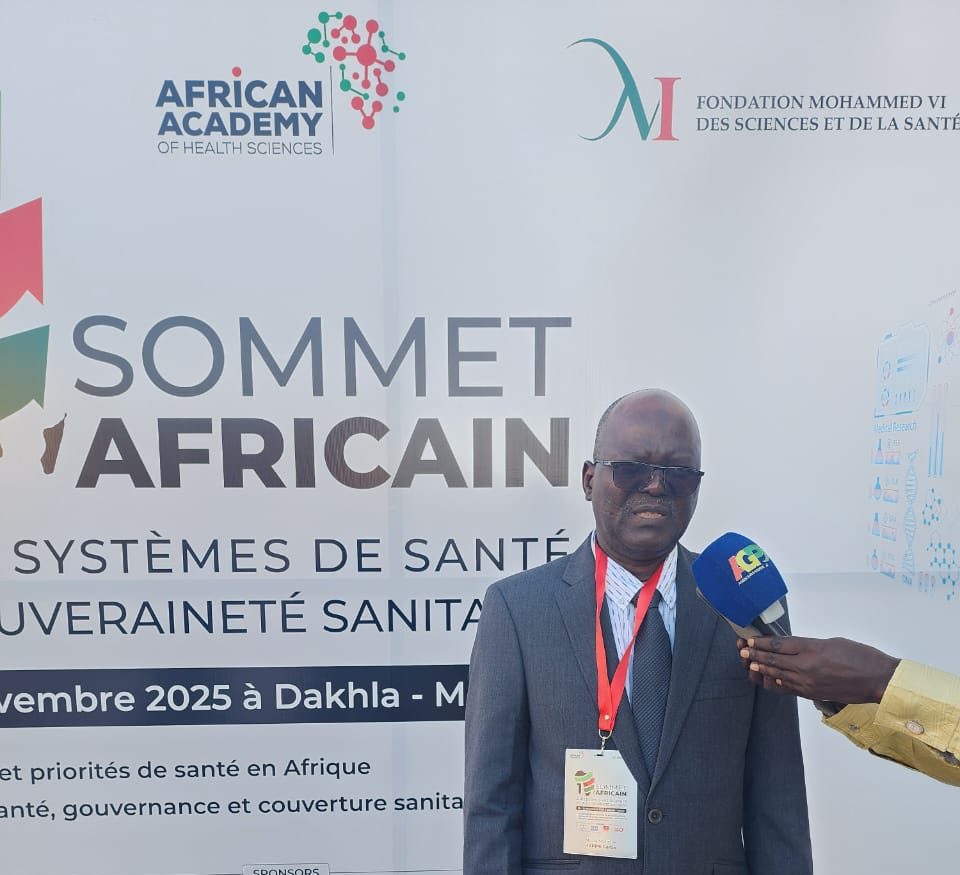
The Nigerien Minister of Public Health and Hygiene, Colonel Major Garba Hakimi, highlighted on November 29 in Dakhla, Morocco, that Niger is making significant strides toward achieving health sovereignty during a press briefing following the two-day African Summit on Health Systems and Health Sovereignty.
Health sovereignty remains a cornerstone of Niger’s leadership vision, championed by key figures such as General Abdourahmane Tiani, President of the Republic, alongside the Prime Minister and Minister of Economy and Finance. These authorities are accelerating efforts to strengthen the healthcare sector, the minister emphasized.
Infrastructure expansion drives primary care improvements
Progress has been made through the construction of hospitals and integrated health centers nationwide. These facilities are designed to enhance community-based primary healthcare, a critical foundation for a robust health system. As Minister Hakimi explained, “robust healthcare begins with accessible primary care infrastructure.”
High-tech medical solutions and workforce development
The government is also investing in advanced medical equipment across the country to ensure accurate diagnoses and effective treatment. Equally important, the minister stressed, is the development of skilled professionals. Continuous training and specialization programs are being rolled out to ensure healthcare workers can effectively utilize these new technologies.
Additionally, the government has allocated significant funding to healthcare, including free services for vulnerable populations and a 50% reduction in public health facility fees. Measures such as free childbirth services, care for children under five, and infrastructure development at all levels are broadening access to essential healthcare.
Minister Hakimi expressed confidence that these initiatives will accelerate progress toward universal health coverage, a key goal for Niger’s leadership. “We are fully committed to this vision and, God willing, will achieve it,” he affirmed.
Challenges and strategic responses in African health systems
During the Dakhla Summit, African health experts reviewed the continent’s health systems, identifying both progress and critical challenges—including system fragility, governance issues, and funding gaps. The focus, however, shifted to solutions: how can African nations build resilient, high-performing health systems?
The minister emphasized that the summit’s success lay in aligning with Morocco’s vision for a sovereign Africa in health matters. Niger actively participated in the inauguration of the African Academy of Health Sciences headquarters, a key milestone in this strategy.
The Moroccan initiative includes building university hospitals and training facilities, including a comprehensive health complex in Dakhla. As Minister Hakimi noted, “human resources are the backbone of a strong health system.” He urged African leaders to adopt this vision, stating, “Health sovereignty is achievable—we must rely on our own resources and efforts.”
Financial innovation and the path forward
Beyond traditional budget allocations, many countries are exploring innovative financing models to support health systems. The Dakhla Declaration outlines a five-pillar roadmap: Epidemiology; Human capital and training; Research and innovation; Financing and governance; and Infrastructure and equitable access.
Minister Hakimi concluded with optimism, stating, “By focusing on these five areas, we can achieve health sovereignty—it’s entirely within our reach. The time for action is now.”
The first African Summit on Health Systems and Health Sovereignty, held November 28–29, brought together 200 experts to advance a vision of health independence across the continent, supported by Morocco’s leadership.