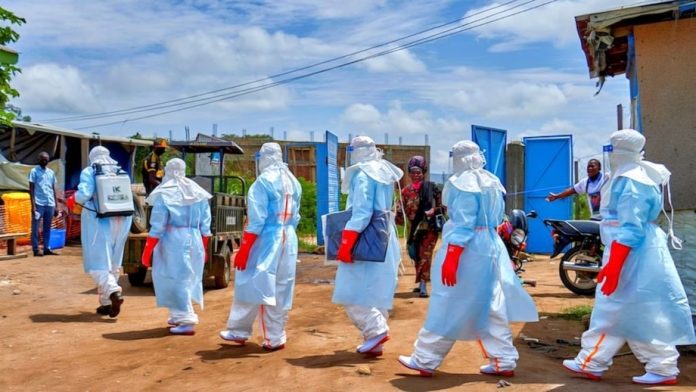
The Ebola epidemic in the Democratic Republic of Congo (DRC) has tragically claimed 600 lives since its initial appearance. This somber figure represents the latest data compiled from Congolese health authorities.
A detailed situation report, updated as of July 7, reveals that a total of 1,759 confirmed cases have been recorded nationwide. In neighboring Uganda, the statistics remain unchanged, with 20 confirmed cases and two fatalities.
Assessing the true scale of this Ebola outbreak continues to be a significant challenge. Anne Ancia, the organization’s representative in the DRC, communicated during a videoconference with the Geneva headquarters that “the disease continues to spread, and its full scope has yet to be definitively determined.”
Despite some advancements in the response efforts, Ancia issued a critical warning: treatment centers are currently operating at nearly 90% of their capacity, placing immense pressure on the nation’s healthcare infrastructure.
The primary epicenter of the current Ebola activity is concentrated in Ituri province, located in the northeastern DRC, sharing borders with Uganda and South Sudan. The virus has also been detected in the adjacent provinces of North Kivu and South Kivu, regions where high levels of insecurity persist due to the presence of the M23 armed group.
Population displacement, ongoing violence, and the inherent fragility of the health system are significantly complicating efforts to contain the disease. Furthermore, urgent humanitarian needs are highlighted, particularly concerning the protection of civilians, ensuring access to food, and providing essential medical care.
Officially declared on May 15, this marks the 17th Ebola epidemic to affect the DRC. The current outbreak is attributed to the Bundibugyo variant, for which no approved vaccine or treatment is presently available.
In light of this critical situation, a clinical trial evaluating two experimental treatments was initiated on July 2. Concurrently, emergency authorization has been granted for the deployment of the first molecular diagnostic test specifically designed to detect this uncommon viral strain.
Over the past half-century, Ebola has tragically been responsible for more than 15,000 deaths across the African continent. The Democratic Republic of Congo’s most severe recorded epidemic, which occurred between 2018 and 2020, resulted in approximately 2,300 deaths from around 3,500 identified cases.