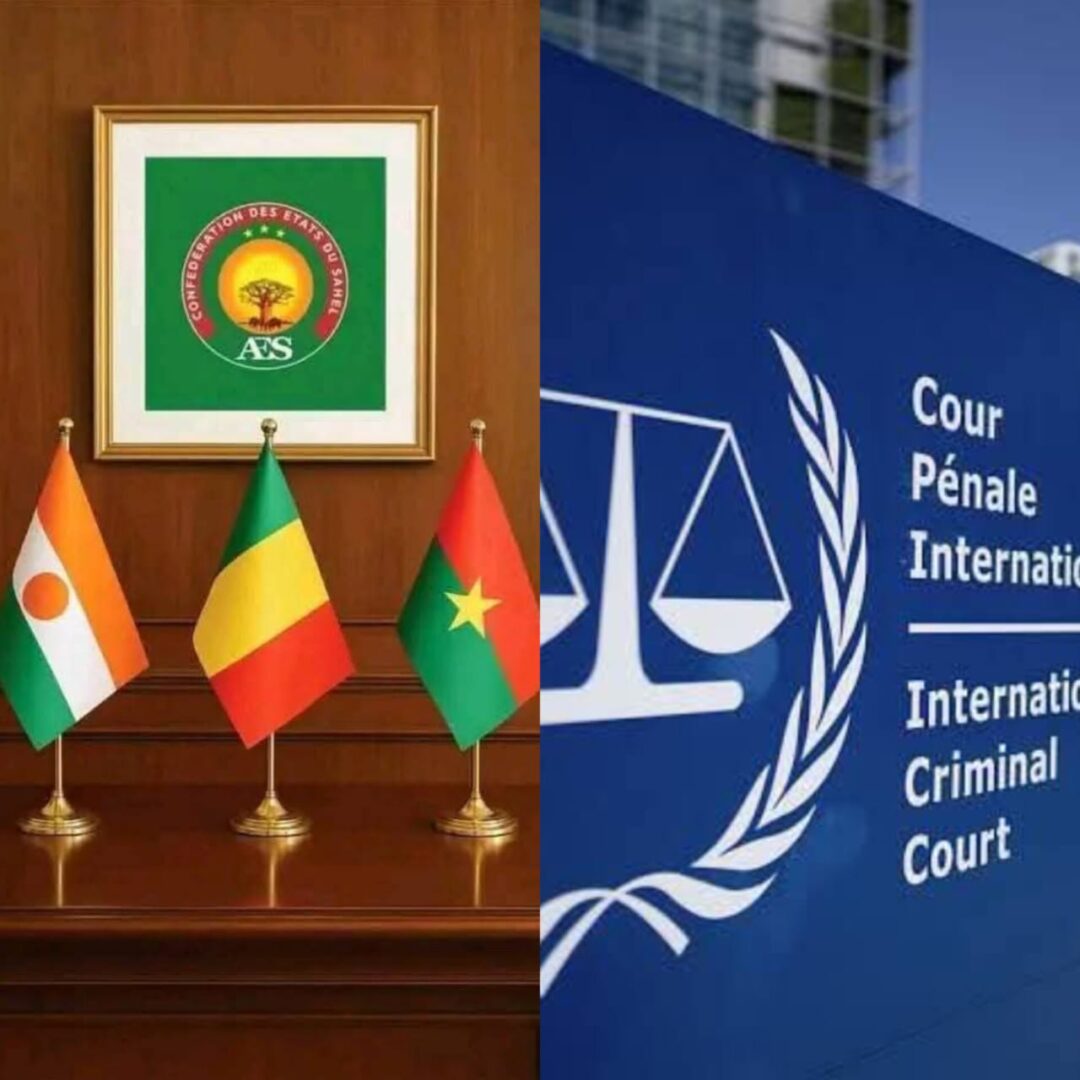
The withdrawal of Burkina Faso, Mali, and Niger from the International Criminal Court marks more than a diplomatic shift—it signals a fundamental questioning of global justice in the 21st century. On September 22, the Alliance of Sahel States (AES) crossed a threshold no one thought possible, not merely by realigning foreign policy but by delivering a symbolic blow to international criminal justice that has not been felt since the Rome Statute’s adoption in 1998.
The departure of the three Sahel nations is framed as a bold assertion of sovereignty, yet it resonates far beyond the corridors of power. For many in the Global South, this move reflects deep-seated frustrations with a justice system that has repeatedly failed to live up to its universal ambitions. The ICC, once hailed as a beacon of accountability, now stands accused of selective enforcement, political manipulation, and an inability to confront the crimes of powerful nations.
Sovereignty as a shield against justice
For the transitional authorities in Bamako, Ouagadougou, and Niamey, the ICC’s exit is the logical conclusion of a broader disengagement from Western influence. Following the denunciation of military accords with France and the United States, the rupture with ECOWAS and the withdrawal from the International Organization of La Francophonie, the Sahel states have systematically dismantled institutional ties with former colonial powers. The withdrawal from the Rome Statute is not an impulsive act but the final step in a calculated strategy to reclaim political and judicial autonomy.
Yet beneath the rhetoric of national dignity lies a pragmatic calculation. The Sahel’s governments, locked in a brutal asymmetric war against extremist groups, face persistent allegations of human rights violations. By exiting the ICC, they erect a legal barrier to shield military leaderships from accountability while reinforcing partnerships with non-Western allies, particularly Russia, which has itself openly defied the Hague-based court.
The ICC’s credibility crisis
The Sahel’s decision finds widespread support because it exposes a truth long ignored: the ICC’s claim to impartiality is unsustainable. How can the court be seen as neutral when architects of the 21st century’s most devastating conflicts remain untouched? The 2003 invasion of Iraq, launched on false pretenses and in defiance of the UN, caused catastrophic destruction. Yet neither George W. Bush nor Tony Blair have ever faced Hague judges. When the ICC attempted to investigate alleged war crimes by U.S. forces in Afghanistan, Washington retaliated with direct financial sanctions against the court’s prosecutors.
Selective prosecution is another stain on the ICC’s record. The nearly decade-long detention of former Ivorian President Laurent Gbagbo, acquitted in 2019 after judges condemned the prosecution’s “exceptional weakness,” exemplifies the court’s uneven approach. Cases have overwhelmingly targeted leaders from nations resisting Western influence, while allied forces committing similar atrocities have evaded scrutiny. The swift issuance of an arrest warrant for Vladimir Putin over the Ukraine invasion, while decades of inaction followed Western-led conflicts, only deepens the perception of a court serving geopolitical interests rather than justice.
Can Africa forge its own path?
The Sahel’s withdrawal should not be dismissed as mere defiance but recognized as a wake-up call for international law. The ICC can no longer claim a monopoly on global morality. Africa already possesses robust legal instruments, including the African Court on Human and Peoples’ Rights and the ECOWAS Court of Justice, to protect fundamental rights. However, the continent’s credibility is undermined by a paradox: states that condemn the ICC for bias often ignore rulings from their own regional courts when inconvenient.
To replace the ICC’s shortcomings with a justice system that is no more than a tool for national impunity would be a grave mistake. Real sovereignty demands rigorous adherence to regional judicial decisions, not the selective enforcement of laws. The Sahel’s withdrawal from the ICC must serve as a catalyst for strengthening Africa’s legal institutions, ensuring that justice is not dictated by distant powers but forged through transparent, independent, and equitable continental mechanisms. Only then can the continent build a justice system respected by all, both within and beyond its borders.