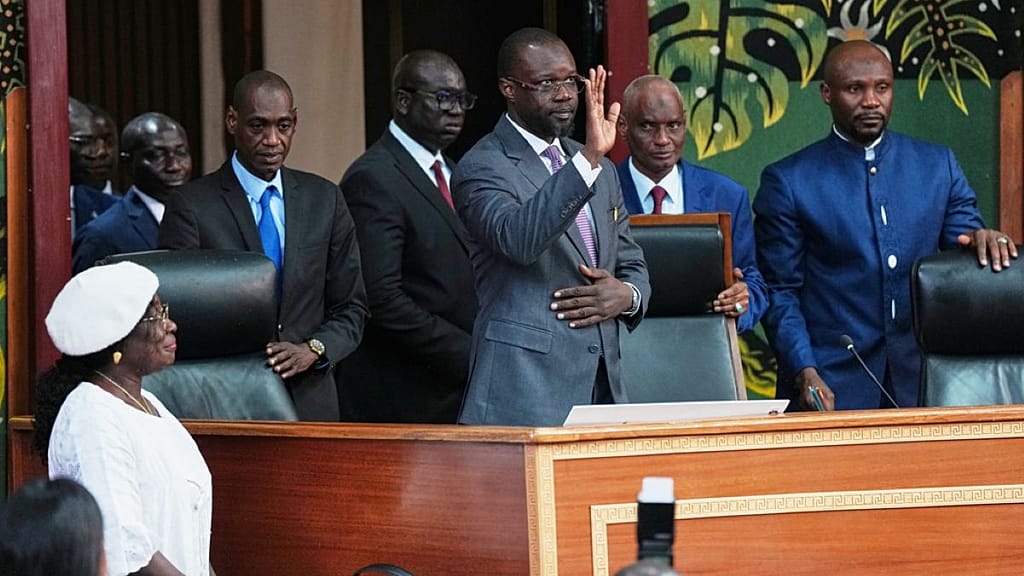
In a decisive legal ruling, Ousmane Sonko has been officially confirmed as President of Senegal’s National Assembly, capping a dramatic shift in the country’s political landscape. The Constitutional Council dismissed an opposition challenge against his return to Parliament, asserting it lacked jurisdiction to intervene in the matter—a decision that closes the door on further appeals.
The ruling comes after Sonko’s abrupt removal as Prime Minister by President Bassirou Diomaye Faye at the end of May. Within days, Sonko reclaimed his seat as a deputy before ascending to the Assembly’s top position, a move that underscores his enduring influence despite the rift between the two former allies.
This judicial outcome solidifies Sonko’s grip on the legislative branch while exposing deepening fissures in the ruling coalition. Once united by a shared agenda, Sonko and Faye now stand on opposing sides of critical debates over economic policy and fiscal management, signaling a new phase of political realignment in Senegal.
From dismissal to dominance: Sonko’s rapid return
Sonko’s swift political rebound highlights the volatility of Senegal’s current institutional dynamics. His removal as Prime Minister triggered immediate calls for his reinstatement as a legislator, a demand fulfilled when he was elected Assembly President shortly after. The Constitutional Council’s decision to reject the opposition’s appeal effectively neutralizes any legal obstacles to his leadership.
Analysts note that this development reflects broader tensions within the country’s governance framework. While Faye’s administration has pursued sweeping reforms, Sonko’s continued presence at the helm of the Assembly suggests he retains significant support among lawmakers—a factor that could reshape legislative priorities in the coming months.
Economic disputes fuel political divide
The growing rift between Sonko and Faye is no longer confined to behind-the-scenes negotiations. Public statements and policy disagreements have laid bare their conflicting visions for Senegal’s future, particularly regarding public spending and economic direction. Sonko’s camp has criticized recent fiscal measures as overly restrictive, while Faye’s team defends them as necessary for stability.
This ideological clash is reshaping alliances in the National Assembly, where Sonko’s party now holds pivotal influence. The Assembly’s leadership under Sonko could accelerate legislative initiatives aligned with his economic agenda, potentially complicating Faye’s reform efforts.