Government launches high-impact task force to revive critical public assets
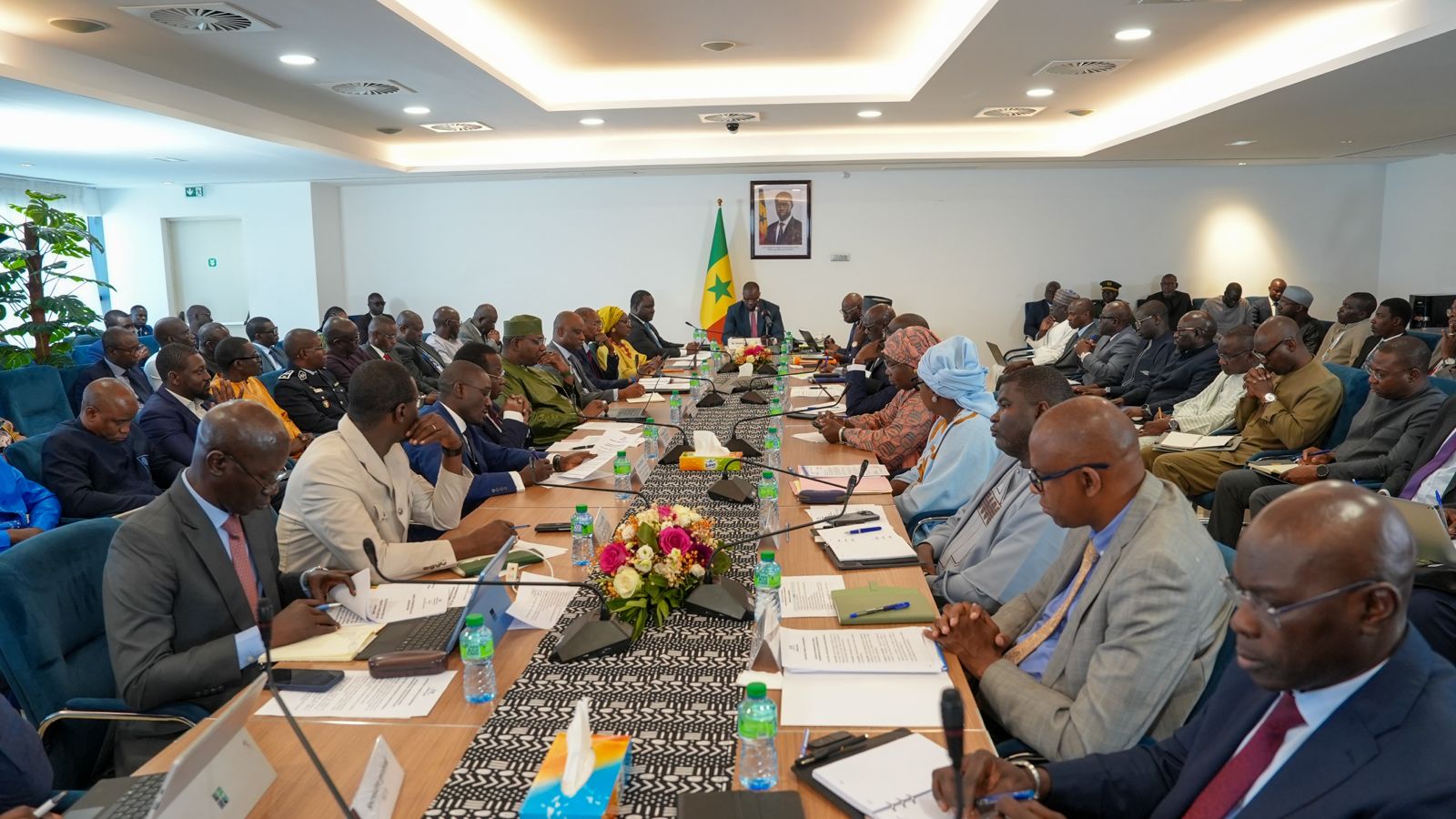
Prime Minister Ousmane Sonko convened an interministerial council meeting on Thursday to address Senegal’s most pressing infrastructure challenges. Held at the Presidential Administrative Building Mamadou Dia in Dakar, the session revealed a stark reality: 245 public projects and assets are currently frozen by financial, legal, technical, or operational barriers, with cumulative investments exceeding several trillion FCFA.
Unused assets costing billions
The audit uncovered 30 completed infrastructures left idle, 25 of which remain blocked, representing a frozen investment of 279 billion FCFA. Fifteen of these high-priority projects were flagged for their economic and strategic importance.
In addition, 23 operational assets worth an estimated 1,065 billion FCFA are underutilized and ready for recycling or enhanced management. Among the 94 ongoing projects, 62 have stalled, tying up 5,227 billion FCFA in investments. An additional 973 billion FCFA is needed to complete these initiatives.
State properties in the crosshairs
The review also examined Senegal’s public real estate and land holdings. A total of 97 properties—primarily in Dakar—were identified, with an estimated market value of 132 billion FCFA. These underperforming assets represent missed opportunities for revenue generation and public service delivery.
Immediate action plan announced
In response, Sonko directed the Secretary-General of the Government to establish a dedicated task force, effective immediately. This committee, chaired by the Prime Minister, will meet weekly and deliver an operational roadmap by June 30, 2026.
The task force’s mandate includes:
- Accelerating the commissioning of stalled projects
- Defining sustainable management and exploitation models
- Developing strategies to recycle and maximize the value of public assets
Root causes identified
Financial constraints emerged as the primary obstacle, with 42 projects stalled due to funding gaps, delayed payments, or insufficient investment allocations. Other hurdles include technical bottlenecks, legal disputes, and the absence of viable operational frameworks.
Sonko highlighted the paradox of completed infrastructures left unused, some for years, blaming coordination failures, lack of final acceptance, or misalignment with actual needs.
Key projects targeted for revival
The government has prioritized several emblematic initiatives, including:
- Port and maritime infrastructures in Foundiougne, Soumbédioune, and Ndangane
- Youth and Citizenship Centers across multiple regions
- Naatangué ANIDA village farms and agropoles in Mpal, Adéane, Dioulacoulon, and Mbellacadiao
Major stalled projects include:
- The Université du Sine-Saloum
- 45 Digital Open Spaces (ENO)
- Regional airports in Saint-Louis, Matam, and Kolda
- The Ndayane container terminal
- The Le Joola Memorial
- The Aristide Le Dantec Hospital
Public-private partnerships in focus
To enhance efficiency, the government plans to leverage public-private partnerships for several assets, including national stadiums, parks, nature reserves, and diplomatic properties abroad. This approach aims to reduce dormant assets and improve the return on public investments.
The initiative underscores Senegal’s commitment to optimizing infrastructure spending, unlocking economic potential, and ensuring that taxpayer-funded projects deliver tangible benefits to citizens.