Lamu, Kenya — When Romuald Wadagni, president of the Republic of Benin, stood on Kenya’s northern coast this Wednesday, 30 September 2026, he was not simply attending another groundbreaking ceremony. He was taking part in the launch of East Africa’s future refinery, a venture driven by the group of Nigerian billionaire Aliko Dangote, and his presence says as much about the shifting logic of African industrial cooperation as it does about the project itself.
The wider context behind a single ceremony
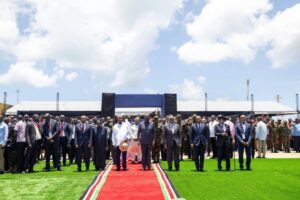
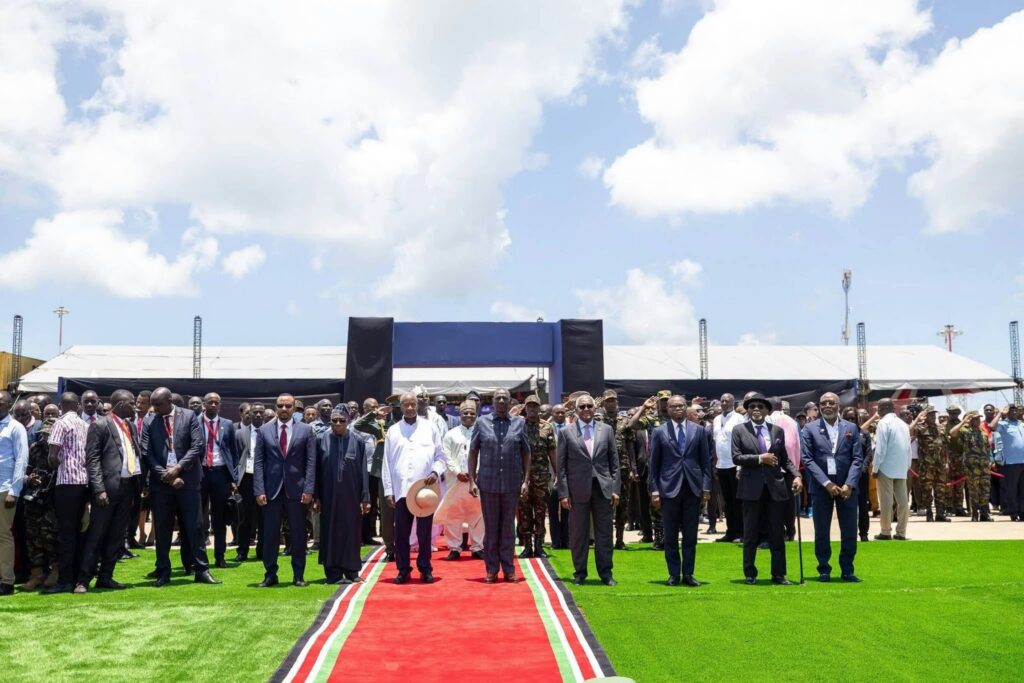
For an event with clear regional weight, the Beninese head of state appeared alongside several African leaders: Ugandan president Yoweri Museveni, Togolese president Jean-Lucien Savi de Tové, Ethiopian prime minister Abiy Ahmed Ali and Kenyan president William Ruto.
That Wadagni chose to travel to Lamu places Benin at the centre of a gathering devoted to one of the industrial projects presented as major for East Africa. The line-up of political leaders around a single infrastructure points to something deeper: a shared calculation that refining capacity is no longer a purely national question.
A 16 billion dollar bet and what it reveals
Located at Lamu, the future refinery carries an estimated investment of 16 billion dollars, or roughly 8,960 billion CFA francs.
Once complete, the facility is expected to process 700,000 barrels of crude oil per day. That figure would rank it among the largest industrial complexes on the African continent and, based on the announced data, make it East Africa’s biggest industrial project in refining capacity.
Beyond the numbers, the timing is telling. Several African countries are actively trying to strengthen local processing of raw materials and cut their reliance on imported refined petroleum products. Lamu fits squarely into that broader search for industrial autonomy.
An African gathering with continental reach
Wadagni’s participation alongside several heads of state and government also reflects the continental dimension attached to the initiative. The simultaneous presence of West African and East African leaders illustrates an intent to turn this site into a project that extends well beyond Kenya’s borders.
For Benin, the president’s attendance is an opportunity to study the prospects opened up by large-scale African industrial investments and the new patterns of economic cooperation taking shape between states.
The Lamu project indeed belongs to an Africa where energy infrastructure is occupying a growing place in strategies for development, economic sovereignty and regional integration.
Industry as the engine of African ambition
With its announced eventual capacity of 700,000 barrels per day, the future Lamu refinery is designed as an infrastructure of exceptional scale. Its construction is expected to mobilise substantial capital and generate an industrial ecosystem spanning energy, transport and logistics.
The ceremony of 30 September 2026 therefore stands as a significant appointment for the leaders present. For Romuald Wadagni, it is above all a chance to take part, alongside several African officials, in a moment dedicated to one of the major industrial projects currently announced on the continent.
At Lamu, attention is fixed on the future: an Africa seeking to expand its industrial capacity and process more of its resources on its own soil.