Abidjan summit champions Africa’s critical minerals as engine for economic transformation
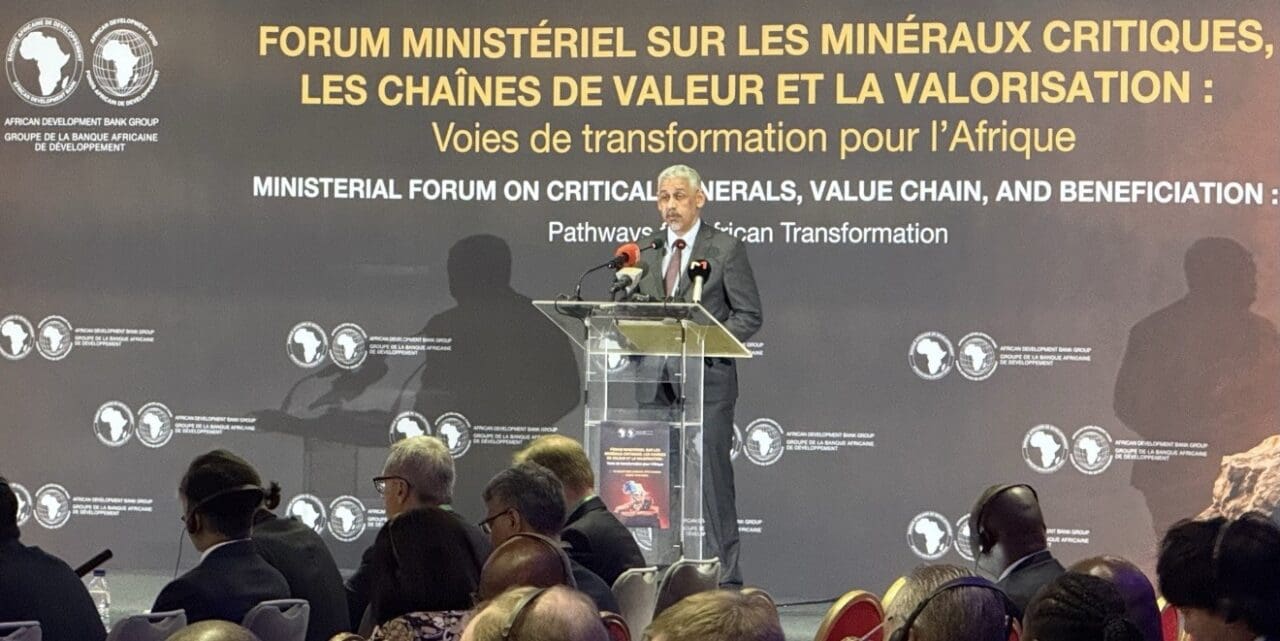
Ministers and development partners from across Africa convened in Abidjan to chart a bold new path for the continent’s critical minerals—valued at a staggering $29.5 trillion—aiming to turn these resources into engines of industrial growth, job creation, and sustainable development.
The high-level gathering brought together ministers of Mines, Energy, Industry, Green Economy, and Natural Resources, alongside representatives from the African Union Commission, the African Continental Free Trade Area (AfCFTA) Secretariat, the United Nations Economic Commission for Africa, regional development banks, financial institutions, and global investors.
Abidjan’s call for a new mining pact to reclaim Africa’s wealth
The meeting’s central goal? To redefine how Africa manages its vast mineral wealth—ensuring these resources drive inclusive economic progress rather than fueling foreign extraction. Discussions centered on three pillars: local value addition, smart financing models, and the build-out of regional value chains to meet surging global demand.
A paradigm shift in natural resource governance
The president of the African Development Bank (AfDB), Sidi Ould Tah, framed the conference as a turning point. “This isn’t just another meeting—it’s about rewriting the rules,” he declared. “Africa must take full control of its mineral wealth and ensure its people benefit directly.”
Key to this vision is local processing of raw materials. “Exporting unrefined ore is a missed opportunity,” Tah emphasized. “We need to transform these minerals into finished products—batteries, electronics, clean energy technologies—right here on the continent.”
He also highlighted a critical funding gap: Africa’s over 100 development finance institutions collectively hold just 1% of global development finance assets. “We must recapitalize and consolidate these institutions to unlock the capital needed for infrastructure, innovation, and industrialization.”
Côte d’Ivoire’s bold plan to harness its mineral riches
Côte d’Ivoire’s Minister of Mines, Petroleum, and Energy, Mamadou Sangafowa-Coulibaly, underscored the need for continental solidarity. “No single nation can go it alone. We must collaborate to build regional value chains that maximize benefits for all Africans.”
The minister revealed that nearly three-quarters of Côte d’Ivoire’s landmass holds untapped critical minerals—lithium, manganese, nickel, and more. This potential is central to President Alassane Ouattara’s ambition to elevate Côte d’Ivoire to upper-middle-income status by 2030.
To achieve this, the government has unveiled a $61 billion integrated mineral and energy strategy (2026–2040), with 88% of funding expected from private investors. The plan targets infrastructure upgrades, local refining, and downstream industries to capture more value within the country.
Africa’s mineral wealth: a $29.5 trillion opportunity
Africa holds roughly 30% of the world’s critical minerals for the energy transition—cobalt, lithium, graphite, rare earths, platinum group metals, copper, manganese, and nickel. The continent’s mineral resources are valued at $29.5 trillion—over eight times its annual GDP and nearly 20% of global reserves. Yet, $8.6 trillion of this remains untapped.
Global demand is set to explode by 2040. Platinum group metals could see demand surge over 1,000%, lithium by 842%, and copper by 88% compared to 2023 levels. The electric vehicle and battery supply chain alone could grow from $7 trillion in 2030 to $59 trillion by 2050.
Seizing the moment: breaking free from raw material exports
The timing couldn’t be more urgent. Africa stands at a crossroads: continue exporting raw minerals as commodities, or seize this historic chance to industrialize on the back of its own resources.
“This is Africa’s moment to rewrite its economic narrative,” said a senior delegate. “By processing minerals locally, building regional industries, and attracting investment, we can create millions of jobs, reduce poverty, and position Africa as a global leader in the clean energy transition.”