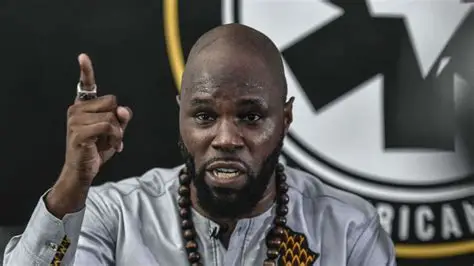
Kémi Séba detained in Johannesburg as Benin seeks immediate extradition
The era of media provocation has transitioned into a period of strict legal scrutiny for Stellio Gilles Robert Capo Chichi, widely known as Kémi Séba. Following his arrest in Johannesburg on Wednesday, April 15, the activist finds himself at the center of a major judicial standoff. Authorities in Cotonou are no longer viewing his actions as mere expressions of opinion, but as serious criminal offenses, formally requesting his swift extradition to face charges related to terrorism.
Benin intensifies pressure for a legal handover
Beninese diplomacy has mobilized international resources to ensure the activist’s return to his home country. The evidence submitted to South African officials is described as substantial, allegedly connecting Séba to a violent attempted coup d’état that occurred in December 2025.
According to the prosecution, Séba did more than just voice dissent; he is accused of serving as the primary coordinator for a seditious movement intended to dismantle the constitutional order through force. For the government in Cotonou, he represents the civilian facade of an armed threat to the state.
Allegations of terrorism and extremist rhetoric
The Beninese government’s accusations extend beyond domestic politics, touching on broader regional security concerns:
- Terrorist associations: Intelligence agencies suggest that Séba has established connections with networks aiming to destabilize the African coastline by importing violent tactics used in the Sahel region.
- Radical ideologies: Official reports highlight a pattern of extremist and racialist discourse. This radical rhetoric is now interpreted as a tool for national fragmentation, designed to undermine social cohesion in Benin to serve external agendas.
The controversy surrounding the Nigerien diplomatic passport
A significant point of contention is Séba’s use of a Nigerien diplomatic passport to avoid legal consequences. Benin has denounced his status as a “Special Advisor” to General Tiani as a strategic attempt to gain immunity. Officials in Cotonou maintain that African solidarity should not provide a safe haven for those inciting disorder. They urge South Africa to prioritize international anti-terrorism conventions over a passport they characterize as a document of convenience used by a person accused of sedition.
Upcoming hearing in Pretoria: A decisive moment
The extradition hearing scheduled for April 20 in Pretoria is expected to be a pivotal event. The court’s decision will determine whether Séba will be sent back to face the Beninese justice system. Many regional observers believe that extradition is necessary to protect state stability against violent populism and the manipulation of public sentiment.
“Pan-Africanism cannot serve as a cover for terrorism. True liberation for a people is not achieved by calling for armed rebellion and racial animosity,” noted an expert in international criminal law regarding the case.
No longer just a figure on the political fringes, Kémi Séba is now entrenched in a legal process that could signify the conclusion of his career as an agitator and the start of a direct confrontation with Benin’s sovereign courts.