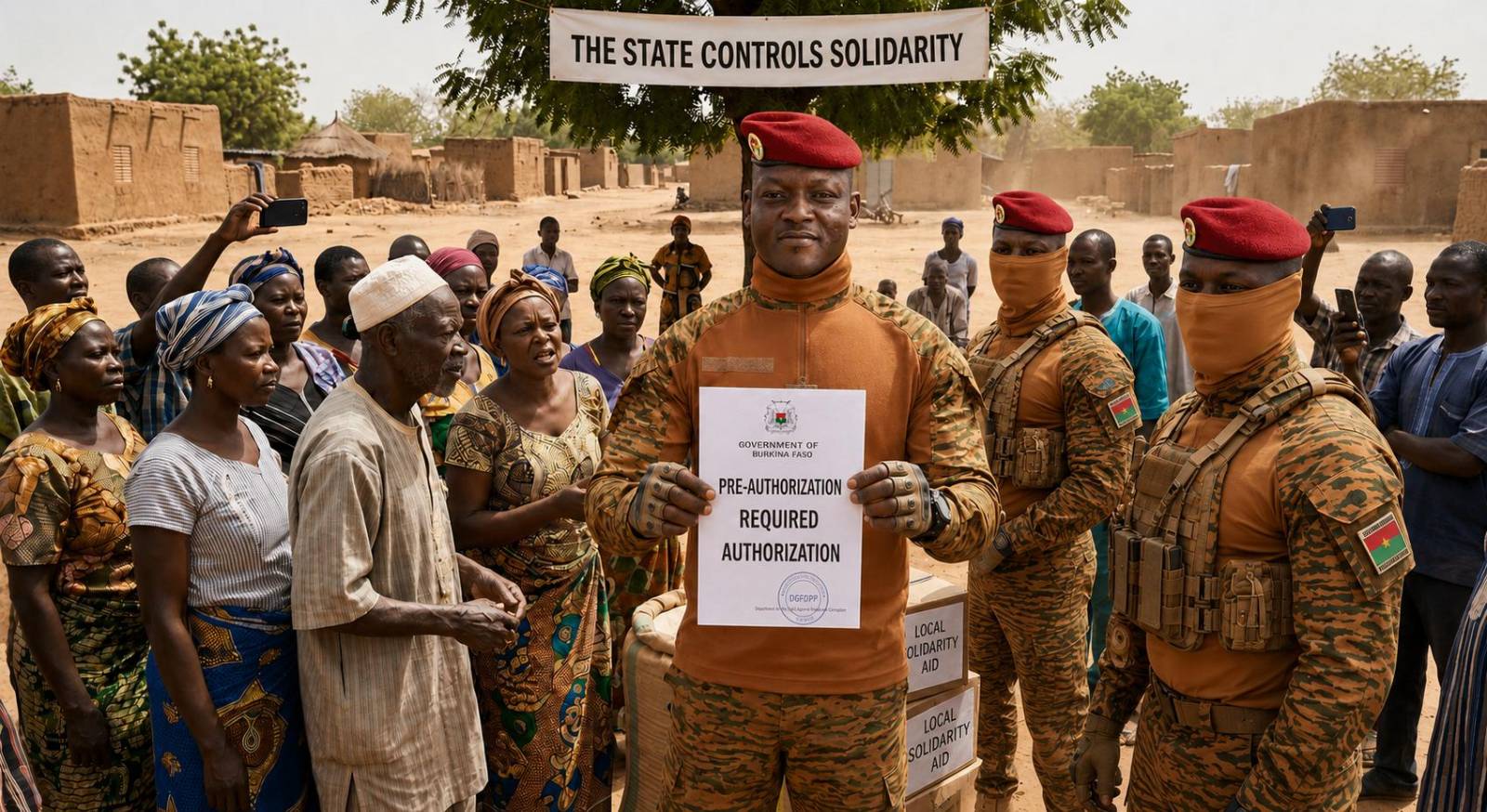
The Ministry of Solidarity in Burkina Faso has recently issued a directive that fundamentally alters the landscape of charitable actions in the country. Effective immediately, all humanitarian efforts—whether organized by individuals, communities, or organizations—must secure prior approval from the authorities or face penalties. While the stated goal is to uphold dignity and prevent the exploitation of vulnerable populations, the policy raises profound questions about the limits of state control over altruism and personal freedoms.
From spontaneous generosity to administrative approval
The new regulation marks a stark departure from Burkina Faso’s longstanding tradition of grassroots solidarity. Historically, citizens, diaspora communities, religious groups, and local associations have played a pivotal role in responding to crises, often acting swiftly to address urgent needs before government agencies could intervene. This decentralized approach has been a cornerstone of the country’s resilience, particularly in the face of growing security and humanitarian challenges.
Under the new framework, however, even the most well-intentioned acts of kindness are subject to bureaucratic scrutiny. The requirement for prior authorization transforms charity from an act of free will into a regulated activity, one that must pass through the filter of state approval. This shift not only introduces delays but also risks stifling the very initiatives that have long sustained communities in times of hardship.
A government monopoly on compassion?
The policy reflects a broader trend in which the state increasingly positions itself as the sole arbiter of social welfare. By centralizing the management of solidarity, the authorities appear to view any independent humanitarian effort as a potential challenge to their authority. This approach fosters an environment of mistrust, where citizens may hesitate to act out of fear of administrative repercussions rather than out of genuine concern for their fellow citizens.
The implications of this shift are particularly concerning given the current context in Burkina Faso. With ongoing security threats, widespread displacement, and rising economic precarity, the need for rapid, flexible, and decentralized humanitarian responses has never been greater. Yet, the new regulations risk creating a void that the state is ill-equipped to fill, given its limited resources, bureaucratic inertia, and logistical constraints.
The illusion of dignity versus the reality of suffering
Proponents of the policy argue that it seeks to protect the dignity of vulnerable populations by preventing the public display of their suffering. However, this perspective overlooks a critical truth: dignity is not preserved by silence or invisibility, but by ensuring that assistance reaches those in need without unnecessary delay. The current approach risks pushing suffering into the shadows, where it becomes harder to address and easier to ignore.
There exists a middle ground—one that balances ethical standards, transparency, and respect for individual consent without imposing cumbersome administrative hurdles. A policy that prioritizes both dignity and efficiency would recognize the complementary roles of state and civil society, rather than seeking to monopolize the latter. After all, history has shown that the most resilient communities are those where collaboration between citizens and institutions flourishes, not where one dominates the other.
Consequences of a disconnected policy
The decision to regulate charity in this manner underscores a troubling disconnect between policymakers and the realities of life in Burkina Faso. Humanitarian crises do not adhere to administrative timelines. Medical emergencies, population displacements, and food shortages cannot wait for bureaucratic approvals. While authorities deliberate over authorizations, the suffering of ordinary citizens continues unabated, unmitigated by the very structures meant to protect them.
Moreover, the policy may inadvertently discourage the very people it aims to empower. Fearing sanctions or complex procedures, individuals and smaller organizations might choose to abstain from helping altogether. The result is a society where generosity is no longer a spontaneous expression of humanity but a regulated transaction, subject to the whims of an overreaching state.
A call for balance
At its core, the issue is not whether abuses in charitable actions should be addressed—it is how such abuses are addressed. Blanket regulations that treat all humanitarian efforts with suspicion risk doing more harm than good. Instead, a targeted approach that focuses on transparency, ethical fundraising, and the protection of vulnerable individuals would strike a better balance between oversight and freedom.
Burkina Faso stands at a crossroads. The choice is between a society where the state controls the expression of compassion and one where citizens and institutions work in harmony to uplift those in need. The latter path, though less immediately visible in the halls of power, is the one that will ultimately preserve the dignity, resilience, and solidarity of the nation.