The nation of Burkina Faso faces an escalating humanitarian and security emergency, yet recent actions by the transitional authorities raise troubling questions about priorities. Between carefully orchestrated public relations campaigns and the harsh realities on the ground, the disconnect has never been more glaring.
Contrasting narratives: security failures and political storytelling
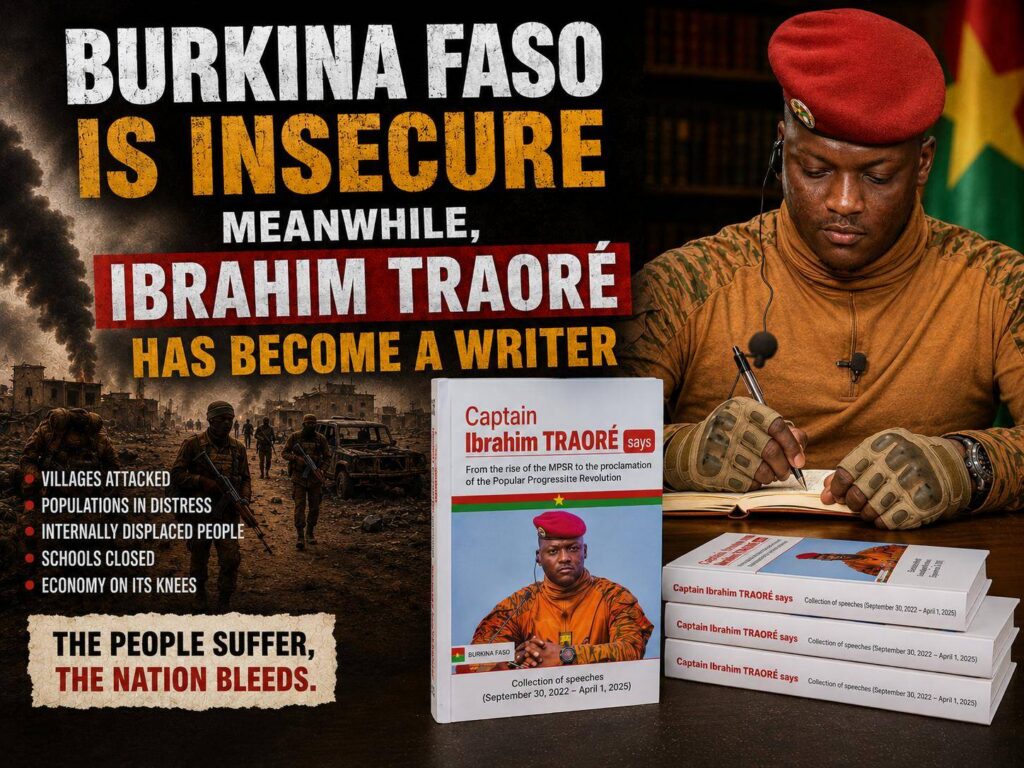
A stark and unsettling contrast persists. While daily reports document relentless terrorist assaults, besieged communities, and an ever-growing tide of internally displaced persons pleading for basic safety and territorial sovereignty, the corridors of power resonate with a different rhythm—one of self-congratulatory narratives and state-sponsored literary releases.
For many Burkinabè citizens, this shift in focus is both disheartening and perplexing. The transitional presidency, once seen as a beacon of hope, now appears increasingly preoccupied with political messaging rather than addressing the existential threats facing the nation.
A contentious publication amid mounting insecurity
The recent release of a book attributed to Captain Ibrahim Traoré has sparked widespread bewilderment. In the capital city of Ouagadougou and across remote regions, the message from citizens remains unambiguous: security is the sole priority, not literary endeavors. To allocate scarce resources—funding, printing, and promotion of state-sanctioned literature—at a time when defense and security forces, including the Volunteers for the Homeland (VDP), struggle with critical logistical shortages underscores a profound disconnect between governance and reality.
As one civil society activist, requesting anonymity, succinctly put it: “The people do not need stories; they need their homeland restored.”
Broken trust and unfulfilled promises
When Captain Traoré assumed leadership, he forged an unspoken social contract with the nation: to restore territorial integrity and restore peace where predecessors had failed. The trust placed in his leadership was predicated solely on this commitment to tangible security outcomes.
Yet today, rhetoric has eclipsed action. By prioritizing personality cults and political marketing over strategic military response, the regime risks squandering the last vestiges of public confidence. The patience of the populace, already stretched to its limits, is wearing thin. A growing chorus of voices now demands decisive change: if the fundamental duty of securing the nation cannot be fulfilled, it is time for a change in leadership.
Facing a crossroads: leadership at a critical juncture
The transitional government stands at a pivotal crossroads. Clinging to public relations as a substitute for real action will only deepen the rift between state and society.
Burkina Faso does not require a propagandist at its helm; it needs a visionary commander capable of restoring stability. Should Captain Traoré fail to refocus the administration’s efforts on the singular, overriding priority of security, history may record his tenure not in the annals of progress, but in the fading ink of illusion—while the nation continues to burn.