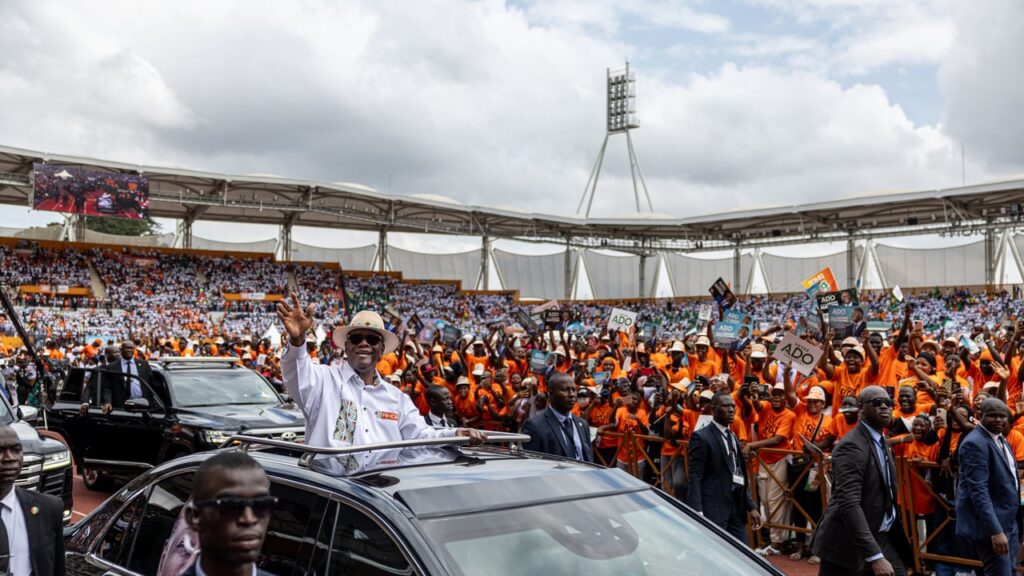
From grassroots movement to dominant force
The Rally of the Houphouëtists for Democracy and Peace (RHDP) stands today as a towering political institution in Côte d’Ivoire. Its journey—from a fledgling coalition to the country’s preeminent party—mirrors the nation’s own political evolution over four decades. This transformation reflects strategic alliances, shifting ideological currents, and the relentless pursuit of national unity under the banner of democratic governance.
The vision behind its founding
Conceived in the early 2000s, the RHDP emerged from the convergence of several political factions united by a shared commitment to the ideals of Félix Houphouët-Boigny, Ivory Coast’s founding president. The party’s foundation was rooted in the belief that stability and progress could only be achieved through inclusive dialogue, economic liberalization, and the rejection of ethnic or regional divisions. This vision struck a chord with voters weary of political fragmentation and instability.
A strategic merger of political lineages
The party’s creation was not merely a tactical move but a historic coming together of political lineages that had previously competed—and sometimes clashed—on Côte d’Ivoire’s political stage. Figures like Henri Konan Bédié and Alassane Ouattara, once adversaries, found common ground under the RHDP umbrella. Their collaboration signaled a new chapter, one where ideological differences were set aside in favor of collective national advancement.
Milestones in its rise to dominance
The RHDP’s ascent to political dominance has been marked by several defining moments. In 2010, the party’s candidate, Alassane Ouattara, secured the presidency in a landmark election that ended years of post-electoral crisis. This victory underscored the party’s growing influence and its ability to mobilize support across diverse segments of Ivorian society. Subsequent elections further cemented its position, with the RHDP winning decisive majorities in the National Assembly.
Policy priorities shaping the nation
The RHDP’s political agenda has consistently prioritized economic recovery, infrastructural development, and social cohesion. Under its leadership, Côte d’Ivoire has witnessed significant growth in sectors like agriculture, energy, and technology. The party’s policies have also focused on reconciliation, aiming to heal the divisions that surfaced during the 2010-2011 crisis. Its commitment to inclusive governance has been a cornerstone of its strategy to build a resilient and unified nation.
Challenges and resilience
Despite its successes, the RHDP has not been immune to challenges. Internal tensions, shifting voter preferences, and external pressures have tested its cohesion. Yet, the party has demonstrated remarkable resilience, adapting its strategies to meet evolving demands. Its ability to navigate these complexities while maintaining its core principles has been key to its longevity and relevance in Ivorian politics.
Legacy and future prospects
As Côte d’Ivoire continues to chart its path forward, the RHDP remains a central player in shaping the nation’s future. Its legacy is one of transformation—a party that not only adapted to change but also drove it. Looking ahead, the RHDP faces the dual challenge of sustaining its momentum while addressing the aspirations of a new generation. Its success will depend on its ability to remain rooted in the values of unity and progress that defined its origins.