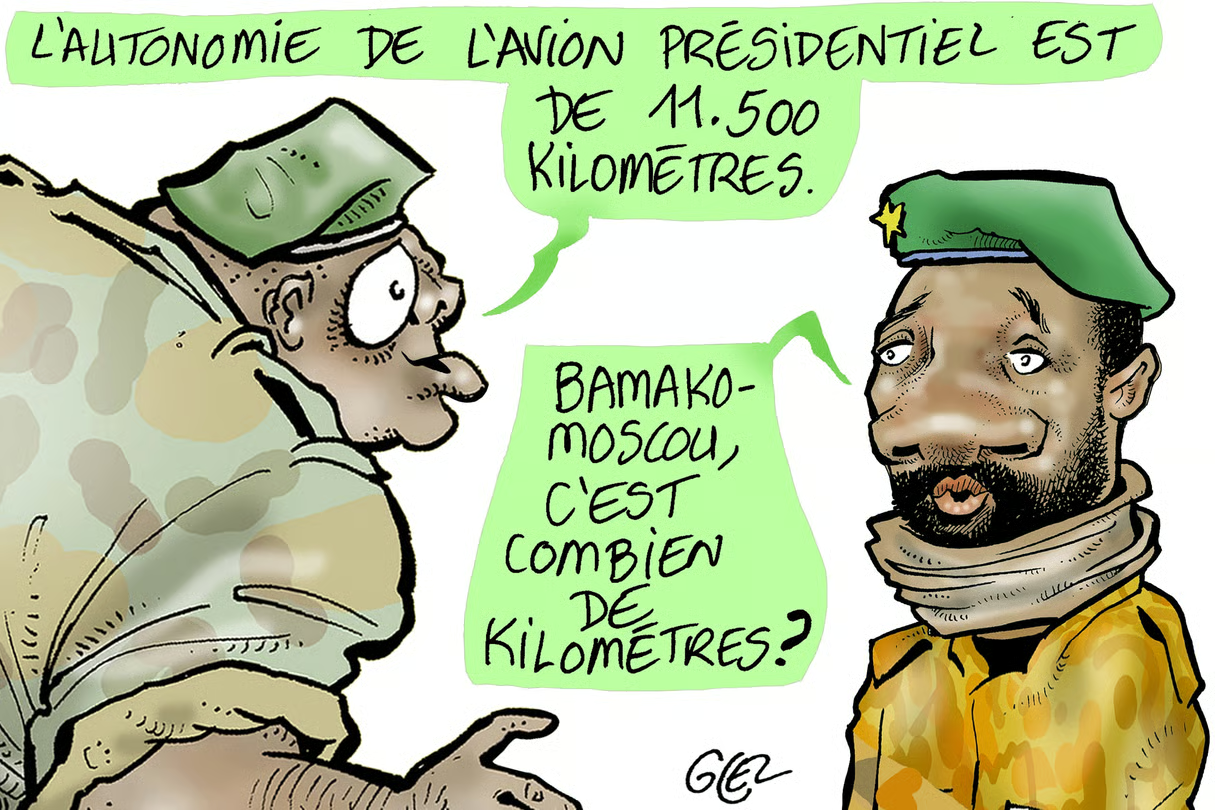
In a move that has sparked debate across Bamako, Mali’s transitional leadership has recently taken delivery of a new presidential aircraft. The sleek, modern jet, now stationed at the nation’s primary air hub, represents a significant upgrade to the country’s official fleet. Its acquisition arrives as the interim government navigates complex domestic challenges while pursuing ambitious reforms.
The decision to invest in the new plane comes at a time when public attention remains sharply focused on fiscal responsibility. Critics have been quick to question the timing and necessity of such an expenditure, particularly as essential services face ongoing funding constraints. Meanwhile, supporters argue that reliable air travel infrastructure is vital for high-level diplomatic missions and urgent state business.
Why a new presidential aircraft matters for Mali
For a landlocked nation like Mali, air connectivity is not merely a matter of convenience—it is a strategic imperative. The new aircraft will enhance the president’s ability to respond swiftly to regional crises, engage in high-stakes international negotiations, and oversee development projects across distant corners of the country. The jet’s advanced capabilities will also streamline travel for government delegations, reducing layovers and logistical delays.
Transportation experts point out that while the initial cost is substantial, the long-term benefits could include improved operational efficiency and enhanced national visibility on the global stage. The aircraft’s arrival signals a commitment to modern governance, even amid economic uncertainty.
Public reaction: pride and criticism
Reactions to the news have been mixed. In the capital, some citizens express pride in seeing Mali adopt state-of-the-art infrastructure that aligns with other African leaders. Others, however, voice concerns over transparency and resource allocation. Social media has become a battleground of opinions, with many calling for detailed disclosure of the procurement process and the total financial outlay involved.
Local economists caution that while mobility is important, public funds must be allocated with meticulous oversight. They emphasize the need for clear communication from authorities regarding how the investment fits into the broader national budget and development agenda.
A symbol of continuity and change
The new jet replaces an older model that had been in service for nearly a decade. Its introduction coincides with a period of political transition, following years of instability and external pressures. For the ruling junta, the aircraft serves as both a practical tool and a symbolic gesture—one meant to project stability and forward momentum.
As Mali continues its path toward democratic restoration, the presence of the new aircraft looms as a tangible reminder of the choices facing its leadership. Will it be seen as an essential enabler of progress, or as a costly indulgence in an era of austerity? The debate is far from settled.