The ongoing political transition in Burkina Faso has reached an unprecedented diplomatic crisis, as staff members from the country’s embassy in Paris have formally applied for political asylum in France. This development, which has sent shockwaves through the transitional government, reveals deeper unease within the state apparatus regarding the current security and political climate.
The timing of these asylum requests is particularly significant. Several diplomats who had been serving in Paris for years have recently been recalled to Ouagadougou as part of an administrative restructuring of the country’s diplomatic network. While the government described these measures as routine organizational changes, the affected personnel perceive them as abrupt and potentially perilous.
Personal upheaval amid administrative decisions
In their official statement, the diplomats expressed the profound disruption these decisions have caused to their lives. Many had established their families in France, enrolled their children in local schools, and built professional careers over several years. The forced return to Burkina Faso, they argue, represents an uncertain future rather than a mere administrative transfer.
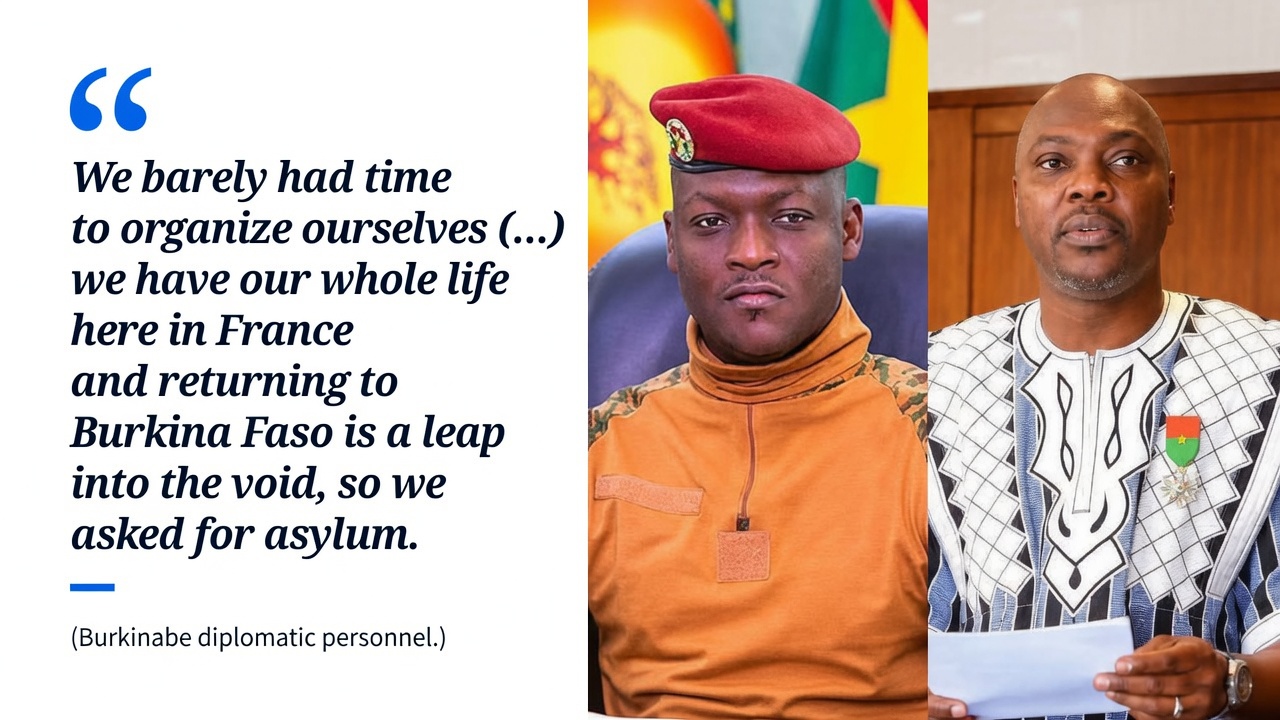
Their testimonies underscore the human cost of top-down decisions. One diplomat remarked, “We barely had time to prepare. Our entire lives are here in France. Returning to Burkina Faso feels like stepping into the unknown. That’s why we have sought asylum.”
Security concerns fuel diplomatic exodus
The crisis has unfolded against the backdrop of Burkina Faso’s persistent security challenges. The ongoing conflict with armed groups has raised concerns among both civil society and diplomatic personnel. Reports of civilians being conscripted into conflict zones without adequate training or preparation have intensified fears among recalled diplomats, who now view their return as a potential threat to their safety.
While authorities have not commented on these specific allegations, the broader climate of insecurity has contributed to the growing reluctance among diplomats to comply with the recall orders. The transitional government’s centralized decision-making process has also drawn criticism, with observers arguing that sweeping administrative changes are being implemented without sufficient consideration for the human consequences.
A symbolic challenge to state legitimacy
The decision of Burkinabè diplomats to seek asylum abroad carries significant symbolic weight. When representatives of a state, tasked with promoting its interests overseas, opt to remain in their host country rather than return home, it raises fundamental questions about the state’s internal stability and the trust vested in its institutions.
Such cases are rare in international relations and typically signal a level of political or security distress that compels officials to seek protection beyond their national borders. For Burkina Faso’s transitional government, this situation presents a critical reputational challenge, particularly as it seeks to restore national sovereignty and public confidence in state institutions.
The unfolding crisis highlights the human dimension behind diplomatic decisions. Behind the formal recall orders are individuals with families, careers, and futures inextricably linked to their roles abroad. The testimony of the Paris embassy staff reveals a reality often overlooked in official statements: the profound personal sacrifices demanded by state service during times of political transition.
Ultimately, this episode serves as a stark reminder of how administrative choices at the highest levels can reshape lives, forcing individuals to weigh the risks of exile against the uncertainties of returning to a nation in flux.